networ cabling,cable management

Things to Avoid in Running Network Cabling

28 Mar 2015

Date cabling,cable managementWhat can cabling that has not been installed properly do?


It can lead to a lot of negative outcomes such as paralyzed network performance, maintenance troubles and hidden costs. Network cabling can be  especially troublesome if it is installed by individuals without the proper knowledge and tools. When it comes to twisted pair cabling, there are many factors that you need to consider.


In the past, many companies installed different cable systems since twisted pair cabling was expensive. At present, full installation is still costly although a greater part of the expense is labor since raw cables is not pricey. Cable management is another concern. Use of ladder racks means additional cost but it reduces upkeep. Also be sure you label cables and to make use of color codes.


Unshielded twisted pairs are more practical in terms of usage. Magnetic fields are produced by low voltages that pass through your cables. This is a vital property of the communications cycle. And if you run unshielded cables along with electrical wires, the magnetic field can be interrupted. The communications becomes corrupted or noisy. You can expect that transmissions will not make it from one point to the other. Another possibility is that transmission rates will become slower. The cables should be perpendicular with electrical lines instead with the electric wires inside of shielded tubes at cross points.


Do not attempt to run cable alongside fixtures that create “noise”. Fluorescent lamps, motors and devices that generate electrical or magnetic interference will distort your cabling infrastructure. Install a data cable conduit that will create a buffer from these hazards. Also figure out the total distance of each cable. This is usually up to 100 meters. However, if cabling data rates reaches 10 to 40 GBPs, be attentive about distance restrictions related to the kind of cabling you plan to use. If you will run 10 GBPs for a maximum of 100 meters over twisted pair cabling, it is best to use Category 6 cabling.


Be aware of local codes.


This is important for safety concerns. In many areas, using PVC-covered cables is not allowed in air-handling spaces. When PVC burns, there is toxic emission that may prove dangerous to firefighters and other safety personnel who will try to navigate the location during emergencies. Failure to follow rules can lead to fines and forced replacement of cabling infrastructure. Contractors must be mindful of these regulatory standards.

Cat5e ,Cat6/6a Cabling,patch cables

Patch Cables and Twisted Pair Cabling

21 Mar 2015

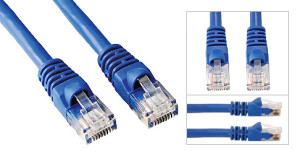
The patch cable is used to link up two network devices. This type of cabling is usually a Cat6 or a Cat5e cable thaCat5e ,Cat6/6a Cabling,patch cablest connects personal computers to the wall plate or provides the short interconnects among the switches, routers and the patch panels in the wall closet or Server Room. These make use of stranded wires instead of solid to increase flexibility. It also lessens the risk of cracking when you unplug the cable. There is also a variety of Ethernet patch called the crossover cable. It is used to hook up two PCs together and sometimes to interconnect switches.


Ethernet Systems


Ethernet systems ensure adaptable and economical methods of conveying voice, data, and multimedia over integrated networks. In fact, Ethernet patch cords have become very common. These wall to wall cables gave rise to the growth of generic and structured cabling systems. Today, these are used practically for all networking components regardless of industry or application. However, there are concerns that you need to consider. Whereas modular attributes and profusion of patch cables denote absolute universal use, there are differences that can reduce interchangeability. Some of the disparities originate from various wiring configurations of cable conductors and connector pins.


Twister Pair Cables


For this type of cabling, two conductors are coiled to prevent electromagnetic interference (commonly known as EMI) that comes from external (usually electrical) sources. One example is the electromagnetic radiation caused by uncovered twisted pair cables or UTP as well as cross talk produced by adjacent electrical wires. The process of shielding generates a conductive barrier to lessen these electromagnetic waves. It also creates a conduit for conduction so that  currents and data can traverse freely. Shielding can be applied on individual pairs or as a group of pairs.


Twisted conductor pairs form a secure circuit. The voltages carry the same magnitude or amplitude. However, one is positive while the other is negative. Incidentally, crosstalk takes place if the electromagnetic field turns out a signal that is too big or strong and intereferes with a nearby pair. The sound is like a fusion of the two fields by means of a swap of the energy between them. Certain components of these signals are passed on to each other during this exchange of energy.


As a result, here is an ensuing increase in the level of “noise”. External sources of EMI and RFI create signal interference in a similar manner. These cause distortion of the signals that go to your office and communications equipment.


Overall, these are the things that you should take into account with regards to twisted and patch cabling.


Please feel free to contact us if you need help with your office cabling project!

Structured Cabling,Washington DC New York City

Basics of Riser Cables

6 Mar 2015

Structured Cabling,Network Cabling Data Cabling Riser cables were designed for non-plenum vertical applications like between the floors of multi-story buildings. They are also described as backbone cables. These cables serve as the main conduit of a distribution system for data, video or voice. It originates from the point where communications go in through a particular edifice.  This cable comprises part of the structure backbone. Other components of this facility are the cable corridors, telecommunications cabinets, equipment rooms, correlated hardware, and support facilities. This cable variety must be fire resistant in accordance with electrical codes. Nonetheless, specifications are not as stringent compared to plenum cables.


Understand its Uses


Riser cables may be used for different forms of data communications which also includes CCTV video access. It is ideal as well for voice communications. One major concern is that requirements vary for each service. Hat is why planning can sometimes be quite complicated. Building managers are often pressed to predict their requirements given limited time and expertise. Quite often they will recommend creating split riser systems for multiple applications which follow parallel routes through the corridors, closets, and equipment areas.


How do you select the medium?


Perhaps, the primary concern is to stay within budget.  You can expect system designers to resort to trade-offs in delivering a broad assortment of services within the backbone system. Other factors that may influence their design are the following:


  • Provide an adaptable medium in relation to supported services

  • Identify the necessary useful life span of backbone cabling

  • Consider the technical needs of users


Standards are on hand to serve as a guide in the design of riser cable systems. There are appropriate benchmarks for optical and copper cable backbone structures. Some of the backbone cable categories include:


  • Copper-shielded and unshielded twisted-pair or UTP cables

  • Coaxial and twin axial cabling configurations

  • Single mode and micron multimode optical fibers


Physical locations supporting riser cables take into consideration the telecommunications service entrances and adjacent equipment rooms containing the main cross-connect. This can extend to the telecommunications closets that serve a particular location, intermediate cross-connects that serve a number of telecommunications closets, or horizontal cross-connects for a remote telecommunications closet or just one level of the building. The telecommunications cabinet is the point of interaction between backbone systems and parallel (same floor) wiring.


Riser cable systems in multiple-story buildings need to pass through equivalent closets making use of connecting conduits between the floors. Said design provides each floor access to the backbone and allows circuits to be distributed to all levels. The conduit and sleeves should go higher than the floor level by at least an inch and fitted with fire-stopping material. These should also adhere to electrical codes. The riser or backbone cable system essentially acts as the core of telecommunications infrastructure.