Fiber Cabling Installation Washington DC

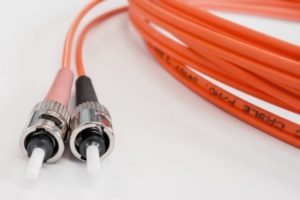
Why Cable Pros Select Fiber Optic Over Copper Cabling
29 Aug 2018

cable,cabling,installation ,Washington DCDuring your consideration of the kind of cable that should be selected for your IT network, several factors come into play. One of the decisions you will need to make is whether to use copper or fiber optic cabling.


Copper certainly has plusses. It is already installed in numerous sites and is less costly for connecting network components. Although fiber optic cabling has a higher price tag, it has key advantages that make it more attractive than copper for creating structured cabling infrastructure.


The following are five reasons why most cable professionals select fiber optic over copper cabling.


Durability


Fiber optic cables have longer service lives than copper, decreasing maintenance costs and downtimes from replacements. Although fiber optic wires are made of glass, copper wires are more susceptible to being damaged.


Fiber Optic is Faster


When evaluating the transmission of copper wire to that of fiber optic, the contest can be simplified to the comparison of the speed of electrons to the speed of photons. Although C transmissions do not move at the speed of light, they are still extremely fast by moving just 31% slower than the speed of light!


Low Attenuation


Over long distances, fiber optic cables will undergo much less signal loss than copper. This quality is termed “low attenuation.” Due to attenuation, copper cables are capable of transmitting information up to a maximum of 9,328 ft, when it then loses power. In contrast, fiber optic cables are capable of transmissions up to 24.8 miles.


Resistance to EMI (Electromagnetic Interference)


If improperly installed, copper cables will generate electromagnetic currents that result in EMI inside nearby wires, which can cause serious problems throughout a network. On the other hand, fiber optic cables are not conductors of electricity.


Safer


Fiber optic cabling is safer because it won’t be a fire hazard. The reason is no electrical current travels through fiber optic cables.


Progressive Office Cabling


Founded in 1986, Progressive Office’s success has been a direct result of years of commitment to seeking solutions on behalf of our clients in the Washington, D.C. and New York City areas. Efficiently working together, Progressive teams get cabling installed and operating as fast as possible while minimizing disruption and downtime. Call our toll free number (800) 614-4560 today.

cabling, network cabling,Washington DC

Top Ten Tips for Business Data Cabling – Part 2

22 Aug 2018

cabling, network cabling,Washington DCAs discussed in Part 1, business cabling projects can be a challenge to properly design, install, and accomplish on schedule. The key to success is finding an experienced team that will provide structured cabling services of high quality. Part 2 will discuss Maintaining Standards, Planning Well, Respecting Regulations, Staying Up-to-Date, and Testing Infrastructure.


Maintaining Standards


Maintain the established standards and best practices of structured cabling. Neglecting to do so will probably reduce quality and the efficiency of a data network. For guidance, refer to the standards set forth by the Telecommunications Industry Association.


Planning Well


Planning well will help future proof your organization. Do your best in estimating what your company will need for the next five years. CAT5E is now the standard, and it can support a maximum of 1000 Mbps. If your company needs more bandwidth, CAT6 is rated at a maximum of 10 Gbps. Re-cabling soon after installation will be disruptive and expensive.


Respecting Regulations


Compliance with codes, laws, and ordinances typically protects the lives of employees and first responders. A company found to be violating regulations will be fined and required to rewire the cabling so it is up to code. In the event of injury or death that is attributable to a violation, individuals found responsible may be held financially and perhaps criminally liable.


Staying Up-to-Date


Staying current with technological developments and regulations related to structured cabling and IT infrastructure will allow you to provide guidance to your company that has foresight. Knowledge of trends will let you anticipate what your IT infrastructure will need in the future.


Testing Infrastructure


Testing IT infrastructure during the installation of cabling is good practice. For efficiency, tests should be performed in phases to detect and fix problems quickly. Testing only after the installation of hundreds of feet of cabling will discover issues far too late and result in time wasteful revisions, repair, or replacements.


Progressive Office Cabling


Founded in 1986, Progressive Office’s success has been a direct result of years of commitment to seeking solutions on behalf of our clients in the Washington, D.C. and New York City areas. Efficiently working together, Progressive teams get cabling installed and operating as fast as possible while minimizing disruption and downtime. Call our toll free number (800) 614-4560 today.

Office Cabling ,Network Cabling

Planning – Network Design Requirements

5 Aug 2018

Office Cabling ,Network CablingAfter receiving the requirements for a network, it is common for designers to prioritize their implementation and integrate them into the format of the design. Occasionally, they initially rely on best practices, instead of focusing on planning. This is unfortunate because the planning process often leads to discovering multiple viable design solutions.


Designers should first make business-centric decisions determining either the solution or design that supports the company’s objectives or strategy. Although it is advisable to follow best practices for network design, reliance on them is more typical on occasions when a network is being designed from the ground up, which is usually not the case for large service providers and enterprises.


Let’s consider optimizing office buildings as a comparison. The standard procedure for civil engineers and architects is to perform an evaluation of a building by identifying existing problems, understanding the organization’s goals, and gathering business requirements. Afterwards, they begin optimizing the office building’s existing features. As examples, this may involve replacing the elevators or expanding the lobby.


The above is similar to the procedure for revamping network design. There will always be faulty designs that were poorly planned. Sometimes they are unable to scale, or adopt emerging technologies, or adapt to changing business conditions. Thus, designers must first make a comprehensive study of the existing business problems, IT requirements, and network design. Next, they should develop solutions that will optimize the present architecture. This may entail redesigning several components of the network. It can also require the addition of a new data center.


In order to choose the correct design choices and technologies, network designers must gather the necessary information that will allow them to make a sound analysis during the planning stage. This also lets them correctly determine the new requirements that will support the company’s business goals. At this point, network designers typically utilize the decision tree and the decision matrix for easing and simplifying the process.


Progressive Office Cabling


Founded in 1986, Progressive Office’s success has been a direct result of years of commitment to seeking solutions on behalf of our clients in the Washington, D.C. and New York City areas. Efficiently working together, Progressive teams get cabling installed and operating as fast as possible while minimizing disruption and downtime. Call our toll free number (800) 614-4560 today.