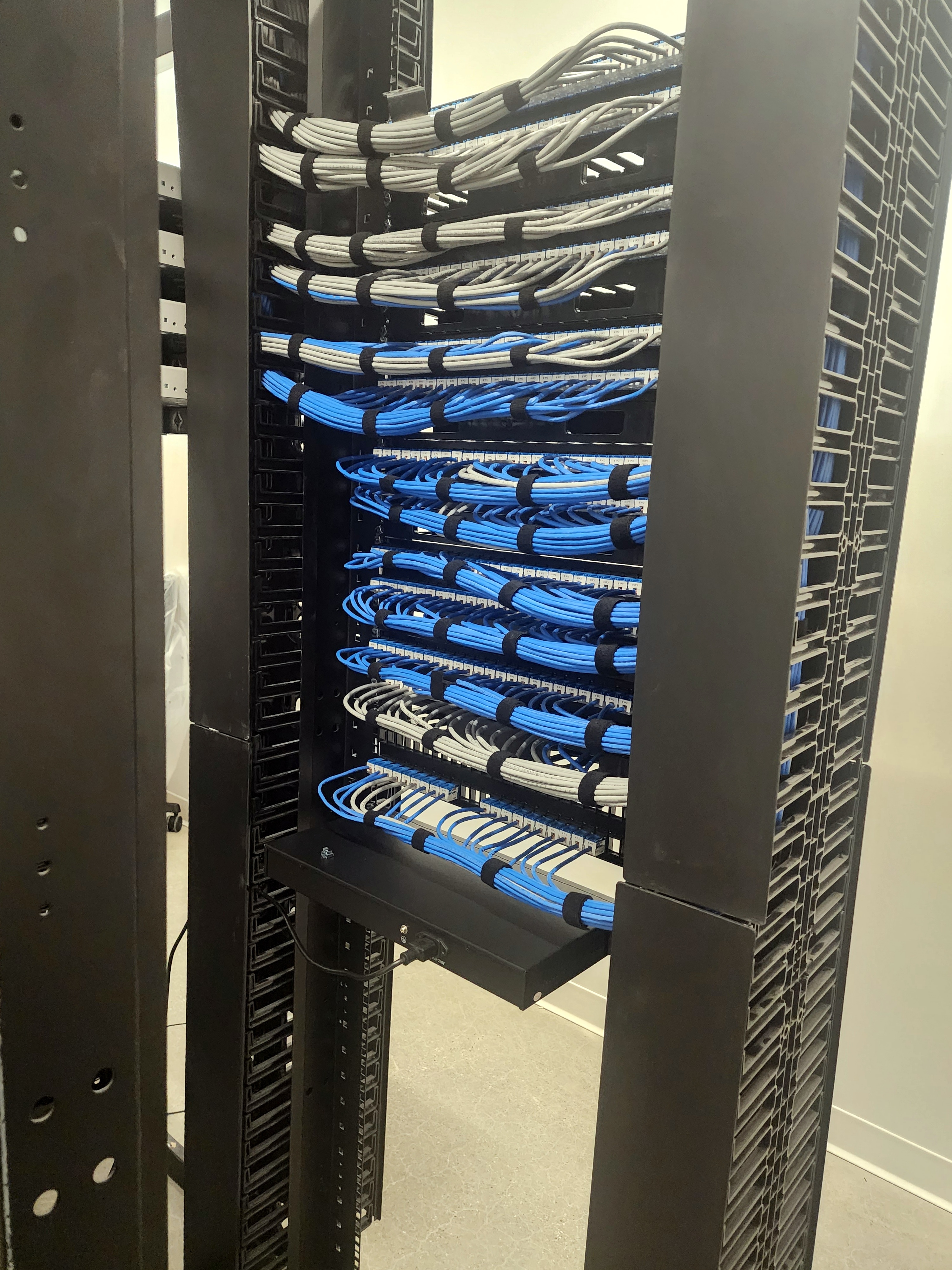
In today’s connected business environment, productivity depends heavily on reliable network infrastructure. From cloud applications and video conferencing to security systems and wireless connectivity, nearly every aspect of daily operations relies on a stable network. However, many businesses underestimate how much professional network cabling impacts performance and efficiency.
For companies nationwide, investing in properly installed structured cabling can dramatically improve reliability, reduce downtime, and help employees work more efficiently. At Progressive Cabling, we design and install network infrastructure that supports productivity, security, and long-term growth.
The Foundation of Every Business Network
Behind every high-performing network is a structured cabling system that connects all devices and systems throughout a building. This includes connections for:
Workstations and office computers
Wireless access points
VoIP phone systems
Security cameras and surveillance systems
Door access control devices
Servers and network equipment
When cabling is installed correctly, these systems communicate smoothly and consistently. When it’s poorly installed, network interruptions and slow performance become common problems.
Reducing Network Downtime
One of the biggest threats to productivity is network downtime. When connections drop or systems fail, employees are unable to complete tasks, communicate with clients, or access important information.
Professional network cabling reduces downtime by ensuring:
Stable and consistent connectivity
Proper termination and testing of cables
Reduced interference and signal loss
Organized and clearly labeled infrastructure
A reliable network allows businesses to operate without interruptions.
Supporting Faster Data Speeds
Modern businesses rely on high-speed data transfer for everyday operations. Video meetings, file sharing, cloud applications, and remote collaboration all require strong network performance.
Upgrading to modern structured cabling such as Cat6 or Cat6A allows organizations to support:
Faster workstation connections
High-performance wireless networks
Reliable video conferencing
Cloud-based platforms and applications
Faster data speeds mean employees spend less time waiting for systems to respond.
Improving Wireless Network Performance
Even wireless networks rely on wired infrastructure. Each wireless access point must connect back to the network through data cabling.
Professional cabling ensures:
Access points are placed strategically
Reliable Power over Ethernet (PoE) delivery
Stable backhaul connectivity
Consistent Wi-Fi coverage throughout the building
This leads to stronger wireless performance and fewer connectivity complaints from employees or customers.
Simplifying Troubleshooting and Maintenance
Disorganized cabling often leads to complicated troubleshooting. Without proper labeling or structure, technicians must spend time tracing cables or testing ports to locate issues.
Structured cabling simplifies maintenance by providing:
Organized network closets
Clearly labeled patch panels
Logical cable pathways
Documentation of connections
This allows IT teams to resolve issues quickly and keep operations running smoothly.
Supporting Security and Smart Building Systems
Today’s commercial buildings depend on connected security systems. Cameras, access control readers, alarms, and building automation devices all rely on network infrastructure.
Professional cabling supports these systems by providing:
Stable PoE connections for cameras and access control
Reliable communication between devices and monitoring systems
Secure network pathways for sensitive data
This ensures that security systems remain functional and dependable.
Preparing for Business Growth
Technology needs rarely stay the same. As companies grow, they add more employees, devices, and systems. Without scalable infrastructure, expanding a network becomes expensive and disruptive.
Professional cabling installations are designed with growth in mind, including:
Extra data drops for future devices
Expandable network closets
Fiber backbones for high-speed connectivity
Structured layouts that support new technologies
Planning ahead prevents costly upgrades later.
Industries That Depend on Reliable Network Cabling
Reliable network infrastructure is essential for nearly every industry, including:
In each of these industries, network performance directly affects productivity and customer experience.
Why Businesses Choose Progressive Cabling
Progressive Cabling provides professional network infrastructure services nationwide. Businesses trust us because we deliver:
Certified Cat6 and Cat6A installations
Fiber optic backbone solutions
Clean and organized cable management
PoE-ready infrastructure for cameras and access control
Code-compliant commercial installations
Scalable solutions designed for long-term growth
Our goal is to build networks that support efficiency, security, and reliability.
Build a Network That Supports Productivity
Reliable network infrastructure is one of the most valuable investments a business can make. When cabling is installed professionally and designed for performance, employees can work faster, systems remain stable, and organizations can focus on growth.
If your business is planning a network upgrade, expansion, or new construction project, professional structured cabling is the foundation for success.
Contact Progressive Cabling today to learn how expert network cabling can improve productivity and support your business operations.