It was once thought that copper cabling would never support speeds above 1 Gig, but Augmented Category 6, or Cat6a - has proven that wrong. Copper still lives and copper cabling may still be around at 40 Gig.
There has been much debate about which is the better option for supporting 10 Gig: Cat6a Unshielded Twisted Pair (UTP) or Cat6a Shielded Twisted Pair (STP)? Both solutions have their uses, and some key information can help installers make informed decisions.
Standards and Alien Crosstalk
The IEEE released the 802.3an 10GBASE-T standard in June of 2006, which specifies 10Gbs data transmission over four-pair copper cabling. The Telecommunications Industry Association (TIA) then began work on transmission performance specifications for the cabling. They published TIA Standard 568-B.2-10: Transmission Performance Specifications for 4-Pair 100 Ohm Augmented Category 6 Cabling in February 2008.
The new Cat6a standard extends the frequency of Cat6a cables to 500 MHz with specifications for a new performance parameter called Alien Crosstalk (ANEXT). Cat6a cables are fully backward compatible with all previous categories, including Cat6 and 5e. NEXT is crosstalk that occurs between adjacent cables and connecting hardware. The higher frequency signals of Cat6a makes ANEXT the limiting noise source for Cat6 and Cat5e systems.
Cat6a UTP vs. STP
Due to its ease of installation and familiarity among installers, Cat 6A UTP is today’s cabling of choice as it can support future bandwidth needs and 10Gb/s performance. In addition, the shield n the STP cable helps prevents electromagnetic and radiofrequency interference (EMI/RFI) on twisted pairs, helping eliminate the effects of noise from sources like machinery, generators, or medical imaging equipment, making STP systems the choice for industrial and healthcare facilities.
As most residential systems are not faced with EMI/RFI challenges, so UTP is still the recommended cabling type for home installations.

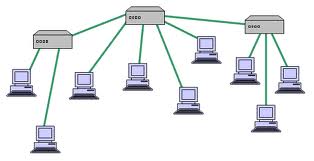

 No, it’s not ET calling home. “Alien Crosstalk” is defined as “unwanted signal coupling from one balanced twisted-pair component, channel, or permanent link to another”.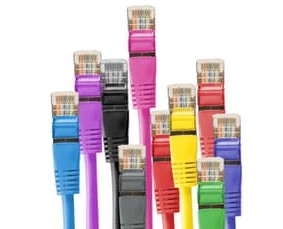


 Always study and document the required