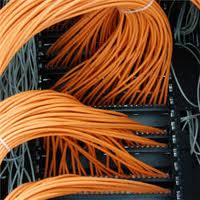
Network Cabling, Data Cabling , cable tray

Uses And Benefits Of Cable Trays

25 Jun 2014

 Network Cabling, Data Cabling, cable traysThe cable tray is meant to prop up insulated cables for communication and power distribution. Cables are mounted on the tray, rather than placed inside a pipe. It can be likened to the structural cog of the building’s electrical layout, as it protects the cables both inside and outside. Wires are organized properly so wire maintenance is easier.


A cable tray facilitates the process of tracking down where wires come from for repairs, and also creates effective fire sealing between wall panels.

Read More

Network Cabling, Data Cabling

Primary Uses Of Cabling Wall Conduit

19 Jun 2014

 Network Cabling, Data Cabling,Wall ConduitThe wire conduit refers to the pipe where cabling passes through. This duct protects insulation and isolates cable wiring. National and local building codes generally require the use of a particular type of conduit for safety and health reasons. The cable conduit is different from the electrical variety. You can install cabling conduits in between walls even if you will not use these pipes immediately; in fact, it is easier and more cost-effective to lay out the conduit during the construction phase.

Read More

cable testing, Network Cabling ,Data Cabling ,cat6-cabling

Benefits of Copper Cabling Solutions

4 May 2014

cable testing, Network Cabling ,Data Cabling ,cat6-cablingThe conventional process of copper cabling has been used for several years and is still preferred by many network cable providers and end-users. Companies like Progressive Office Cabling offer a complete range of cabling solutions in Cat5, Cat5e, Cat6a and Cat6, providing clients with high-quality cable as well as connectivity components. Progressive Office Cabling makes use of highly effective cable management systems and well-trained technicians for installation jobs. It also employs a web-based online project management system to guarantee proper implementation and monitoring of any project.


How Does Copper Cabling Work?


Installation technicians have to follow specific policies and standards, particularly when it comes to building structure concerns. There are several steps to follow with regard to installation. First, the cable should have the appropriate covering or insulation, which is normally made of PVC, Plenum, Ultra-Violet, or mold-resistant varieties. The cable is cut according to the needed length, and outer covers are removed before connectors are attached. Use the appropriate stripping tools for this purpose. Cables should be mounted as orderly as possible.


There are instances when installers have to use ladder trays and J-hooks, which are made for network cabling, or shoot nails into concrete ceilings using a tool that literally propels nails like bullets into the concrete surfaces. Network cables must be installed away from electric power lines, fluorescent lamps and industrial machines; the risk of electrical coupling can increase dependent on proximity and voltage factors.


Different Benefits


Copper cabling has multiple benefits and is the most effective conductor out there. Copper cables are flexible, which is especially advantageous if you are using electrical wires. It is necessary to bend the wire during installation, so you need something durable that will not easily break after a lot of twisting. Copper does not easily melt, so even if a sudden surge of current or overload takes place, there is no risk of burning or melting. At the same time, copper is not difficult to work on. The majority of electricians opt for copper wires because they can be stripped easily or pulled through rigid spots.


With regard to structured copper cabling, there is the Power over Ethernet benefit. This means that it is possible to run power through devices such as Wireless Access Points, surveillance cameras, and power phones. There is an emergency power supply that continues to power mission-critical devices even if electrical power conks out. Copper cabling supports modern technologies and facilitates the convergence of different applications. Hence, it is important that copper cabling is optimized for your requirements. That is why you should make sure to get the services only of experienced and trustworthy providers in the industry. Choose the provider that ensures customer satisfaction and warranty after installation.

Network Cabling, Data Cabling ,Cat5e, Cat6/6a Cabling

Basic Structured Cabling

4 Apr 2013
Cables,Network Cabling, Data Cabling, Cat5e ,Cat6/6a Cabling

"Structured cabling” is a complete system of cabling and associated hardware which creates a telecommunications infrastructure. This infrastructure can serve a range of tasks, such as providing telephone service or data transmission through a computer network.

Every cabling system is unique. Variations in the structure of the facilities housing the installation, the specific cabling and connections needs, use and function, as well as customer needs requires standardization to ensure acceptable system performance from increasingly complex systems. The American National Standards Institute (ANSI) is the responsible organization
Read More
Cat5 Cat6 Network Cabling,Washington DC

The Good, the Bad, and the Ugly: Cabling Lessons Learned

14 Dec 2012

Cat5, Cat6 data cables ,connected to serversA magnetic field when running low voltages. Unfortunately, when this unshielded cabling creates a magnetic field created. Any electrical cabling bear by disrupts communication, slowing transmission or preventing Network cabling is a tricky. Even with a solid background, technicians without adequate knowledge and training can make mistakes that may shut down an entire system. Here are some typical mistakes seen in network cabling.


Plan for the Future.  Cat5 may be the cheaper option, but can cause problems when upgrading is needed. Install Cat5e or Cat6 cables with options for upgrades to save labor costs.


Don’t Mix and Match. Twisted pair cabling was often out of the price range for many companies, so priority was given to data, while voice had with cheaper cabling. Now, VoIP has made voice equal to data in importance and need. Fortunately, a typical VoIP phone has a built-in Ethernet connection or pass-thru that is compatible with almost any data cable, which decreases installation costs.


Don't put Electrical Cables Next to Data Cables. Data cables use twisted pairs of wires inside that help produce transmissions altogether. This generally happens when the cables are running parallel, so if your cable is near a power line, lay them perpendicular to the power line.


 Not Laying New Cable When You Need To. Ethernet switches are convenient, but can be misused. Mini-switches are often added to provide a few extra ports; but this can cause bottlenecks and instability. Add extra cable instead, if more network resources are needed.


Forgetting Cable Management. “Ladder racks” add extra cost to an installation, but they also make the installation look better, run better, and easier to maintain and update. Also, don't forget to color code or label your cables, so technicians can actually find the right cable later.

International Cooperating Ministries – Cabling Project Notes

20 Aug 2012

Project Objectives and Details based on site survey by Richard Elbe


Number of Drops: 110 total cable drops

  • 47 double network drops

  • 1 single network drop

  • 3 network printer drops

  • 3 media box wallplates with (2 HDMI, 2 VGA and 3 RCA Jacks)


Ceiling: Non-plenum, separate ducting allows for Cat6 PVC cable rather than the more expensive plenum cable.

Racks: 6' x 19" Relay Rack

Switches: Five 24,port Netgear Gigabit switches that will leave room for 4 ports per switch for future expansion of the network.
Read More
Cat5e, Cat6/6a Cabling ,Structured Cabling

Do Not Use Basket Tray against a Tight Ceiling

8 Aug 2012

When a new office design is in its initial stages, it is critical to consider proper handling of utilities, power water and cabling inside the walls and ceiling. For cabling, it is necessary to use hooks to hold the cables above the drop ceiling. When the installation of cable involves large numbers of cables traversing lengthy expanses, it is normal to install cable ladder trays up in the ceiling to carry the bulk of the cable along the main corridors of the office. Cable ladders vary in quality and cable handling capabilities. The amount of cable and the budget of the project will determine the type of cable ladder that will be built.


A higher quality cable ladder will, in the long run, save time and money during the installation phase of a cabling project. The alternative to a cable tray is to install cable conduit. Considerations in choosing to use a cable ladder tray system include the following:

Read More

Data Cabling, Cat5e, Cat6/6a Cabling

US Court of Appeals Veterans Affairs – Cabling Project Notes

18 Jun 2012

Project Objectives (Do not call, this project has been COMPLETED)


Number of Drops: 360 (140 duals, and 20 quads)

Ceiling: Non-plenum, separate ducting

Racks: Enclosed, 19”, will already be installed by customer

Switches: Provided by customer, 48 port

Patch cables: None necessary. They will provide patch cables from wall plate to computers and from patch panels to switches.

Labeling and documentation of all cabling is important. How this looks is important to them. Please provide a spreadsheet of all wallplates and rooms.

  • Location is behind elevators.

  • All workstation runs will terminate in wiring closet behind elevators.

  • We will mount patch panels in this closet on the wall. Use 24port, Cat5e, patch panels.

  • They will mount racks for switches.

  • 4 pairs of fiber will run from the closet to the server room on the same floor. We are to provide the cabling plant for the fiber.


Office Cabling Network Cabling

Server Room:


  • 2, 24 port patch panels per rack.

  • Cabling plant for fiber to switch closet.


Existing server room


Click HereThey want cable management hardware to be part of the solution. What you see in this room is what they’re cleaning up and looking to make high end and professional in the new location. Photos here include existing fiber. Note the ceiling cable management rack. In the new location these will be in place in the server room and along the ceiling in the main hallways.


New server space - Roughed in area they’re moving to.


General Floor Space:


  • Quad drops in each office and cube in the technology area

  • Dual drops in all other offices

  • 6 drops for cable t.v.

  • Wall facing outside is already dry walled and insulated


Part of that wall has large window with wall space under it. Customer is unsure if drops will go there or anywhere along that outside wall.

Includes the outside wall. They’re not sure if there will be drops along this wall. If so it’ll be interesting because of the insulation. Also note that they MAY want drops under the windows along this wall.

There are some pictures of the ceiling details. Also note that the client will already have cabling runners ceiling mounted down the middle of the two main hallways to the server room.


Special Fiber Optic Line Item Bid:


US Court of Appeals wants this as a line item so they can choose to add this work or not when they’re doing the budget.

Fiber runs between floors. The floor plan represents the 6th floor. 14 runs broken out as follows. A single 6-strand fiber cable will be run from the 6th to each floor in the table below. Three strands will be connected and three will be left as spares.


# of Runs Floor
3 11th
3 10th
3 9th
3 2nd
2 Mezzanine

12’ ceilings, concrete floors.

Conduit already exists between the floors. We have to repack the conduit we use with fire stop putty to meet fire code. See photos of the “Switch closet” for conduit images.