Network Cabling ,Data Cabling, Cat5e ,Cat6/6a Cabling

Reviewing Tools for Cabling Installation
30 May 2015

 Network Cabling, Data Cabling, Cat5e,Cat6/6a CablingCabling installation requires a lot of expertise. This is important due to the complexity of networks cables for data and communication services.  There are tools installers use to install and test cables. Some of the instruments include carts and caddies.


Basic Implements


Network carts and caddies hold cable spools for easier pulling. Reels can be set up on the wire cart which can hold 500 and 1000 foot reels. Cables are mounted on bars that slip through bored holes on the mounting framework. The cart contains a large, wide base that prevents tipping when you pull the cable.  Wire caddies secure smaller cable spools which come in lengths of 500 feet or less. And it has dividers that prevent the wires from becoming crisscrossed and twisteded.


Termination Tools


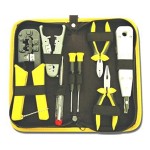
The appropriate termination tool increases productivity. It allows installation and termination of Cat5e and Cat6 jacks onto the connectors on a patch panel.


This "punch down tool" ensures accuracy and consistency. There are three categories: manual, impact and multi-wire. Cable installers can opt for a manual but most consider the impact tool to be the best option.


The fundamental impact instrument is fitted with a spring-loaded head which can be triggered by the installer. Not much force is needed. The spring is released automatically after being compressed. Modern multi-wire tools like the Jack Rapid punch down tool can terminate jacks eight times faster.


You can use several interchangeable blades for various impact tools. However, this depends on your cabling system. The advantages of this tool are its speed, user-friendliness and uniformity of termination. Sophisticated models consist of fixed blades that cut off leftover wire instantly instead of having to use wire cutters. These new products include a handle that is easy to hold, a disposable blade head and fixed band that holds the jack in place.


Other Useful Tools


You might need professional shears to ensure a quick, clean, and accurate cut.  Each job requires cutting of cables and trimming of excess wires.  A premium cable stripper guarantees immediate and hassle-free elimination of exterior insulation from multi-core cables, unshielded twisted as well as shielded twisted pairs. The flexible depth gauge will give better results.  Refrain from using pocket knives or ordinary scissors because you will probably end up damaging the cable. Other functional tools for cable installation are can wrenches for demarcation point boxes; crimping pliers; knives for splicing cables; voltage detectors; modular plug crimpers for telephones; and, probe picks to detect loose or broken connections.


But if you prefer to have a profession all do it all for you, contact us!
structured cabling, Data Cabling ,Cat5e, Cat6/6a Cabling

Powerful Networks in Structured Cabling

16 May 2015

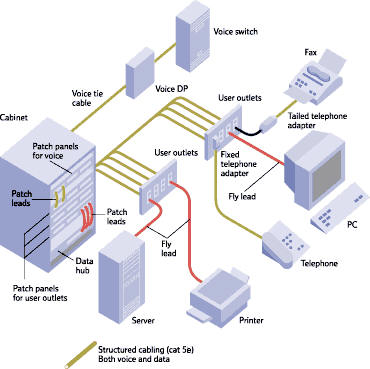
structured cabling, Data Cabling ,Cat5e, Cat6/6a CablingIt is known that structured cabling systems are fabricated to guarantee that information flows efficiently through the network. Such system are made up of transmission products installed based on appropriate guidelines in engineering design. These enable users to put into operation voice and data systems that capitalizes on speed.


This particular configuration has emerged as shared platform for multiple information technology applications. These include voice and data, building automation, security mechanisms, telecommunications conferencing, and fire alarms. This union transformed the structured cabling platform into the most essential network element. Therefore, it calls for a crucial investment in a very reliable, adaptable and scalable cabling structure.


High-performance Networks


This efficient and complex cabling scheme segregates the whole infrastructure into controllable blocks. After that, it puts them together to come up with a high-performance network. This end product is the vital link for many enterprises and all data hubs. Such a system facilitates consistency across the network particularly for commercial building structures. Consistency generates cost-effectiveness by standardizing maintenance processes, cutting down on manpower requirements, and improving reliability.


The “structured” design makes possible easy management by identifying specific distribution points, regular labeling and color codes, cabling management, and distribution techniques. As a rule, data facility managers use dynamic methodologies to fill the center with information technology equipment. This accommodates the evolving needs of business operations which frequently compel the need for the most modern IT equipment. Since companies rely on equipment as well as infrastructure, management believes requirements for additional IT capability should be made promptly. If the infrastructure is below par, upgrades will be much more difficult.


Crucial Concerns


The best IT specialists see to it that problems in structured cabling systems are dealt with immediately. One of the primary concerns is to employ highly competent service providers and coordinate entry points/space for each provider. This procedure enhances flaw tolerance of the overall system design. The high-performance model supports aggregate telecommunications requirements and thereby leads to a maximum returns on investments.


Centralized Intermediate Distribution Frames (IDFs) should be in centralized locations in the office facility. This will produce efficient cable management and will ease the addition of new equipment. This design technique has been adopted to avoid any disruption of the data unit or minimized once changes or upgrades are implemented. Telecommunications rooms contain the IDFs, main distribution frames and entrance facilities. Switches are installed in the middle of server rows for economical management.


Please contact us if you have any questions or concerns about your office network cabling.

Directions in Telecommunications and Cabling

3 Apr 2015

 Data Cabling ,Network cabling, DCThe telecommunications industry continues to advance. And bandwidth demands will continue to increase. Meanwhile, conditions to convey considerable amounts of information quickly are changing. Applications including graphic information, technical modeling, video conferencing, and multi-level online databases will certainly increase bandwidth requisites. The bottom line is demand for higher transfer speed for information is expected to rise.


Properties for Cabling Systems


Two principal properties needed for cabling systems are performance and easy installation. Fiber and shielded twisted-pair provide stronger signals compared to Unshielded Twisted Pair (UTP) although these two lagging in client acceptance. The question is will UTP provide the appropriate bandwidth for modern applications?


Unshielded Twisted Pair


UTP is considered the most prevalent cable worldwide for telecommunications and networking. Cat 5e is the most popular and it long ago replaced coaxial cable which failed to keep up with more dependable and faster networks. UTP is also easy to install, develop and troubleshoot. Unshielded Twisted Pair cabling does not have any foil covering. It depends on twisted pairs inside the cable to prevent electromagnetic interference. UTP is used extensively for local area networking and comparable cabling configurations. Hence, installation is easier and less expensive.


Shielded Twisted Pair


Shielded twisted Pair (STP) features a metallic foil enclosing twisted wire pairs inside the cable. This is the safeguard against electromagnetic intervention which facilitates rapid data transmission. STP functions by drawing electromagnetic interference and counterbalancing this with grounded cabling. The drawback is that if the cable is not grounded correctly it loses the capacity to prevent unnecessary noise. STP is also larger and more sensitive compared to UTP cables. Expert cable installers use this cabling for industrial environments where adjacent equipment emit significant amounts of elctron-magnetic interference (EMI). Actually, UTP and STP can perform well if installed and maintained by efficient cabling providers.


Transmission is Essential


Transmission should be balanced. This is the standard for conduction of data using twisted cabling pairs. Separate protection for balanced twisted pairs is designed to enhance resistance and emission of the communication lines. The shielding method produces a conductive barrier that lessens these electromagnetic waves. It also creates a conduit for conduction so that currents and can pass data through without any obstruction. Shielding can be performed on individual pairs or as one set of pairs.


Please contact us if you have any questions or concerns or if you need a free quote on your cabling project.


networ cabling,cable management

Things to Avoid in Running Network Cabling

28 Mar 2015

Date cabling,cable managementWhat can cabling that has not been installed properly do?


It can lead to a lot of negative outcomes such as paralyzed network performance, maintenance troubles and hidden costs. Network cabling can be  especially troublesome if it is installed by individuals without the proper knowledge and tools. When it comes to twisted pair cabling, there are many factors that you need to consider.


In the past, many companies installed different cable systems since twisted pair cabling was expensive. At present, full installation is still costly although a greater part of the expense is labor since raw cables is not pricey. Cable management is another concern. Use of ladder racks means additional cost but it reduces upkeep. Also be sure you label cables and to make use of color codes.


Unshielded twisted pairs are more practical in terms of usage. Magnetic fields are produced by low voltages that pass through your cables. This is a vital property of the communications cycle. And if you run unshielded cables along with electrical wires, the magnetic field can be interrupted. The communications becomes corrupted or noisy. You can expect that transmissions will not make it from one point to the other. Another possibility is that transmission rates will become slower. The cables should be perpendicular with electrical lines instead with the electric wires inside of shielded tubes at cross points.


Do not attempt to run cable alongside fixtures that create “noise”. Fluorescent lamps, motors and devices that generate electrical or magnetic interference will distort your cabling infrastructure. Install a data cable conduit that will create a buffer from these hazards. Also figure out the total distance of each cable. This is usually up to 100 meters. However, if cabling data rates reaches 10 to 40 GBPs, be attentive about distance restrictions related to the kind of cabling you plan to use. If you will run 10 GBPs for a maximum of 100 meters over twisted pair cabling, it is best to use Category 6 cabling.


Be aware of local codes.


This is important for safety concerns. In many areas, using PVC-covered cables is not allowed in air-handling spaces. When PVC burns, there is toxic emission that may prove dangerous to firefighters and other safety personnel who will try to navigate the location during emergencies. Failure to follow rules can lead to fines and forced replacement of cabling infrastructure. Contractors must be mindful of these regulatory standards.

Cat5e ,Cat6/6a Cabling,patch cables

Patch Cables and Twisted Pair Cabling

21 Mar 2015

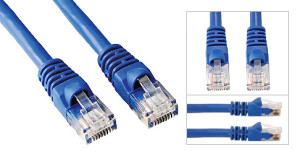
The patch cable is used to link up two network devices. This type of cabling is usually a Cat6 or a Cat5e cable thaCat5e ,Cat6/6a Cabling,patch cablest connects personal computers to the wall plate or provides the short interconnects among the switches, routers and the patch panels in the wall closet or Server Room. These make use of stranded wires instead of solid to increase flexibility. It also lessens the risk of cracking when you unplug the cable. There is also a variety of Ethernet patch called the crossover cable. It is used to hook up two PCs together and sometimes to interconnect switches.


Ethernet Systems


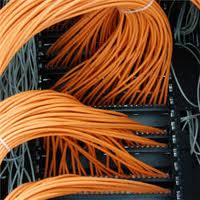
Ethernet systems ensure adaptable and economical methods of conveying voice, data, and multimedia over integrated networks. In fact, Ethernet patch cords have become very common. These wall to wall cables gave rise to the growth of generic and structured cabling systems. Today, these are used practically for all networking components regardless of industry or application. However, there are concerns that you need to consider. Whereas modular attributes and profusion of patch cables denote absolute universal use, there are differences that can reduce interchangeability. Some of the disparities originate from various wiring configurations of cable conductors and connector pins.


Twister Pair Cables


For this type of cabling, two conductors are coiled to prevent electromagnetic interference (commonly known as EMI) that comes from external (usually electrical) sources. One example is the electromagnetic radiation caused by uncovered twisted pair cables or UTP as well as cross talk produced by adjacent electrical wires. The process of shielding generates a conductive barrier to lessen these electromagnetic waves. It also creates a conduit for conduction so that  currents and data can traverse freely. Shielding can be applied on individual pairs or as a group of pairs.


Twisted conductor pairs form a secure circuit. The voltages carry the same magnitude or amplitude. However, one is positive while the other is negative. Incidentally, crosstalk takes place if the electromagnetic field turns out a signal that is too big or strong and intereferes with a nearby pair. The sound is like a fusion of the two fields by means of a swap of the energy between them. Certain components of these signals are passed on to each other during this exchange of energy.


As a result, here is an ensuing increase in the level of “noise”. External sources of EMI and RFI create signal interference in a similar manner. These cause distortion of the signals that go to your office and communications equipment.


Overall, these are the things that you should take into account with regards to twisted and patch cabling.


Please feel free to contact us if you need help with your office cabling project!

network cabling, data cabling

Perfect Patch Panel Installation

4 Jun 2013
This project involved installation of 28 double drops into two 48-port patch panels. Each wall plate has two connections with one dedicated to data and the other dedicated to voice. Price Benowitz has a lovely office at 409 7th Street, NW. The building is historic but renovated into a modern office. So, the drop ceilings and hollow walls facilitated a straight-forward installation of the Cat5e network cabling system.
Read More
Network Cabling, Data Cabling ,Cat5e, Cat6/6a Cabling

Basic Structured Cabling

4 Apr 2013
Cables,Network Cabling, Data Cabling, Cat5e ,Cat6/6a Cabling

"Structured cabling” is a complete system of cabling and associated hardware which creates a telecommunications infrastructure. This infrastructure can serve a range of tasks, such as providing telephone service or data transmission through a computer network.

Every cabling system is unique. Variations in the structure of the facilities housing the installation, the specific cabling and connections needs, use and function, as well as customer needs requires standardization to ensure acceptable system performance from increasingly complex systems. The American National Standards Institute (ANSI) is the responsible organization
Read More
Office Cabling, Network Cabling

Reduced Costs Through Network Cabling

19 Jan 2011

 Office Cabling ,Network CablingUpgrading to a system that allows for more users and has a higher level of performance is often viewed as something that will ultimately cost a business money.  In all reality though, beyond the initial cost of materials and installation, implementing a network cabling system that connects all of the equipment in your office can actually work to save you money.


Installing network cabling into your business environment will allow all employees to share access to a single piece of equipment as opposed to buying a separate piece of equipment for each user.  If your business requires

Read More

Network cabling,Office Cabling in DC

Upgrading or Adding to Your Network – Progressive Office can Help

12 Jan 2011

Office Cabling in DCThere could be any number of reasons that your voice and data system may be changing.  You might be adding more PCs or phone lines; adding a dedicated server to store critical data or adding scanners or printers to more adequately serve customer needs.


In order to ensure a seamless transition into your larger, upgraded network there’s a very good chance that you’ll need upgrades or

Read More