white security camera on post

Why PoE Security Camera Cabling Is the Future of Commercial Surveillance

27 Jan 2026

Modern businesses require surveillance systems that are reliable, scalable, and easy to manage. As companies in Atlanta, GA and Pittsburgh, PA continue to upgrade their security infrastructure, PoE (Power-over-Ethernet) security camera systems have become the preferred solution. At Progressive Office Cabling, we provide expert CCTV cabling system consulting and installation, helping organizations build smarter, more efficient surveillance networks.

Read More

Fiber Optic Cabling, Progressive Office Cabling

Cat6 Security Camera Installations for High-Performance Business Networks

23 Jan 2026

Modern business security depends on more than just cameras—it depends on the network infrastructure behind them. As organizations continue to adopt IP-based security cameras, Cat6 cabling has become the gold standard for reliable, high-performance installations. At Progressive Office Cabling, we specialize in Cat6 security camera installs for businesses in Atlanta, GA and Pittsburgh, PA, delivering clean, scalable, and future-ready network solutions.

Read More

a camera on a wall

Proactive Video Surveillance Planning: How to Design Camera Systems That Actually Protect Your Business

26 Dec 2025

Installing security cameras is one of the most common steps businesses take to protect their property. But too often, camera systems are installed reactively—after a break-in, incident, or insurance requirement—without proper planning. The result is poor coverage, blind spots, unreliable footage, and systems that don’t deliver when they’re needed most.

Read More

Network Redundancy & Disaster Recovery Cabling: Keeping Georgia Businesses Online When It Matters Most

19 Dec 2025

No business plans for downtime — but every business should be prepared for it. Power outages, equipment failures, construction damage, and severe weather can disrupt operations in seconds. For companies across Georgia, from Atlanta to Cobb County and Rome, having a reliable network redundancy and disaster recovery cabling strategy is no longer optional — it’s essential.

Read More

Network Cabling Upgrades for 2025 in Georgia

21 Nov 2025

As businesses across Georgia continue to evolve, the demands on their data networks are growing rapidly. More devices, more data, more cloud-applications, and new technologies like IoT and 5G are changing the way companies connect. A reliable network starts with the physical layer: the cabling. For businesses in Atlanta, Cobb County, Floyd County, and beyond, upgrading your network cabling now sets the foundation for future growth.


Why an Upgrade Is Critical in 2025


Modern workplace trends are pushing infrastructure harder than ever. With hybrid work, video-based collaboration, wireless access points, sensors, and more, businesses can no longer rely on legacy wiring. Structured cabling — properly planned and installed — remains essential to support these needs. 
Key drivers for upgrades include:


  • Higher bandwidth requirements for cloud computing and large-data workflows.


  • Greater reliance on wireless access, which still depends on wired backbones.


  • Growing use of IoT devices and Power over Ethernet (PoE) systems that demand stronger infrastructure.


  • The need for reliability and scalability — new wiring means fewer disruptions and simpler growth.


What Upgrades Should Georgia Businesses Consider


Here are focal areas for network cabling upgrades in 2025:


1. Move to Higher Performance Cabling


Replacing older Cat5e wiring with Cat6, Cat6a, or fiber optic cabling is increasingly common. These cables provide higher speeds, better signal quality, and longer useful life.
Fiber optics in particular are becoming mainstream for backbones and high-density applications.


2. Ensure Structured Cabling Design


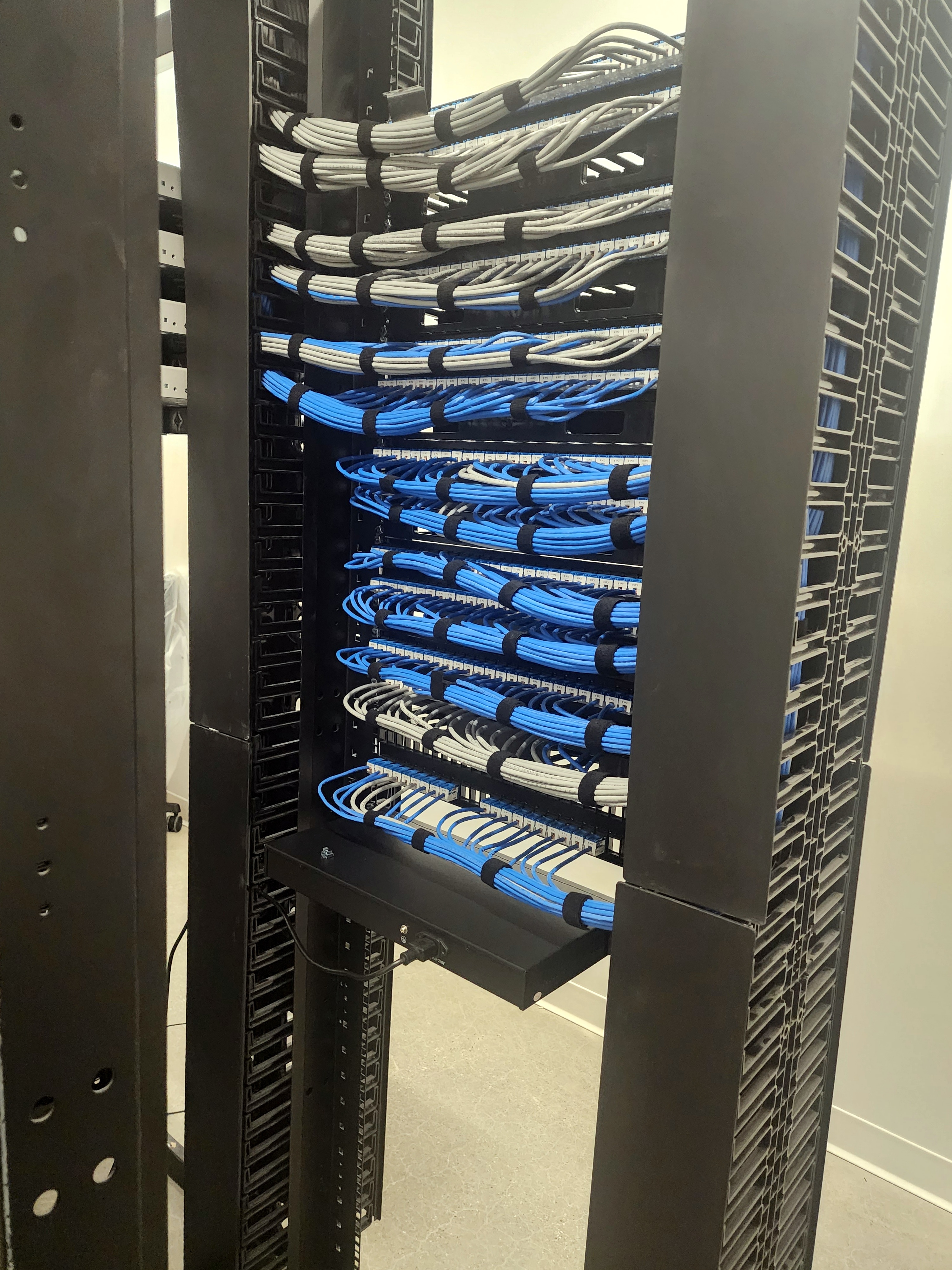
Upgrading isn’t just about the cable type — it’s about having a structured, organized system that includes labeled, documented runs, patch panels, conduits, and clear paths. Structured cabling reduces maintenance headaches, simplifies troubleshooting, and supports more devices.


3. Prepare for Wireless & IoT Expansion


Even though Wi-Fi and wireless devices seem “wireless,” they rely on robust wired connections. Access points, sensors, cameras, and other devices require reliable data backhaul. Good cabling supports this growth and prepares you for technologies like Wi-Fi 6/6E or Wi-Fi 7.


4. Choose Scalable and Flexible Infrastructure


Your cabling should be built with future expansion in mind — more users, more devices, more data. Upgrading now means you won’t be “catching up” later. It’s about long-term planning and avoiding repeat overhauls.


Benefits of Upgrading Now


When you invest in cabling upgrades, your organization sees tangible advantages:


  • Improved performance and lower latency for applications, meetings, data transfers.


  • Fewer outages and less downtime, increasing productivity.


  • Simplified maintenance: fewer legacy cables to untangle, clearer system architecture.


  • Future-proofing your building or facility, making it ready for whatever comes next (new devices, new users, new services).


  • Better ROI over time — while upfront costs may seem higher, the long term savings from fewer upgrades, fewer issues, and better performance add up.


What This Means for Georgia Businesses


Whether you operate in Atlanta’s high-rise offices, a warehouse in Cobb County, or a campus in Floyd County, Georgia’s businesses share similar infrastructure challenges. Many buildings still have older wiring, mixed cabling standards, or wiring that wasn’t designed for today’s technology requirements. Upgrading makes sense now.
For example:


  • Companies moving into multi-tenant buildings need flexible data drops and cabling that can handle multiple tenants’ demands.


  • Warehouses using automated systems or IoT sensors need strong backbones and reliable drops.


  • Offices adopting hybrid work and high-density wireless need cabling that supports a large volume of devices.


How to Get Started


If you’re considering an upgrade, here’s how to approach it:


  1. Assessment – Have a professional evaluate your current cabling infrastructure, identify weak areas, and map out your technology roadmap.


  2. Design – Create a structured cabling plan including backbone, horizontal runs, data drops, and future needs.


  3. Choose Cable Types – Decide where fiber makes sense, where high-grade copper (Cat6a) is efficient, and plan for PoE and IoT.


  4. Implementation – Schedule installation methodically to minimize disruption. Ensure proper labeling, documentation, and testing.


  5. Maintain & Expand – After installation, keep documentation updated, perform routine testing, and plan for expansions.


Why Choose Progressive Cabling


As a local provider serving Georgia, including Atlanta, Cobb County, Floyd County, and surrounding areas, Progressive Cabling offers:


  • Certified expertise in structured cabling, fiber optics, data drops, wireless support.


  • Installation quality that meets current standards and anticipates future needs.


  • Solutions built to scale, align with your growth, and reduce future disruptions.


  • A partner approach — helping you not only build the infrastructure but maintain and expand it as your business evolves.


Ready for 2025 and Beyond


The world of business connectivity is changing fast. The infrastructure you install today has to support the technology of tomorrow. By investing in network cabling upgrades now, your company in Georgia can stay competitive, efficient, and ready for growth.
Don’t let outdated wiring hold you back — take the first step toward a future-ready network infrastructure.


Contact Progressive Cabling today to schedule a consultation for your network cabling upgrade in Georgia and prepare your business for 2025 and beyond.

Fiber vs. Copper Cabling: Which Is Right for Your Business?

7 Nov 2025

This one is written to engage both small business owners and facility managers in Georgia who are evaluating upgrade options — and it naturally promotes Progressive Cabling’s expertise in both copper and fiber installations.


Fiber vs. Copper Cabling: Which Is Right for Your Business?


When it comes to building or upgrading your company’s network, one of the most common questions is: Should we use fiber optic cabling or copper cabling?


Both types of cabling have their place in modern infrastructure, but the best choice depends on your specific business needs, facility size, and performance goals.


At Progressive Cabling, we install both fiber optic and copper (Cat6/Cat6a) cabling across Atlanta, Cobb County, Rome, and surrounding areas, helping businesses of all sizes design efficient, scalable, and future-ready networks.


If you’re wondering which is right for your organization, let’s break down the key differences, advantages, and ideal use cases for each.


Understanding the Basics


Copper Cabling


Copper cabling — including Cat5e, Cat6, and Cat6a — uses electrical signals to transmit data between devices. It’s been the standard in commercial networking for decades and remains widely used for local area networks (LANs), office connections, and access point installations.


Fiber Optic Cabling


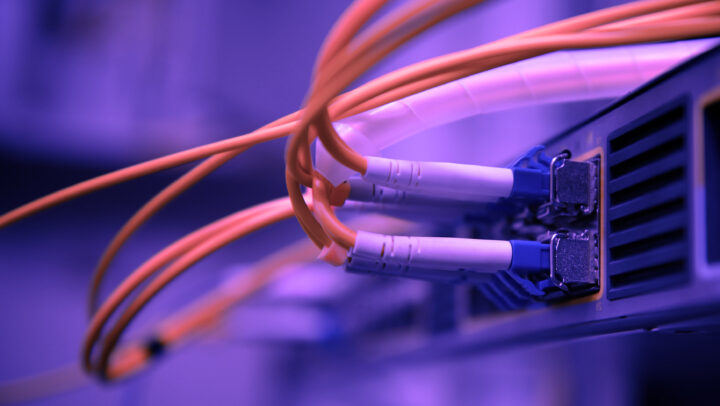
Fiber optic cabling uses light instead of electricity to transmit data through strands of glass or plastic. This allows information to travel at significantly higher speeds and over longer distances without signal loss or interference.


Both technologies are reliable, but their differences can make one a better fit than the other depending on your environment and connectivity goals.


Speed and Bandwidth


Fiber optic cabling offers unmatched speed and bandwidth capacity. It can handle massive data loads and transfer information at nearly the speed of light.


In contrast, copper cabling (like Cat6 or Cat6a) is still fast and perfectly adequate for most small to mid-sized businesses but has limitations in bandwidth over longer distances.


Winner: Fiber – ideal for high-demand environments such as large offices, data centers, or warehouses with multiple devices streaming, uploading, and transferring data simultaneously.


Distance and Signal Integrity


Fiber optic cables maintain signal strength over miles, while copper cabling typically maxes out around 300 feet before performance drops.


For businesses that need connectivity between multiple buildings or across large facilities, fiber is the superior choice. However, for shorter runs inside offices or retail spaces, copper cabling remains cost-effective and practical.


Winner: Fiber for long-distance; Copper for local connections.


Reliability and Interference


Copper cabling is more susceptible to electromagnetic interference (EMI) and environmental factors such as temperature changes, humidity, or nearby electrical wiring.


Fiber optic cabling, on the other hand, is immune to EMI and provides consistent, stable performance — even in industrial environments or high-density data applications.


Winner: Fiber – especially in warehouses, healthcare facilities, and manufacturing plants.


Installation and Cost


Copper cabling is typically less expensive to install and easier to maintain, making it ideal for smaller networks or budget-conscious projects.


Fiber optic cabling requires specialized tools and technicians, which can increase upfront installation costs — but it delivers long-term savings through better reliability, lower maintenance, and longer lifespan.


Winner: Copper for short-term affordability; Fiber for long-term value.


Security


In an age where cybersecurity is more critical than ever, fiber has a clear advantage. Because it transmits data through light instead of electrical signals, it’s nearly impossible to tap without physically damaging the line — making it a much more secure medium for sensitive information.


Winner: Fiber – especially for financial, legal, or healthcare organizations handling confidential data.


Flexibility and Scalability


If your business is growing fast or upgrading to cloud-based systems, fiber optic cabling provides the scalability you’ll need. It can easily handle future increases in bandwidth demands, whereas copper may eventually require replacement or supplementation.


That said, a hybrid approach — using fiber as the backbone and copper for local connections — often delivers the best of both worlds.


Winner: Both – depending on your layout and growth plans.


The Hybrid Solution: Fiber Backbone + Copper Network


For many Georgia businesses, the most effective and cost-efficient option is a hybrid network.


  • Fiber serves as the backbone, connecting server rooms, data centers, and key network hubs across long distances.


  • Copper cabling connects local workstations, access points, and devices within each office or floor.


This combination delivers high-speed performance while keeping installation costs reasonable — and Progressive Cabling specializes in designing these integrated systems.


Why Georgia Businesses Trust Progressive Cabling


From Atlanta offices to Rome warehouses and Cobb County schools, Progressive Cabling delivers:


  • Expert installation of fiber, Cat6, and Cat6a cabling systems


  • Organized, code-compliant, and future-ready networks


  • Hybrid system design for optimal cost and performance


  • Certified technicians for both copper and fiber installations


  • Ongoing maintenance, testing, and troubleshooting services


Our goal is to provide you with a network that meets today’s demands and tomorrow’s possibilities — without unnecessary complexity or downtime.


Upgrade Your Network with the Right Cabling Solution


Whether your business needs fiber optic speed, copper cabling efficiency, or a hybrid design, Progressive Cabling has the expertise to plan, install, and maintain the right system for you.


We proudly serve businesses across Atlanta, Cobb County, Floyd County, and all of Northwest Georgia, delivering reliable, high-performance cabling infrastructure.


Contact Progressive Cabling today to schedule a consultation and find out which cabling solution is best for your business.