

Benefits of Copper Cabling Solutions
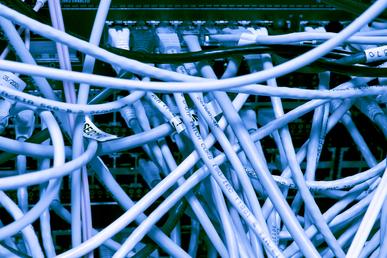
 The conventional process of copper cabling has been used for several years and is still preferred by many network cable providers and end-users. Companies like Progressive Office Cabling offer a complete range of cabling solutions in Cat5, Cat5e, Cat6a and Cat6, providing clients with high-quality cable as well as connectivity components. Progressive Office Cabling makes use of highly effective cable management systems and well-trained technicians for installation jobs. It also employs a web-based online project management system to guarantee proper implementation and monitoring of any project.
How Does Copper Cabling Work?
Installation technicians have to follow specific policies and standards, particularly when it comes to building structure concerns. There are several steps to follow with regard to installation. First, the cable should have the appropriate covering or insulation, which is normally made of PVC, Plenum, Ultra-Violet, or mold-resistant varieties. The cable is cut according to the needed length, and outer covers are removed before connectors are attached. Use the appropriate stripping tools for this purpose. Cables should be mounted as orderly as possible.
There are instances when installers have to use ladder trays and J-hooks, which are made for network cabling, or shoot nails into concrete ceilings using a tool that literally propels nails like bullets into the concrete surfaces. Network cables must be installed away from electric power lines, fluorescent lamps and industrial machines; the risk of electrical coupling can increase dependent on proximity and voltage factors.
Different Benefits
Copper cabling has multiple benefits and is the most effective conductor out there. Copper cables are flexible, which is especially advantageous if you are using electrical wires. It is necessary to bend the wire during installation, so you need something durable that will not easily break after a lot of twisting. Copper does not easily melt, so even if a sudden surge of current or overload takes place, there is no risk of burning or melting. At the same time, copper is not difficult to work on. The majority of electricians opt for copper wires because they can be stripped easily or pulled through rigid spots.
With regard to structured copper cabling, there is the Power over Ethernet benefit. This means that it is possible to run power through devices such as Wireless Access Points, surveillance cameras, and power phones. There is an emergency power supply that continues to power mission-critical devices even if electrical power conks out. Copper cabling supports modern technologies and facilitates the convergence of different applications. Hence, it is important that copper cabling is optimized for your requirements. That is why you should make sure to get the services only of experienced and trustworthy providers in the industry. Choose the provider that ensures customer satisfaction and warranty after installation.

 A magnetic field when running low voltages. Unfortunately, when this unshielded

 communications, because light propagates through the fiber with little attenuation compared to electrical cables. This allows long distances to be spanned with few or no repeaters. Additionally, the per-channel light signals propagating in the fiber can be easily modulated at 1 Gb/s.
 rt distances, up to 550 m (600 yards), and single-mode fiber used for longer distance links. Because of the tighter tolerances required to couple light into and between single-mode fibers (core diameter about 10 micrometers), single-mode transmitters, receivers, amplifiers and other components are generally more expensive than multi-mode components.
 Click here to go to a page that will put you in touch with us. Answer all of the questions that you can and we will get back to you with a quote.