Data Cabling,Structured Cabling, Cabling Design-Washington DC

Structured Cabling Benefits for Your Business
28 Apr 2017

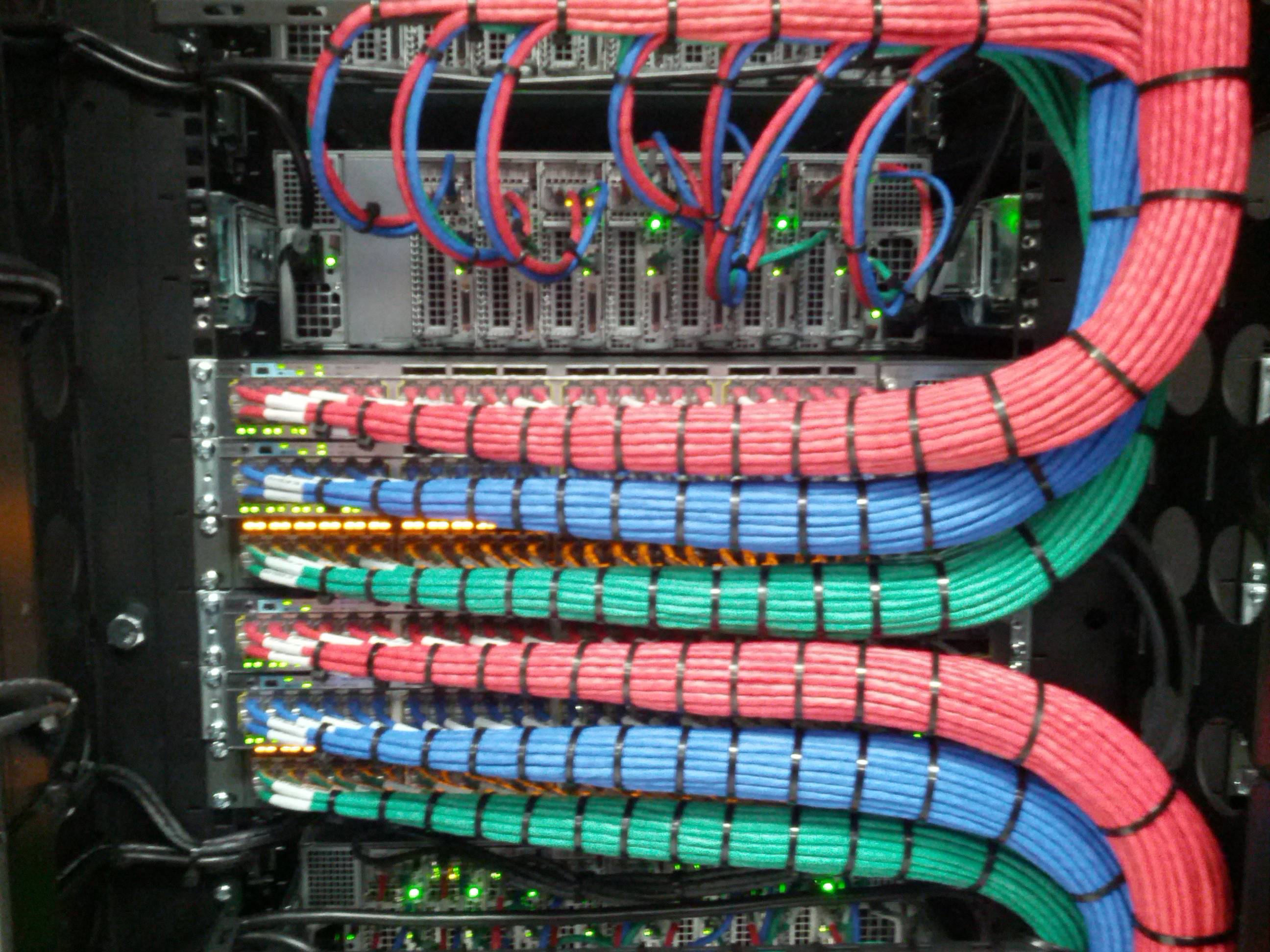
 Structured cabling, cable, Washington DCThe structuring of cabling will result in better organization and easier management of the cables. If you are a building manager or business owner, you may already know a bit about structured cabling. You may be currently thinking about its installation in your premises. In the most basic terms, structured cabling allows for several devices like computers and telephones to be connected via a cabling system infrastructure. The following discusses several benefits of structured cabling for a facility or office. Consult with experienced structured cabling professionals to get the best results.


Adaptability


Structured cabling is technology that allows business managers to plan and prepare for the future, making its implementation a valuable investment. Structured cabling that installs a newer cable such as Cat 6 will provide adequate bandwidth, making it viable for an extended period as a business’ IT needs gradually expand. The high bandwidth of a structured cabling system will also give a business the increased ability to adapt newer applications, devices, and technologies.


Diagnosis and Repairs Made Easier


Whenever issues occur on multiple, disorganized cabling systems, determining the source of the problems will be difficult. Although structured cabling is a unified system, it is organized in segments, making it much easier for technicians to locate malfunctions and repair them.


Flexibility at Lower Costs


The people, equipment, and offices of an organization are not static. Businesses evolve and restructure as time passes. Employees of a department may have to move to another area. The entire area of an office may also need renovation. Typically, changes like these grind business to a halt, hurting the bottom line. However, a structured cabling system allows a company’s staff to move to another part of an office, connect, resume working, and remain productive without missing a beat.


Networking


Employees will also be able to connect their devices into any outlet of a structured cabling system as opposed to a particular wire, promoting flexibility and productivity. In addition, a structured cable system will be able to convey data in multiple forms, allowing staff on a network to connect with other computers, servers, printers, and telephones.


Simplified Management


One of the greatest advantages of a structured cabling system is the elimination of disorganized and unsightly wires. The replacement of a configuration using multiple cabling with a structured cabling system will result in easier and less costly management by technicians as they will save time on repairs and restructurings.


Union Network Cabling


When union work requires a unionized cabling group, call on Union Network Cabling for your commercial Cat5e/6/6a and fiber cabling projects. Specializing in cabling for data, voice, security and even the latest WiFi and LiFi solutions. Phone: (202) 462-4290

Network Cabling, Network , Structured cabling, cable, Washington DC

Network Upgrade Planning for Companies – Part 2

24 Apr 2017

 Network , Structured cabling, cable, Washington DCAs mentioned in Part 1, a good network upgrade plan will make an analysis determining each aspect of SWOT: Strengths, Weaknesses, Opportunities, and Threats, helping project managers create a clear plan consisting of five phases. Part 1 discussed the first two, Gathering of Requirements and Selection & Design. Part 2 will cover the last three, Implementation, Operation, and Review & Evaluation.


3) Implementation


Proper execution of the first two phases, will allow Implementation to be performed without major issues. However, every neglected task in the first two phases will certainly have to be addressed during Implementation. A sound schedule will provide time for unanticipated problems which will minimize disruptions of the customer’s business. Maintaining communication between project designers and the client throughout installation is crucial for making a project successful.


4) Operation


After the completion of the network implementation phase, the network transitions into a production environment. The network is live and executes the tasks it’s been programmed to perform. The proper completion of all tasks before this phase will minimize unexpected incidents during the network’s operation phase.


5) Review & Evaluation


Once operational, the network’s design and implementation must be studied and assessed in terms of the design’s objectives. Typically, these tasks are performed by design team staff with the help of network members. There will be an evaluation of costs, performance, and environmental fit.


The items below are recommended for this process:


  • Make a comparison between user experience and the documented goals, then make an assessment of the design’s performance.

  • Make a comparison between planned designs and costs and actual results of deployment, ensuring future projects will learn from these lessons.

  • Observe the operation and document all revisions, making sure the system is accountable.


Each phase should practice sound planning and conduct reviews for optimal functioning and successful installation. For ideal results, on-site technicians should participate in all phases of a network upgrade. They will have a better grasp of the project’s goals, and they will able to provide users better service.

Union Network Cabling


When union work requires a unionized cabling group, call on Union Network Cabling for your commercial Cat5e/6/6a and fiber cabling projects. Specializing in cabling for data, voice, security and even the latest WiFi and LiFi solutions. Phone: (202) 462-4290

Network, Data cabling, IT Support

Network Upgrade Planning for Companies – Part 1

12 Apr 2017

Network, Data cabling, IT SupportPlanning the network upgrade for a company requires careful consideration. Similar to other projects, a need is determined, and then the upgrade process is planned from its start to conclusion. Every sound network upgrade plan will make an analysis determining each aspect of SWOT: Strengths, Weaknesses, Opportunities, and Threats. This SWOT analysis will help project managers create a clear plan that defines the tasks required and the order of the workflow.


Overview


A network constructed as a hodgepodge of devices attached using a combination of protocols and technologies is a sign of substandard initial planning. This lack of forethought results in networks that are prone to downtime, challenging maintenance, and difficult troubleshooting. This poor kind of network is commonly found at small businesses that undergo rapid and unanticipated growth. Big companies also experience this when their networks suddenly expand after a merger with or acquisition of another company. In cases where growth is expected, a company will have a better opportunity to properly plan a network upgrade that is less problematic and provide users adequate service.


Five Phases


Network upgrade planning starts after completion of the initial site survey and report. The plan will be typically divided into five phases as listed below, and each will be then discussed individually.


  • Gathering of Requirements

  • Selection & Design

  • Implementation

  • Operation

  • Review & Evaluation


1) Gathering of Requirements


Once adequate data has been gathered from visits to the customer and site, the ISP design team will make an evaluation that will determine network requirements and write an analysis report.


2) Selection & Design


After the completion of the analysis report, equipment consisting of devices and cabling will be selected. Several designs will be drafted by the design team, and these will be submitted to other project members for feedback.


This process with allow participants to consider the LAN from a point of view of documentation and assess trade-offs in terms of cost and performance. In addition, design weaknesses will be discovered and solutions will be considered. Moreover, this phase will allow prototyping to determine optimum methodology. Prototypes let designers see how the network will operate before final implementation.


Part 2 will cover the next three phases, Implementation, Operation, and Review & Evaluation.


Union Network Cabling


When union work requires a unionized cabling group, call on Progressive Office Cabling for your commercial Cat5e/6/6a and fiber cabling projects. Specializing in cabling for data, voice, security and even the latest WiFi and LiFi solutions. Phone: (202) 462-4290

cable,Data Cabling ,Cat5e, Cat6/6a Cabling

Category 5e Cabling Becoming Obsolete

4 Apr 2017

cable,Data Cabling ,Cat5e, Cat6/6a CablingIt is inevitable that applications requiring speeds greater than 100 Mbps and 1000 Mbps will increase. The growing use of wireless devices, high resolution images, HD video streaming, surveillance, and multimedia are straining the capacity of Category 5e infrastructure, and there will come a point when it will be unable to cope.


Although it is capable of handling 1000 Mbps speeds at 100 MHz, the upgrading of Category 5e cabling will be necessary in the near future in order to support new applications and emerging technologies that will be deployed by businesses that are bandwidth intensive.


Category 5e Inadequate in Near Future


Cabling will be migrating from being behind walls to above ceilings, where it can end at a wireless access point (WAP). Much more cabling will be needed to serve an increasing utilization of WAPs for numerous users.


The advent and growth of new Wave 2 WiFi devices, which transmit at data at ranges of 1 Gbps up to perhaps 7 Gbps, will require faster Ethernet links for the connection of these WAPs. Installing Category 6A cabling may be the only effective solution for companies. The need for average speeds greater than 1G is increasing, perhaps to 10G. Category 5e is incapable of carrying speeds of 10 Gbps speeds over a required distance of 100 meters.


An emerging technology using balanced twisted-pair cabling, HDBaseT is used to transmit uncompressed HD video, audio, Ethernet, control, and power over 100 meters. Category 5e will be unable to support it, while Category 6A cabling is capable.


4-cable pair PoE, the next power over Ethernet standard, provides power more efficiently. However, the gauge of cable must grow in order for the reduction of resistance and permit higher power delivery. Consequently, 4-pair PoE has superior performance on Category 6A 23 AWG than Category 5e 24 AWG.


Cabling Standards Recommend Category 6A


For certain organizations, such as educational institutions, commercial buildings, data centers, and healthcare facilities, new installations require or recommend at least Category 6 cabling. Even though Category 6A may require greater capital expenditure than Category 5e cabling, costs will be decreased in the long term. A company’s network will be future proofed and will be capable of supporting new applications and emerging technologies.


Union Network Cabling


When union work requires a unionized cabling group, call on Union Network Cabling for your commercial Cat5e/6/6a and fiber cabling projects. Specializing in cabling for data, voice, security and even the latest WiFi and LiFi solutions. Phone: (202) 462-4290