Structured Cabling,Washington DC New York City

Structured Cabling Benefits for Security Systems – Part 2

29 Jul 2017

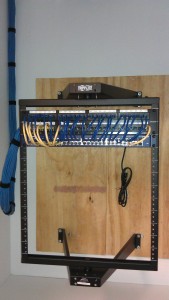
Structured Cabling,Cat5e Cat6/6a CablingAs discussed in Part 1, the transition to IP-based security products along with the rapid increase in business applications has resulted in end-users expecting greater video, audio, and data integration. These items require delivery over a standardized structured cable system. The following are the benefits offered by structured cabling for security systems.


Standardization


The infrastructure of a structured cabling system utilizes the same cabling for conveying all forms of data. This enables the standardization of Ethernet, VoIP, CCTV, access control, along with all other data and communications systems. Standardization allows a structured cabling system to function with numerous systems and protocols in the present and during the service life of the permanent links installed.


Reliable


A structured cabling system will be able to support equipment from multiple vendors, allowing the support of hardware and applications during expansion and switching to other vendors. This capability makes a cable system more reliable because it helps avoid having to reconfigure or replace cabling during technological upgrades or the addition of new devices.


Flexible


Re-configurations involving transferring equipment such as a computer, CCTV camera, or a VoIP phone to another area are made easier by a structured cabling system, which provides the spine for plug and play applications. The shift to TCP/IP, IEE802 packet data transmission enables agile networks that are capable of communication, opening the gateway to numerous purposed integrated systems.


Simpler Fault Diagnosis


Troubleshooting is made quicker and easier by structured cabling because of its segmented design, preventing a single point of failure that could crash an entire network. For the most part, fault diagnosis can be easily accomplished by a certified structured cabling tester, a device which can rapidly identify problems inside a cabling system.


Reusable Cabling


The instances of having to buy and pull new cable are significantly decreased, allowing a company to maximize its existing cabling infrastructure and save money. Structured cable also minimizes disruptions and downtime events because less cabling leaves more building area functional.


Future Proofing


Future installations of applications like CCTV, access control, multimedia, video conferencing, etc. will probably not experience upgrade issues, making structured cabling a worthwhile investment for the foundation and future of a company.


Part 3 will cover the Challenges and Planning of a Structured Cable System.


Network Cabling


When  work requires a unionized cabling group, call on  Progressive Office Inc. for your commercial Cat5e/6/6a and fiber cabling projects. Specializing in cabling for data, voice, security and the latest WiFi and LiFi solutions. Phone: (202) 462-4290
Data Cabling,Structured Cabling,Washington DC

Setting Up a Campus Network

23 Jul 2017

Data Cabling,Structured Cabling,Washington DCAcademic institutions can garner all the benefits of the Internet age by integrating information and communications technology (ICT) with their teaching and learning environments. ICT is an extension of the term for information technology (IT), emphasizing the unification of telecommunications, computers, software, storage, and audio-visual components within a network.


The quality of education can be significantly improved through the sharing of skills, resources, content, and faculty development. IT content and resources should be available to both faculty and students throughout the campus. To this end, academic institutions must establish a network in each of their campuses, achieving the same speed of data transfer at each building.


Typically, a campus network is comprised of several local area networks (LANs) that are interconnected inside a specific geographical area. Networking components, such as switches, routers, and firewalls, and transmission media, such as copper cable and optical fiber, are utilized for interconnection and communication between connected devices.


Campus Network Topology


For academic institutions like colleges or universities, a campus area network should be interconnected to various types of buildings, including administrative, academic, library, student center, hostel, guest house, sports facility, conference, technology, training, and laboratory.


A campus network will be interconnected via high-speed Ethernet cabling over optical fiber of up to 10GB capability. For the efficient processing of data and information traffic using distribution, access and core segments, tiered hierarchal architecture is utilized.


Every building, block, center, and residential complex will be connected by high-speed optical fiber cable. Moreover, every node within a building will be connected with UTP copper cable that supports gigabit speed.


The conference rooms, teaching halls, and common areas inside each campus will be Wi-Fi enabled through the deployment of 802.11 based wireless access points with central authentication, permitting secure network access via laptops, tablets, smartphones, and other Wi-Fi enabled devices.


Internet services, along with common applications, will also be installed at key locations, such as library study halls, allowing students, faculty, and staff easy access via desktop computers and laptops around the clock.


Network Cabling


When  work requires a unionized cabling group, call on Progressive Office Inc.   for your commercial Cat5e/6/6a and fiber cabling projects. Specializing in cabling for data, voice, security and the latest WiFi and LiFi solutions. Phone: (202) 462-4290

Cable Management,Cable Management ,Data Cabling ,Cat5e, Cat6/6a Cabling

Security Aspects of Structured Cabling – Part 1

11 Jul 2017
 

structured Cable Management/ BlogCabling system designed for the purpose of security have hardly changed the last decade and a half. Delivering video images and access control data to a control room utilizing standard transmission technology is basic and familiar. What has recently changed is the transition to IP-based security products and the rapid increase in business applications, resulting in end-users expecting a greater video, audio, and data integration. All of these items require delivery over one standardized structured cable system.


As opposed to traditional video and access control systems, voice and data communications cabling systems have had numerous transformations. Functioning on structured cable systems, data networks have shifted from the pioneering 1980s proprietary cabling to standards-based cabling using optical fiber and balanced twisted pair. This has resulted in greater transmission speeds and significantly increased network bandwidth. These two elements allow a security installer to achieve integration that is demanded by clients for CCTV, access control, and other applications. Through the adoption of standardized structured cabling, installers will be able to access new streams of revenue and provide tangible benefits to users by unifying all of their systems within one cabling infrastructure.


This change in the utilization and deployment of structured cabling systems was recognized by ANSI/TIA-862-B “Structured Cabling Infrastructure Standard for Intelligent Building Systems”, which was developed by the TIA TR-42.1 Commercial Building Cabling Subcommittee and released February 2016. This standard features the requirements of several standard and developing systems that are able to use the existing cabling of buildings. It also includes Distributed Building Services that do not utilize a building’s infrastructure cabling because of application, connector, historic, and topographic limitations.


A company’s network infrastructure is crucial in the distribution of information using electronic media, including CCTV, access control, data, and voice. Functioning over a structured cabling system, this distribution network is developed for the perpetual flow of data, featuring redundancy at the heart.  Installed with centralized topology, this enabled the most facile sharing of resources achievable, along with the greatest flexibility and expandability possible.


Part 2 will cover Structured Cabling Benefits for Your Business.


Network Cabling


When work requires a unionized cabling group, call on  Progressive Office Inc.,   for your commercial Cat5e/6/6a and fiber cabling projects. Specializing in cabling for data, voice, security and the latest WiFi and LiFi solutions. Phone: (202) 462-4290

structured cabling,Network Cabling,Washinton DC

Challenges and Planning of a Structured Cable System – Part 3

5 Jul 2017

 structured Cabling, Network Cabling, Washington DCAs previously discussed, the transition to IP-based security products and the rapid increase in business applications has resulted in end-users expecting greater video, audio, and data integration. These items require delivery over a standardized structured cable system. The following are the benefits offered by structured cabling for security systems. Part 3 will cover the Challenges and Planning of a Structured Cabling System.


Challenges


Typically, customers exploring the security market are advised that the only method for deploying a new access control system or an IP video surveillance system is through the removal of all current coaxial or UTP cable and then the installation of an entirely new Cat 5/6 structured cabling network.


Another method is much less disruptive and cheaper. It uses existing cable and employs an IP transmission system that is a hybrid. There are numerous hybrid transmission systems available that enable installers to make good use of extended Ethernet and PoE power distances through existing cable.


Planning


An effective, structured cabling system supports all the communication needs of a company with the integrated flexibility that enables users to link to CCTV cameras, VoIP telephones, access control points, and data devices. Planning a security system upgrade will include several crucial considerations as summarized below.


  • Applications: What will the system accommodate now as far as data, video, voice, and multimedia applications? What emerging technologies will be adapted in the future?

  • Service Lifetime: The service lifetime of a structured cabling system should be 15 to 20 years because it will be the spine of an organization’s communications network.

  • Compatibility: The applications that will function on the structured cabling system for the foreseeable future should be compatible with it.

  • Bandwidth: As bandwidth demand will usually increase because of business growth, a company must consider present and future demand.

  • Users: For the 15 to 20 year service lifetime of the structured cabling system, the estimated number of users during this period should determine the capacity required.

  • Modifications: Fiber-optic technologies are being developed rapidly, and the design of a structured cabling network should include flexibility in order to accommodate modifications and additional users.


Union Network Cabling


When union work requires a unionized cabling group, call on Union Network Cabling for your commercial Cat5e/6/6a and fiber cabling projects. Specializing in cabling for data, voice, security and the latest WiFi and LiFi solutions. Phone: (202) 462-4290