Structured Cabling, Cabling, Washington DC

Improve Data Center Reliability with Structured Cabling – Part 2
29 Nov 2017

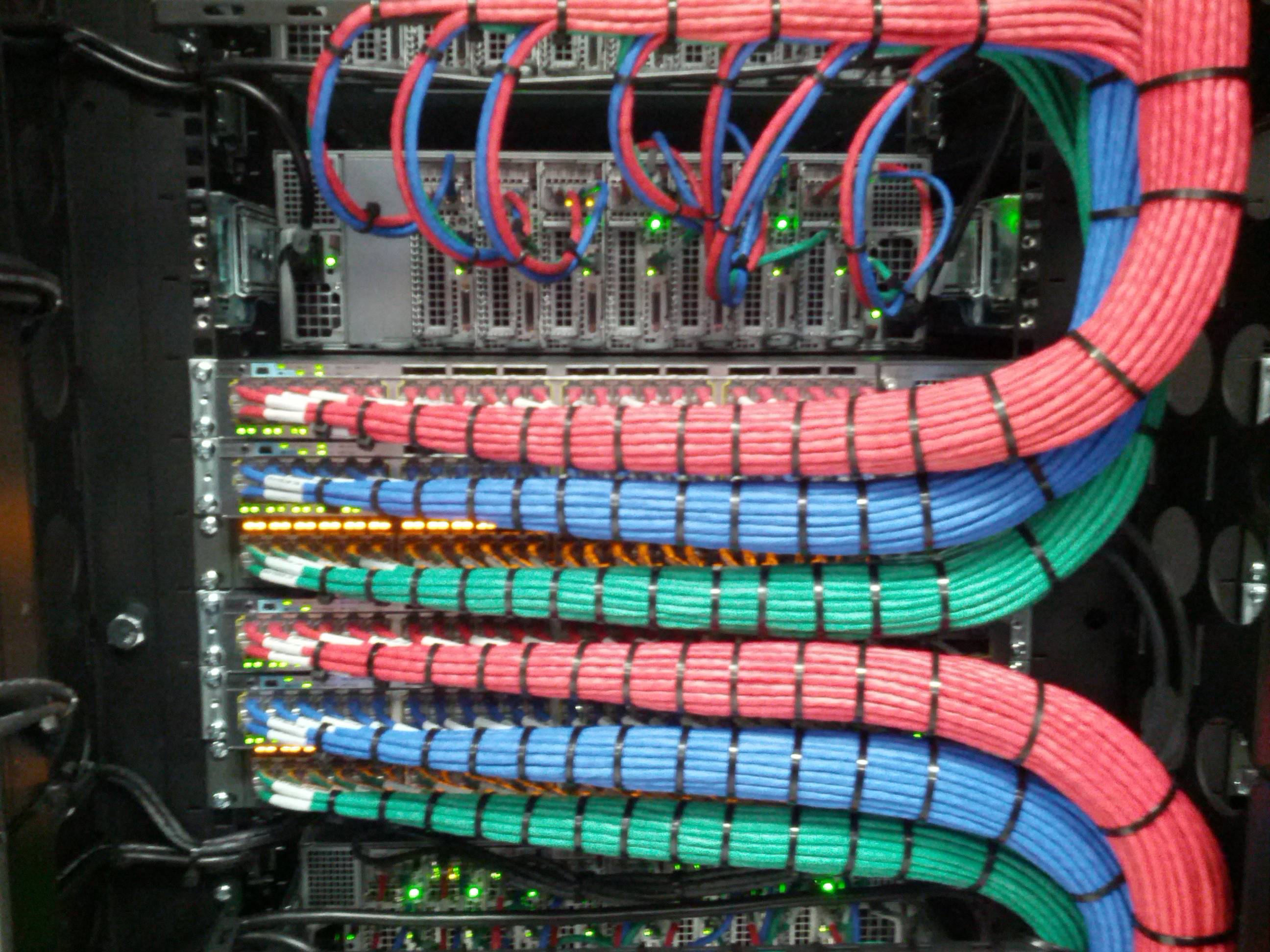
Structured Cabling, Cabling, Washington DCAs mentioned in Part 1, data center efficiency can be improved by properly planning and implementing structured cabling principles. In addition, structured cabling best practices should be the foundation of every data center. Part 2 will discuss Cabling Infrastructure and Improved Network Function.


Cabling Infrastructure


It would be wise to constantly keep the future in mind while you are installing your cabling infrastructure. Setting aside space will allow for expansion. The goal is to make your structured cabling both sound and dependable.


Testing Policy – After the addition or removal of equipment, testing every connection makes sure that a data center will be reliable over time. Performing these tests as a standard practice will help prevent issues that result in downtime. Inconsistent testing practices will result in an unreliable data center.


Standardization – The standardization of cable and rack usage will significantly facilitate maintenance. When there is a meltdown, the managers and engineers of a data center won’t have any doubts as to the types of cables and configuration of racks that are being utilized.


Documentation – When proper documentation is neglected, the training of new staff members will be much more difficult and take longer. The addition of equipment and related components will also result in more errors. Good documentation is integral for every sound structured cable system.


Spare Cables – The stocking of spare cables to prepare for contingencies will help prepare a data center for crises that may strike a structured cabling system.


Improved Network Function


A data center will have losses of up to $10,000 for each minute of unplanned outage. Implementing the best practices of TIA/ISO standards will raise the performance of a structured cabling system and make a data center more reliable. Its computer network will have the following benefits:


  • Greater responsiveness

  • Increased reliability and overall performance

  • More secure data backup, storage, and retrieval

  • Flexibility for accommodating additional computer terminals and components

  • Capable of supporting telephony and other network-dependent systems


Progressive Office Cabling


Founded in 1986, Progressive Office’s success has been a direct result of years of commitment to seeking solutions on behalf of our clients in the Washington, D.C. and New York City areas. Efficiently working together, Progressive teams get cabling installed and operating as fast as possible while minimizing disruption and downtime. Call our toll free number (800) 614-4560 today.
Data Cabling,Structured Cabling, Cabling Design-Washington DC

Improve Data Center Reliability with Structured Cabling – Part 1

22 Nov 2017

Data Cabling,Structured Cabling, Cabling Design-Washington DCCabling systems were once proprietary prior to the 1990s, which was a major problem for data centers. Each modification required vendor-specific knowledge of each component of the cabling system. In 1991, the TIA/EIA-568 standard was introduced to bring about structured cabling systems.


Although 5% percent of a network budget is currently spent on structured cabling, 59% of downtime can be attributed to it. Most downtime results from not adhering to standards. Data center efficiency can be increased by proper planning and implementing structured cabling principles. Structured cabling best practices should be the foundation of every data center.


Proper Planning


Designing proper cable runs, identification of cable types, the process of network verification, planning for future expansion, and accurate documentation are all part of the proper planning for structured cabling. Lacking these, a data center would be disorganized and chaotic.


A data centers begin at the MDA (Main Distribution Area), single or multiple HDA(s) (Horizontal Distribution Area), as well as the required equipment and spacing to allow cable access. The Main Distribution Area is the location of core networking equipment. The cross-connects of HDAs are utilized for the distribution of cables to the EDA (Equipment Distribution Area). A well-organized data center is the product of a structure that is well-planned.


Best Practices


Proper Standards –To attain high levels of proficiency, cabling standards, which are revised every five to ten years, must be followed. Remaining up-to-date will allow a data center to be more adaptable to changes of technology. American data centers now comply with the TIA/EIA-568 standard developed by the TIA (Telecommunications Industry Association), while business and companies located overseas comply with the ISO/IEC IS 11801.


Cable Identification System – In addition to standards, implementing an identification system utilizing colors and labels will assist managers in data center organization. A sound system will conserve both time and money over the long term. Addressing problems or even maintaining aging equipment is eased by a well-defined and easily understandable cable identification system.


Part 2 will discuss Cabling Infrastructure and Improved Network Function.


Progressive Office Cabling


Founded in 1986, Progressive Office’s success has been a direct result of years of commitment to seeking solutions on behalf of our clients in the Washington, D.C. and New York City areas. Efficiently working together, Progressive teams get cabling installed and operating as fast as possible while minimizing disruption and downtime. Call our toll free number (800) 614-4560 today.

Network Cabling, Network , Structured cabling, cable, Washington DC

8 Network Cabling Mistakes to Avoid – Part 2

14 Nov 2017

As discussed in Part 1, the improper I can result in poor network performance, maintenance issues, and concealed expenses. Part 2 will discuss four more network cabling errors to avoid. Remember to consult with a cabling company that is experienced and provides excellent service.


Mistake No. 5: Ignoring Distance Limitations


The standard distance limitation for UTP cabling with Ethernet at 1 Gbps is 100 meters. For cabling used for 10 Gbps or 40 Gbps, it is important to be aware of the distance limitations of the kind of cabling that will be used. Let’s say your project plans to run 10 Gbps for a maximum of 100 meters over UTP cabling. This will require utilizing at least CAT 6A cabling.


Mistake No. 6: Bypassing Codes


Bypassing local codes may result in endangering first responders. In most facilities, it is prohibited to use PVC-jacketed cabling within air handling spaces. When PVC cabling burns, it produces poisonous fumes that can be hazardous to firefighters and other first responders who must enter the facility during an emergency.


The failure to comply with local codes with respect to low voltage cabling may result in costly fines and perhaps even being ordered to completely remove and reinstall cabling, an expensive exercise. Working with a reputable cabling service company that is knowledgeable regarding local ordinances will avoid future problems.


Mistake No. 7: Neglecting Testing


After cabling is installed, testing should be performed on every cable, using equipment that can verify functionality. The verification of cable lengths and specifications is also important. For certain transmission rates, it must be verified that the cabling is capable of adequately providing support.


Mistake No. 8: Non-Compliance with Standards


Your company’s project should comply with technical standards to ensure the proper functioning of its network. Non-compliance will make noise and interference more likely, leading to inefficiency and poor network performance.


Network cabling standards are used worldwide and are drafted by ISO/IEC, CENELEC and the Telecommunications Industry Association (TIA). TIA (USA) issues the ANSI/TIA-568 standards for telecommunications cabling in commercial facilities.


Progressive Office Cabling


Founded in 1986, Progressive Office’s success has been a direct result of years of commitment to seeking solutions on behalf of our clients in the Washington, D.C. and New York City areas. Efficiently working together, Progressive teams get cabling installed and operating as fast as possible while minimizing disruption and downtime. Call our toll free number (800) 614-4560 today.

Cat5 Cat6 Network Cabling,Washington DC

8 Network Cabling Mistakes to Avoid – Part 1

9 Nov 2017

Cat5 Cat6 Network Cabling,Washington DC Improperly installed twisted pair cabling can result in poor network performance, maintenance issues, and concealed expenses. The following article discusses eight network cabling errors to avoid. To get the best results for your cabling project, make sure to consult with a company that is experienced and provides excellent service.


Mistake No. 1: No Future Planning


If your company is moving to a new office space and new cabling will be required, it would be wise to avoid outdated technology and install equipment that will meet both your current and future needs. Labor costs will likely be the costliest aspect of the project. Although high-quality cable will not be cheap, it will be well worth the investment for your firm’s network requirements the next several years.


Mistake No. 2: Poor Cable Management


Implementing rack-based and ladder rack cable management will certainly raise the outlay for a project. However, sound cable management will ease maintenance and decrease downtime. You should be aware that cabling tasks do not end after installation. Additional cables will probably be needed, and configurations may be revised. Use a standard system for labeling and color coding cables for faster and easier identification. Doing so will speed tasks like repair, reconfiguration, and replacement.


Mistake No. 3: Parallel with Electrical Wiring


Generated by low voltage, the magnetic field conducted by data UTP (unshielded twisted pair) cables is an important feature for the conveyance of data. However, when UTP cables run parallel to electric wiring, there will be a disruption of its magnetic field. This results in garbled and noisy communication. Sometimes transmissions completely fail from point to point. Another negative effect is the extreme slowing of transmission.


Mistake No. 4: Nearby Devices and Fixtures


Noise can be introduced onto data cabling by more than just electrical wires. Fluorescent lighting, motors, and similar items that shed electrical or magnetic interference will wreak havoc on your cabling infrastructure as well. Make sure that in your planning, you leave a data cable pathway that avoids these kinds of hazards.


Part 2 will discuss four more network cabling errors to avoid.


Progressive Office Cabling


Founded in 1986, Progressive Office’s success has been a direct result of years of commitment to seeking solutions on behalf of our clients in the Washington, D.C. and New York City areas. Efficiently working together, Progressive teams get cabling installed and operating as fast as possible while minimizing disruption and downtime. Call our toll free number (800) 614-4560 today.