Structured Cabling,Washington DC New York City

Structured Cabling’s Top Ten Tips

31 Dec 2017

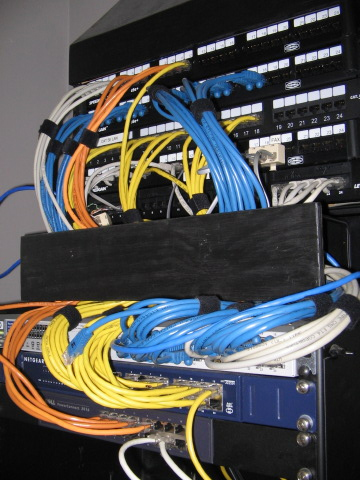
Structured Cabling,Washington DC New York CityStructured cabling that is properly installed can help your business grow by helping to improve its network performance and IT capability. The following will discuss structured cabling’s Top Ten Tips for installing cabling systems.


#1 Cable Labeling


Although cable labeling will slow installation, it will help save lots of time and effort during future repair, reconfiguration, and maintenance tasks.


#2 Cable Testing


Ensure every cable is tested and confirmed to be functioning properly during the installation process. A cable with a nominal performance should not be utilized as it may decrease overall system performance.


#3 Short Patch Cables


Do not use long patch cables when they aren’t required. They are inefficient, look disorganized, and are prone to tangling.


#4 Select Quality Terminations


Avoid purchasing cheap terminating cables because time will be unnecessarily spent on troubleshooting in the future. Select those that are of high quality and terminate properly and rapidly.


#5 Avoid Overheating


Keep in mind that maintaining proper cable temperatures to avoid overheating is crucial for stable and reliable network performance.


#6 Measure 2X, Cut 1X


Precise measurements prior to cutting will minimize damaged and wasted cables during installations.


#7 No Kinky Fiber Cables


As fiber cables have great flexibility, they can kink bend, and knot. These will result in flaws in the fiber cables, negatively affecting performance of the network.


#8 Maximum Cable Length


Do not exceed the maximum length of a cable run, which is typically 100 meters for network cabling systems.


#9 Allow for Expansion


Network cabling systems should always have room for interior expansion. As a business grows, its network should have the room to be able to upgrade or expand.


#10 Qualified Installation Company


In order to ensure that a company’s network cabling system will be properly installed, management must select a qualified installation company and request references.  Their technicians should be BICSI certified and experts in ANSI standards.


Progressive Office Cabling


Founded in 1986, Progressive Office’s success has been a direct result of years of commitment to seeking solutions on behalf of our clients in the Washington, D.C. and New York City areas. Efficiently working together, Progressive teams get cabling installed and operating as fast as possible while minimizing disruption and downtime. Call our toll free number (800) 614-4560 today.
Structured Cabling,Network Cabling ,Data Cabling Washington DC

Basics and Benefits of Zone Cabling – Part 3

20 Dec 2017

Structured Cabling,Network Cabling ,Data Cabling Washington D.CAs discussed in Part 2, there are considerable cost savings from the deployment of zone cabling systems. Part 3 will continue discussing the basics and benefits of zone cabling.


Additional Zone Cabling Benefits


  1. Additional IP devices for audio & video, BAS, digital signage, voice, data security, digital signage, WAPs (wireless application protocols), etc. can be integrated easily into the current structured cabling system through ZE (zone enclosure) connections.

  2. Extra ports within the ZE facilitate fast MACs (moves, adds, and changes) of current service configurations.

  3. For easing installation and decreasing labor costs, tested trunking and factory pre-terminated cables can be utilized.

  4. Increased efficiency of pathway utilization will be realized for the entire facility space.

  5. Structured cabling system deployment will be speedier and cause less disruption.


Smart & Green Building Designs


Perfect for smart and green building designs, zone cabling systems can reduce labor expenses and waste of cabling materials. Centralized connections inside ZEs achieve greater efficiency for the routing of pathways. LEED credits provided by the United States Green Building Council (USGBC) can be maximized. In addition, cable sharing can support several low-speed and low pair count applications functioning on a single 4-pair cabling system. This achieves greater efficiency in cable and pathway utilization.


Summary


Modern workspaces are becoming more social and flexible, and they are increasingly reconfigured and updated with greater frequency.


Zone cabling systems allows flexibility in work spaces, facilitating faster and less disruptive moves, adds, and changes than traditional cabling systems.


Zone cabling allows for greater efficiency in the use of pathways and materials, which is required for smart and green building designs.


CAT 6A shielded cabling is recommended in zone cabling designs to achieve maximum performance.


Shielded CAT 6A zone cabling designs result in greater performance, better support of remote powering applications, and ZE termination flexibility at practically no additional cost in comparison to CAT 6A UTP designs.


Regardless of size, zone cabling installations planned with 25% spare port availability will considerably decrease client disruption and allow the facility owner to recover the expense for extra ports inside two to five years or after achieving the threshold for ROI.


Progressive Office Cabling


Founded in 1986, Progressive Office’s success has been a direct result of years of commitment to seeking solutions on behalf of our clients in the Washington, D.C. and New York City areas. Efficiently working together, Progressive teams get cabling installed and operating as fast as possible while minimizing disruption and downtime. Call our toll free number (800) 614-4560 today.

Network Cabling,Cat6 Cable New York City

Basics and Benefits of Zone Cabling – Part 2

14 Dec 2017

Network Cabling,Cat6 Cable New York City As mentioned in Part 1, zone cabling designs provide benefits in materials savings, decreased installation times, and easier MACs (moves, adds, and changes). Part 2 will continue discussing the basics and benefits of zone cabling.


Designs


Experts recommend CAT 5e and 6 UTP (unshielded twisted pair) zone cabling topology with a connecting block system within the ZE (zone enclosure). This configuration will render unnecessary the stocking of factory pre-terminated and tested interconnect cords for connections in the ZE, simplifying cable management through the elimination of cable slack.


Please note that CAT 6A UTP media is not recommended for zone cabling due to reasons involving performance and flexibility. UTP cabling is vulnerable to crosstalk in particular installation scenarios. In addition, it is not the best media for supporting remote power applications with loads of 30W or more. Because CAT 6A UTP zone deployment is dependent on modular connections inside the ZE, connections provided by pre-terminated and tested interconnect cords need to be available for rapidly enabling MACs. Affordable shielded zone cabling solutions are recommended to address these situations.


Cost Savings


Even though more CAPEX (capital expenditure) will be necessary for a zone cabling installation, assessing total costs should also account for OPEX (operating expenditure). The performance of MACs is classified as OPEX, and studies by Siemon found there are hundreds of dollars in savings from each move, addition, or change when using a zone cabling design versus a traditional cabling design. Their study also discovered a tipping point when ROI begins accruing from utilizing a zone cabling design.


IT (information technology) needs for many organizations evolve constantly, which requires being able to quickly reconfigure floor space. An improved capability of supporting MACs will allow owners of facilities to achieve considerable ROI benefits from deploying zone cabling systems in a two to five year period. According to Siemon, the combined costs of CAPEX and OPEX for zone cabling designs will be invariably less than traditional cabling designs


Part 3 will continue discussing the basics and benefits of zone cabling.


Progressive Office Cabling


Founded in 1986, Progressive Office’s success has been a direct result of years of commitment to seeking solutions on behalf of our clients in the Washington, D.C. and New York City areas. Efficiently working together, Progressive teams get cabling installed and operating as fast as possible while minimizing disruption and downtime. Call our toll free number (800) 614-4560 today.

Cables, Cabling Design,Structured Cabling

Basics and Benefits of Zone Cabling – Part 1

7 Dec 2017

Cables, Cabling Design,Structured CablingTopology or zone cabling design starts with horizontal cables running from patch panels within the TR (telecommunications room) to connections in a ZE (zone enclosure). A ZE can be installed in a ceiling, on a wall or beneath a raised floor. Next, cables originating from ZE connecting blocks or outlets lead to telecommunications outlets inside the WA (work area), equipment outlets, or straight to BAS (building automation system) devices.


Keep in mind ZE connections are creating by modular outlets or punch down blocks. No active equipment is housed in the ZE. For zone cabling deployment, experts recommend installing zone enclosures within a floor space’s populated areas that have the greatest density.


The primary element of zone cabling design is allowing flexibility in client work spaces that enable efficient MACs (moves, adds, and changes). Studies have found that zone cabling can result in considerable savings as opposed to the traditional configuration of home run work area to TR cabling. This is attributable to the fact that MACs on a home run topology need a greater amount of cabling materials and installation time for implementation.


To illustrate the savings mentioned above, we can compare a home run cabling link to a zone cabling link. Both can support a WA outlet positioned 200 ft. from the TR. In this scenario, the ZE is already cabled from the TR with extra ports for supporting additional services and positioned 50 ft. from the WA outlet. Should a second cable be required for deployment, 200 ft. of additional cable will require pulling from the telecommunications room that is designed traditionally, but just 50 ft. will require pulling with a zone cabling design.


Other important benefits derived from the utilization of zone cabling designs are considerably decreased installation and disruption times, along with cable pulling savings of 75%, which will result in significantly improving ROI (return on investment).


Part 2 will continue discussing the basics and benefits of zone cabling.


Progressive Office Cabling


Founded in 1986, Progressive Office’s success has been a direct result of years of commitment to seeking solutions on behalf of our clients in the Washington, D.C. and New York City areas. Efficiently working together, Progressive teams get cabling installed and operating as fast as possible while minimizing disruption and downtime. Call our toll free number (800) 614-4560 today.