Structured Cabling,Network Cabling ,Data Cabling Washington DC

Is Up-to-Date Structured Cabling Crucial for Your Business?
31 Jan 2018

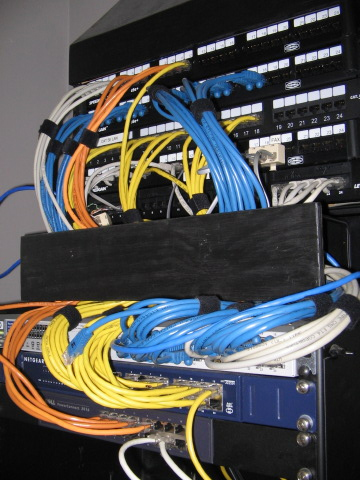
Structured Cabling,Network Cabling ,Data Cabling Washington DCIf you are busy running a business every day, you probably don’t consider the IT infrastructure of your company very often. However, if you let it become outdated, you will make your enterprise un-competitive and prevent it from achieving its potential.


Think of your IT network as the transport system for your data and some of the services your firm provides. Using structured cabling is the best way to ensure its efficiency. This system is advantageous because it allows the connection, movement, and removal of devices without needing new cables every time there is a change.


A structured cabling system that is up-to-date can run optimally in the present and also allow a company to readily expand in the future as its business grows. The following are five advantages of a structured cabling system.


Decreased Maintenance Costs


Replacing old cabling with superior high-quality cabling will ensure better performance and longevity. Structured cabling also makes it much easier to trace and repair problems, resulting in less downtime and monetary losses from maintenance work. The unification of data, voice, and video on a single IT network will also reduce the time needed for maintaining and repairing components.


Ease of Management


The consolidation of cabling under a single system that can handle data in several formats will be much easier to manage than a disorganized system of multiple point-to -point wiring. Structured cable also allows longer cable runs, which help decrease errors and interference affecting data. Cabling will also be easier to remove and install.


Greater Speeds


Slow data transmission hurts the bottom line because time is money. If your company still has obsolete CAT3 cables, upgrade to CAT5e or CAT6 cables to keep up with your competitors. Fiber optic cables will provide even better performance. Upgrading will also allow your organization to more easily expand when more bandwidth is needed.


Less Clutter


A well-organized office projects the desired image for clients and customers. It also helps promotes company pride among employees. Clutter and poor data transmission caused by bundles of disorganized wires and cables will be eliminated by the simplified organization of structured cabling.


Progressive Office Cabling


Founded in 1986, Progressive Office’s success has been a direct result of years of commitment to seeking solutions on behalf of our clients in the Washington, D.C. and New York City areas. Efficiently working together, Progressive Office teams get cabling installed and operating as fast as possible while minimizing disruption and downtime. Call our toll free number (800) 614-4560 today.

Cable Installation, Cabling, Washington D.C.

Ethernet Crossover Cable Basics

24 Jan 2018

Cable Installation, Cabling, Washington D.C.The crossover cable connects two Ethernet network devices to each other. They were invented for temporarily supporting host-to-host networking when a network router or another intermediary device is not available. Although crossover cables appear the same as a standard straight-through (patch) Ethernet cable, their internal wiring structures are different.


Straight Through vs. Crossover


A straight-through cable is used for connecting two different kinds of devices, such as a network switch to a computer. In contrast, a crossover cable is for connecting two devices that are identical.


The straight-through cable’s ends can be wired in any manner, but both ends must be identical. This is different from the crossover cable’s internal wiring, which reverses the signals for receiving and transmitting. The first and third wires and the second and sixth wires are crossed.


High-quality Ethernet crossover cables have special markings which allow users to distinguish them from straight-through cables. They are often red in color and the word "crossover" will appear on its casing and packaging.


Crossover Cable Needs


Crossover cables came into use during the 1990s and 2000s because the most common types of Ethernet were unable to support direct cable connections between hosts. Intended for using specific wires for both receiving and transmitting signals, the original and Fast Ethernet standards required the communication of two endpoints through an intermediary device to avoid conflicts.


The Ethernet feature MDI-X has auto-detection for the prevention of signal conflicts, enabling the Ethernet interface to automatically determine and negotiate the expected signaling convention of the device at the other end of the cable. The majority of home broadband routers and Gigabit Ethernet adopted MDI-X.


As a result, crossover cables are only necessary for the connection of two Ethernet client devices if they are not configured for Gigabit Ethernet. Nowadays, Ethernet devices are compatible with crossover cables because they can automatically detect them.


Ethernet Crossover Cables Usage


Crossover cable usage should be limited to direct network connections. When a user tries connecting a computer to an antiquated router or network switch via a crossover cable rather than a standard cable, the link can be prevented from working.


Progressive Office Cabling


Founded in 1986, Progressive Office’s success has been a direct result of years of commitment to seeking solutions on behalf of our clients in the Washington, D.C. and New York City areas. Efficiently working together, Progressive Office teams get cabling installed and operating as fast as possible while minimizing disruption and downtime. Call our toll free number (800) 614-4560 today.

structured cabling,Network Cabling

Advantages of Upgrading to Structured Cabling – Part 2

15 Jan 2018

structured cabling,Network CablingAs discussed in Part 1, point-to-point cabling systems are outdated and companies should strongly consider making the transition to structured cabling to remain competitive. Part 2 will discuss the advantages of upgrading to structured cabling.


The Advantages


Cost Effectiveness – Flexible and scalable, structured cabling can transmit data reliably and more easily handle increasingly large loads. This allows an organization to raise the productivity of its employees, helping to achieve its business goals. Its bottom line is further aided because structured cabling decreases the costs of maintenance and energy consumption.


Decreased Downtime – There is a greater chance of human error when there are several disorganized cabling networks, which result in disruptions and downtime. In contrast, a sound structured cabling system provides greater reliability; in addition, troubleshooting expenses are reduced because problems are easier to identify, find, and repair.  Downtime is decreased, business losses are minimized, and a company  will be more reliable and profitable.


Future Proofing –Structured cabling provides greater bandwidth and this allows a company to easily expand when its business grows. Having adaptable and scalable IT systems makes a company more competitive when it needs to evolve with its industry. Structured cabling ensures that an organization’s network infrastructure will remain capable of supporting new applications and technologies.


Greater Flexibility – Structured cabling can improve performance levels allowing a business to expand with greater ease. Move, add and change requests can be handled faster and more efficiently. Companies with structured cabling can develop and deploy services much faster because its data center can accommodate network infrastructure modifications more readily.


Maintenance Easier – Structured cabling provides a organizational approach that makes maintaining data centers and networks much more straightforward. In normal business environments, a variety of IT equipment and devices are being used simultaneously. When they are functioning on only one system, this removes the need for several wiring systems to be installed.


Progressive Office Cabling


Founded in 1986, Progressive Office’s success has been a direct result of years of commitment to seeking solutions on behalf of our clients in the Washington, D.C. and New York City areas. Efficiently working together, Progressive Office teams get cabling installed and operating as fast as possible while minimizing disruption and downtime. Call our toll free number (800) 614-4560 today.

Structured cabling Network Cabling Washington DC

Advantages of Upgrading to Structured Cabling – Part 1

4 Jan 2018

Structured cabling Network Cabling Washington DCIf it has been a while since your company has upgraded your network cabling, you and your team may not be achieving your potential. As you know, an organization’s IT network is the very heart of its operations. Lacking a network that is up-to-date, staff members will not be as efficient and productive as possible.


Updating from Point-to-Point Cabling


The update that yields the most benefits is having your network make the transition from an outdated point-to-point cabling system to a far more effective structured cabling system. As you may know, there are only two ways for transmitting data over network cables. Numerous companies persist on using point-to-point cabling. Unfortunately, it tends to become problematic, especially when a company needs to significantly expand the network’s size and capabilities. Let’s dig deeper to understand the reasons.


Point-to-point cabling directly connects a switch, device, network, a server, or network, to another network component via fiber optic cable. For the last few decades, this wiring method provided an innovative way to swiftly build a network. However, during that period, the majority of networks at IT departments were not large.


Nowadays, as networks expand and speedy transmissions of massive data amounts become routinely expected, the maintenance of outdated point-to-point cabling systems, along with the thousands of cables required for operations, becomes a large burden on a company’s IT resources.


As a result, organizations have transitioned to structured cabling systems. Rather than directly connecting every single network component to another, a structured cabling system directly links storage units and servers to a communication backbone.


Installed in every part of a facility, local cabling panels are linked to the communication backbone with only one cable. This enables users to easily connect their devices to the whole network by connecting a cable to the nearest cabling panel.


Part 2 will discuss the advantages of upgrading to Structured Cabling.


Progressive Office Cabling


Founded in 1986, Progressive Office’s success has been a direct result of years of commitment to seeking solutions on behalf of our clients in the Washington, D.C. and New York City areas. Efficiently working together, Progressive Office teams get cabling installed and operating as fast as possible while minimizing disruption and downtime. Call our toll free number (800) 614-4560 today.