Employees are one of the most important assets of a business. Keeping them safe should be a priority as the world has become more dangerous. The number of mass shootings has risen during the COVID-19 pandemic. Management should secure offices and take measures to prevent security threats to protect their staff.
Schools of the 21st century are now driven by rapidly evolving technology. Today’s classrooms have rapidly rising demands for bandwidth to support current and future data and video requirements. The past few years have seen tremendous growth of distance learning and on-demand educational materials.
An IT infrastructure composed of several standard components, a structured cabling system can be installed in a building, a facility, or throughout a campus. Properly designed and installed, this type of network cabling is capable of supporting rapidly advancing technology.
Also called video systems, CCTV systems can be installed in factories, retail settings, law enforcement buildings, schools, shipping facilities, small businesses, and warehouses to aid in crime prevention.
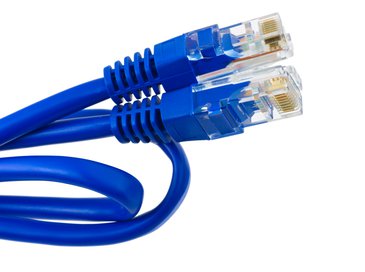
If you wish to connect two or more PCs or other networking equipment, you will need to use a type of network cable. The types vary, determined by how the cabling is manufactured and the types of wires and metals that are utilized. Below are the various types of network cabling with a discussion regarding their specifications and the ways they are used.
Data cabling for distribution centers and warehouses will require a different set of requirements than office buildings. A key difference is many cables and electrical equipment will have to be installed by using powered access lifts, which will be at heights of 25 feet and more. As a result, detailed planning will be needed for cable runs throughout the structure.
Companies that have outdated cabling infrastructure will suffer from equipment unreliability and more network downtime. As a result, the efficiency and productivity of employees is reduced, decreasing a company’s ability to generate revenue. It may have been years since your organization installed its existing network cabling, and the cables are now unable to handle modern data demands.
When people think of protection against cyberattacks, the majority consider antivirus software, firewalls, encryption, etc. as the primary solutions. However, more can be done in terms of hardware to strengthen defenses against malicious attacks.