
Is Wired or Wireless Best for Your Business? – Part 2
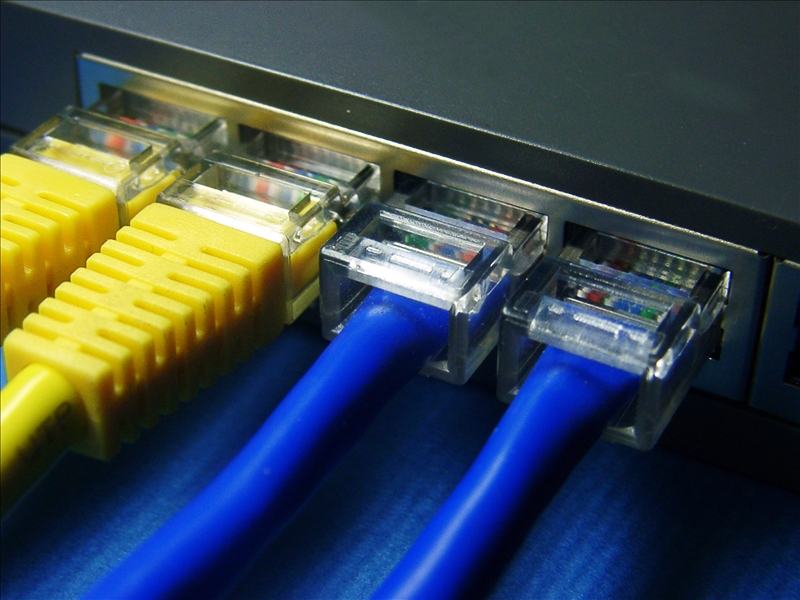
 As discussed in Part 1, many users no longer think wired Internet connections are necessary because WiFi has become so commonplace in everyday use. However, hard-wired connections do have advantages for businesses that should not be overlooked. Part 2 will discuss Wireless Advantages and Considerations.
Wireless Advantages
Typically, wireless Internet connections will likely be adequate for the majority of tasks at a workplace. Lots of employees like wireless primarily because of its convenience and mobility, thinking the advantages from a hard-wired connection are not worth the trouble of attaching an Ethernet cable. In addition, advancements in WiFi technology are gradually gaining on . Even though an organization may not require Ethernet’s advantages in speed, low-latency, stability, and security, it should reconsider before going completely wireless.
Wireless Considerations
Make sure that the new WiFi equipment that your company buys features the newest 802.11 AC Wave 2 standard. It will be crucial for the future because it can support several users and handle multiple inputs and outputs (MU-MIMO).
Another benefit of 802.11 AC Wave 2 is that it gives WiFi equipment the capability of supporting multiple inbound and outbound streams. Thus, a company’s WiFi will be able to receive and broadcast data at the same time. As a result, audio and video streaming performance is improved.
The 802.11 AC Wave 2 standard will also allow your organization to implement future technological advancements. The latest devices from Apple can support MIMO over 5Ghz bandwidth, and this will eventually become the industry standard in the near future.
Conclusion
Obviously, an office can have both Ethernet and WiFi. Certain types of organizations require a hard-wired network to handle very large files, and they will also need to provide WiFi for guests, conference rooms, and outdoor areas. Always remember that Ethernet will provide better performance than WiFi for companies that need to process a great volume of data. At the same time, businesses should take advantage of advances in WiFi technology.
Progressive Office Cabling
Founded in 1986, Progressive Office’s success has been a direct result of years of commitment to seeking solutions on behalf of our clients in the Washington, D.C. and New York City areas. Efficiently working together, Progressive teams get cabling installed and operating as fast as possible while minimizing disruption and downtime. Call our toll free number (800) 614-4560 today.
The Benefits of Structured Cabling for IT Infrastructure
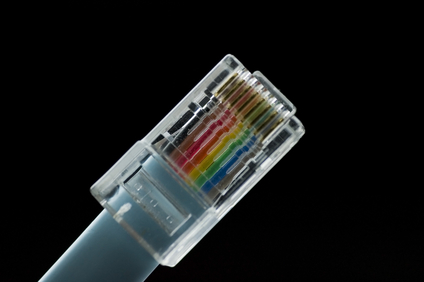
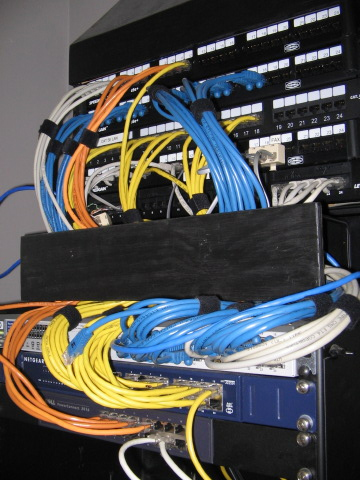
 Utilizing best practices developed over time, structured cabling determines the design and construction of an organization’s IT infrastructure. Standardized practices ease modifications and additions and promote compatibility and reliability. The following will discuss the benefits of structured cabling for your organization’s IT infrastructure.
Efficiency
There will be times when it will be necessary to move forward with changes to your IT infrastructure. When this involves dealing with improperly placed cables without a labeling system, each project will take longer than what would be necessary for a well-organized system. Structured cabling’s best practices decrease downtime and minimize mistakes.
Flexibility
Structured cabling allows flexibility, meaning repairs and changes to the infrastructure become easier and faster to perform. This means data center managers will not hesitate to implement needed changes because they don’t have to deal with disorganized cabling that make their jobs much harder.
Future Proofing
The perpetual improvements of telecommunications technology make it crucial to have an IT infrastructure that can adapt to future technical advances. Structured cabling makes this possible by ensuring upgrades are not difficult to integrate with the existing system. Structured cabling enables future proofing, and so it can be considered a sound investment for companies anticipating expansion.
Redundancy
Structured cabling allows the creation of an IT infrastructure that features redundancy, which helps ensure reliability and accessibility, particularly during maintenance or repair. If a cable is somehow compromised, data communications can keep functioning over redundant cabling as repairs are being performed.
ROI
Business owners should consider structured cabling as an investment that will improve their IT infrastructures. As it will significantly increase the efficiency of its data operations, the ROI (return on investment) could far exceed the initial outlay for implementation over time.
Progressive Office Cabling
Founded in 1986, Progressive Office’s success has been a direct result of years of commitment to seeking solutions on behalf of our clients in the Washington, D.C. and New York City areas. Efficiently working together, Progressive teams get cabling installed and operating as fast as possible while minimizing disruption and downtime. Call our toll free number (800) 614-4560 today.
Improving Data Availability in Your Data Center
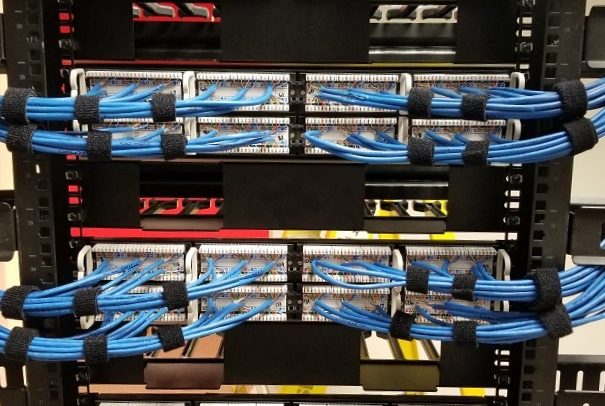
 In the current business environment, your customers demand that their questions are addressed immediately and solutions for their problems are promptly applied. Business owners cannot permit remote locations and network interruptions from impacting their ability to provide services. This article will discuss four methods for improving data availability in your company’s data center. Consult with an expert and experienced managed IT services firm for the best results.
Disaster Recovery
Disasters that can affect a company’s data availability are not necessarily only from natural causes such as an earthquake or flood. They can be caused by something as common as a power outage due to a technical problem at the electrical utility. Fortunately, you can prepare your company in the event that access to your critical and sensitive business is interrupted by having a disaster recovery plan in place, which may feature solutions such as co-location and cloud storage.
Single Point of Failure Elimination
Your IT infrastructure will be able to eliminate single points of failure by backing up and having alternatives ready. Work with a managed services provider (MSP) to evaluate your company’s network architecture and consider solutions such as clustering, load balancing, redundancy, and virtualization.
Proactive Monitoring
Having a sound recovery plan that is regularly modified and tested is essential for the prevention of data loss. However, proactive monitoring of your company’s IT infrastructure may even be important because it may stop a disaster from occurring in the first place.
Virtualization and Cloud Computing
Your company’s data availability can be bolstered through the application of virtualization and cloud computing. Securely storing critical IT resources at a service provider’s data center ensures that critical business data is both backed up and available in the event of a disaster.
Progressive Office Cabling
Founded in 1986, Progressive Office’s success has been a direct result of years of commitment to seeking solutions on behalf of our clients in the Washington, D.C. and New York City areas. Efficiently working together, Progressive teams get cabling installed and operating as fast as possible while minimizing disruption and downtime. Call our toll free number (800) 614-4560 today.
Emerging Data Center Trends for 2018 – Part 2

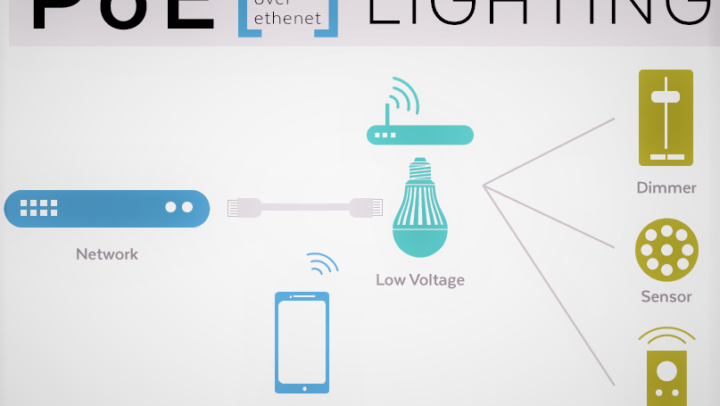
 As discussed in Part 1, 2018 is turning into a year with several exciting emerging data cabling trends. Part 2 will discuss Low Voltage Lighting Over POE and Passive Optical Networks. Before starting your company’s data cabling project, consult with an expert and experienced team to get the best results.
3) Low Voltage Lighting Over POE
Certain to be used increasingly in the future, low voltage lighting powered by POE (Power Over Ethernet) networks will provide several benefits. Efficient, low voltage lights need less electricity, saving on utility bills and lessening environmental impact.


The Principles of Network Design – Part 4
 As discussed in Part 3, a company’s network design should help the organization meet its Business Requirements, give it Business Continuity capability, and provide the adequate Elasticity to allow it to cope with business developments. Part 4 will cover How IT Enables Business Innovation.
How IT Enables Business Innovation
Modern businesses use IT technology to innovate and improve their customer service. When an emerging technology can enable a company to be more competitive in the marketplace and raise customer satisfaction, it will be typically acquired by the business, and its features will be integrated into its network.
A great example of the above is the rapid growth of cloud-based data centers, which are allowing new companies to drastically decrease their capital expenditure and allowing their scaling at will. However, they will still require a high performing data center that has the qualities of flexibility and reliability.
Requirements
A company’s industry and how it began will help a network designer to quickly grasp its underlying requirements. It is obvious banking will certainly need information security. Thus, the network design for banking has to provide the required security capabilities to be adopted by the industry. Moreover, a designer must keep in mind the industry’s standards that are applicable to IT infrastructure and services.
Priorities
Every organization makes priorities that revolve around its business objectives. They should be factored in an IT network infrastructure’s planning and design. Keeping in mind a company’s priorities will help produce a network that successfully supports its business activities.
Suppose an organization’s network for business communication requires (as numbered in importance of priority): 1) collaboration, 2) interactivity, and 3) mobile access. Accordingly, the first two features required must be provided prior to satisfying the third requirement.
In conclusion, a network designer must be cognizant of a company’s business priorities in order to be able to successfully create a network that serves its needs.
Progressive Office Cabling
Founded in 1986, Progressive Office’s success has been a direct result of years of commitment to seeking solutions on behalf of our clients in the Washington, D.C. and New York City areas. Efficiently working together, Progressive teams get cabling installed and operating as fast as possible while minimizing disruption and downtime. Call our toll free number (800) 614-4560 today.

The Principles of Network Design – Part 3
 As discussed in Part 2, Top-Down Logic is used for the process of Preparation, Planning, Design, Implementation, Operation, and Optimization (PPDIOO). In addition, network designers must determine the Scope of Design prior to the collection of data and planning. Part 3 will cover Business Requirements, Continuity, and Elasticity.
Requirements
Figuring out what an organization needs requires having an understanding of its current objectives, mission statement, and future plans. Knowledge of these should guide the business-driven aspects of the network design. Using a top-down approach, a business’s goals, drivers, requirements, continuity, and strategy will determine its business applications, technical and functional requirements, and network infrastructure solutions.
Continuity
Business continuity is a company’s ability to continue doing business after a system outage caused by a man-made or natural disaster that has damaged a data center. An organization needs a disaster recovery plan to develop its resiliency in the face of such disasters. Various parts of its network may need to be more resilient due to regulatory compliance.
Elasticity
Elasticity is an organization’s level of flexibility when responding to business developments. This typically refers to a change in business objectives or conditions, including growth, recession, merger, acquisition, etc. Therefore, a company’s network design must have adequate flexibility in order to fulfill its business requirements and strategic goals. A designer’s comprehension of the overall trends of the organization’s business sector will provide valuable guidance in the design’s features that provide flexibility.
The design of a network must give an organization the flexibility that will allow it to perform integrations with other networks. This will usually be required when mergers and acquisitions take place. It is important to note that during a merger or acquisition, the network may undergo considerable growth during a very brief period. In such circumstances, the most daunting challenge for network designers is having to handle the various design principles, conflicting control plane protocols, and overlaps in IP address spaces of the networks being integrated.
Part 4 will cover “How IT Enables Business Innovation.”
Progressive Office Cabling
Founded in 1986, Progressive Office’s success has been a direct result of years of commitment to seeking solutions on behalf of our clients in the Washington, D.C. and New York City areas. Efficiently working together, Progressive teams get cabling installed and operating as fast as possible while minimizing disruption and downtime. Call our toll free number (800) 614-4560 today.
Data Center Cabling’s Emerging Trends for 2018 – Part 2
 As discussed in Part 1, structured cabling is now considered the foundation of network infrastructure, and organizations and their data centers are seeking ways to improve its efficiency and functionality through several trends. Part 2 will discuss Modularization, Optimization, and Virtualization.
Modularization
New data centers are now being built to support ever-increasing networking demands. Companies are participating by determining which modular data center cabling solutions to implement in order to be future-proofed as this technology grows more sophisticated.
They are also seeking the ability to better scale data and network resources, which will decrease capital expenditure for infrastructure and thus increase the potential for profits.
These organizations are also rapidly implementing virtual data center solutions.
Featuring modules and components that are specially designed, modular data centers are portable, scalable, and containerized. Capable of supporting converged infrastructures, a modular data center requires sound data cabling infrastructure to be effective.
Optimization
An organization that may not be able to build a new data center can still upgrade its existing data cabling. In addition, data center providers are rapidly being chosen as a cost-effective method for optimizing network infrastructure.
Although copper and fiber cabling are considered adequate, there is a growing demand for connectivity that is speedier and more efficient for apps, computers, servers, and storage systems. Optimizing data cabling is the most direct way to obtain this by standardizing components such as cabling, racks, cabinets, etc.
Virtualization
Research has found that more than half of small and medium enterprises (SMEs) are now running workloads on virtual machines. In comparison, data center providers are utilizing virtualization at a rate of at least 95%.
Virtualization technology is establishing itself as a proven, scalable, and cost-effective option for networking. Virtualization most commonly functions on computers, networks, servers, and storage systems. The most essential feature of network virtualization is well-designed structured data cabling.
Progressive Office Cabling
Founded in 1986, Progressive Office’s success has been a direct result of years of commitment to seeking solutions on behalf of our clients in the Washington, D.C. and New York City areas. Efficiently working together, Progressive teams get cabling installed and operating as fast as possible while minimizing disruption and downtime. Call our toll free number (800) 614-4560 today.