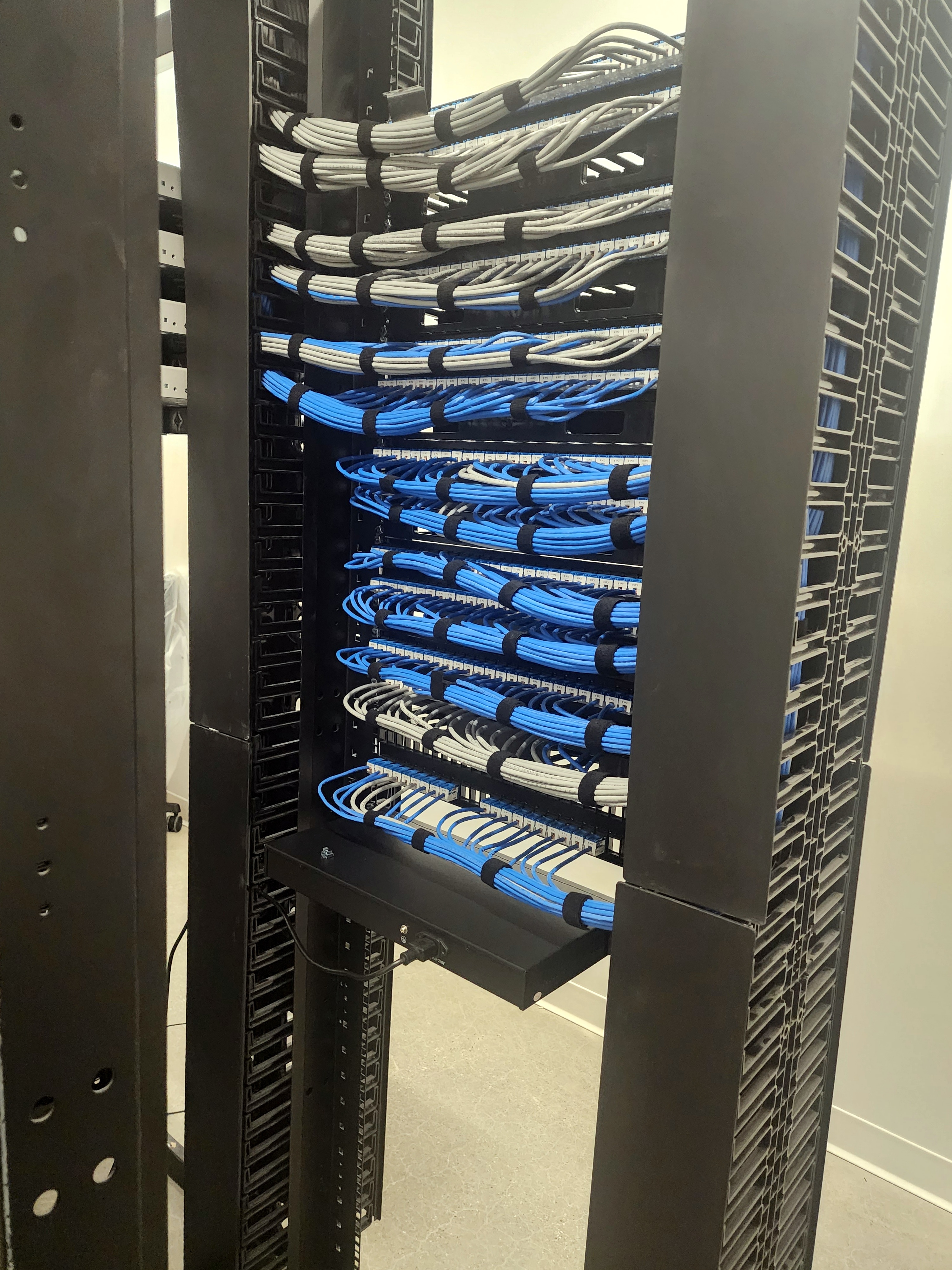
Warehouses are no longer simple storage facilities. Today’s distribution centers and industrial spaces rely on real-time inventory tracking, wireless scanning systems, security cameras, access control, automation technology, and cloud-based management platforms. All of this depends on one critical element: reliable network cabling infrastructure.
For warehouses nationwide, investing in professionally designed structured cabling is essential for operational efficiency, security, and long-term scalability.
At Progressive Cabling, we design and install warehouse network cabling solutions that support performance in demanding, high-traffic environments.
Why Warehouses Have Unique Networking Needs
Warehouse environments present challenges that traditional office spaces do not. High ceilings, metal racking systems, long cable runs, heavy machinery, and fluctuating temperatures all impact network performance.
Without proper planning, warehouses often experience:
Wi-Fi dead zones between racks
Dropped scanner connections
Slow inventory updates
Unreliable security camera feeds
Network congestion during peak operations
A professionally designed cabling system solves these issues at the infrastructure level.
Structured Cabling as the Foundation
Structured cabling creates an organized framework that connects all devices within the warehouse. This includes:
Workstations and management offices
Wireless access points throughout the facility
Security cameras and NVR systems
Access control readers and keypads
Shipping and receiving systems
Automated equipment and sensors
Using Cat6 or Cat6a cabling, properly routed and terminated, ensures stable performance across all systems.
Fiber Optic Backbones for Large Facilities
Warehouses often span large square footage, making fiber optic cabling a critical component of the network backbone.
Fiber provides:
High-speed data transmission over long distances
Minimal signal loss across large buildings
Reliable connectivity between network closets
Strong support for high-bandwidth applications
Scalability for future expansion
By combining fiber backbones with structured copper cabling, warehouses achieve both speed and efficiency.
Supporting Warehouse Wi-Fi Coverage
Wireless coverage is vital in warehouses where employees rely on handheld scanners, tablets, and mobile devices. However, metal shelving and dense inventory can interfere with signals.
Proper network cabling ensures:
Strategically placed wireless access points
Dedicated data drops for ceiling-mounted APs
Stable Power over Ethernet (PoE) support
Balanced network load across the facility
This infrastructure ensures consistent connectivity in every aisle and work zone.
Security Camera and Access Control Integration
Warehouses store valuable inventory and equipment, making security a top priority. Modern facilities rely on integrated surveillance and access control systems.
Professional cabling supports:
High-resolution PoE security cameras
Perimeter and loading dock monitoring
Door access control systems
Integration with central monitoring platforms
Reliable recording and playback systems
Clean, organized cabling reduces the risk of camera outages and security vulnerabilities.
Planning for Growth and Automation
Many warehouses are adopting automation systems and smart technologies, including:
Inventory tracking sensors
Automated sorting equipment
Environmental monitoring systems
Real-time data analytics
A scalable cabling design ensures these technologies can be added without costly reinstallation.
Future-ready planning includes:
Spare conduits and pathways
Additional data drop capacity
Proper rack and switch space
PoE-ready infrastructure
This prevents disruption as operations expand.
Reducing Downtime Through Proper Installation
Warehouse downtime can disrupt shipping schedules and impact customer satisfaction. Properly installed cabling reduces risks by providing:
Organized network closets
Clearly labeled patch panels
Clean cable management
Code-compliant installations
Easier troubleshooting and maintenance
Reliable infrastructure supports consistent daily operations.
Industries That Rely on Warehouse Cabling Solutions
Warehouse network infrastructure is critical for:
Distribution centers
Manufacturing facilities
E-commerce fulfillment operations
Cold storage facilities
Industrial supply companies
Logistics and transportation hubs
In each case, performance and uptime are essential.
Why Businesses Choose Progressive Cabling
Progressive Cabling provides professional warehouse network cabling solutions nationwide. Businesses choose us because we deliver:
Structured Cat6 and Cat6a installations
Fiber optic backbone design
PoE-ready infrastructure for cameras and Wi-Fi
Organized, code-compliant network closets
Scalable solutions for automation and growth
Clean, professional workmanship
We build warehouse networks that support productivity, security, and expansion.
Build a Strong Network for Your Warehouse Operations
Warehouses operate at high speed — and your network should too. A professionally designed cabling system ensures reliable connectivity, improved security, and readiness for future growth.
If your warehouse is planning an upgrade, expansion, or new construction, now is the time to invest in infrastructure that performs.
Contact Progressive Cabling today to learn how professional warehouse network cabling can support your operations nationwide.