Best Practices for Server Room & Data Center Cable Management
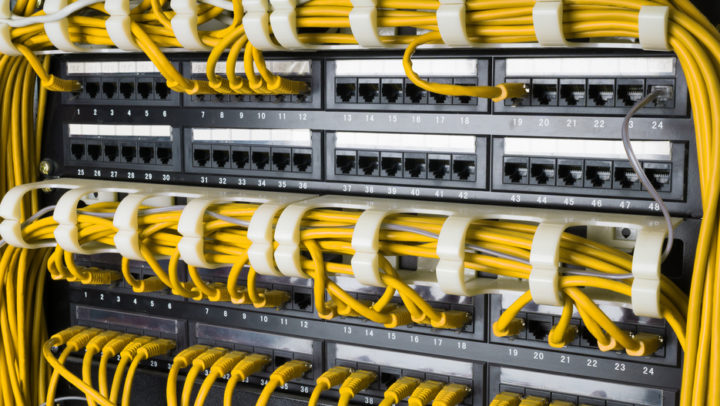
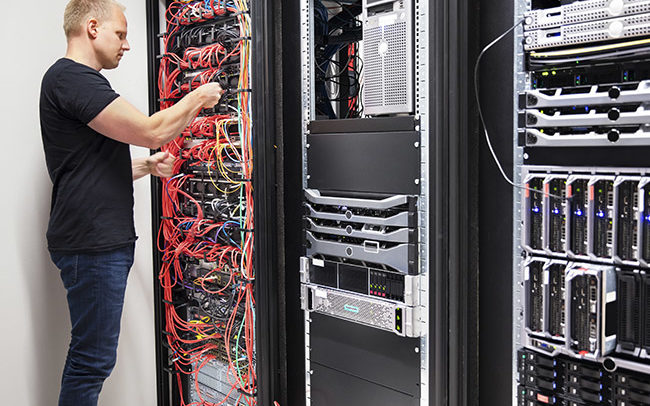
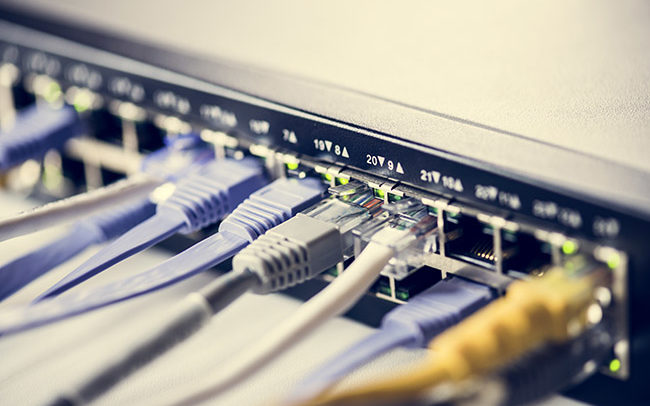
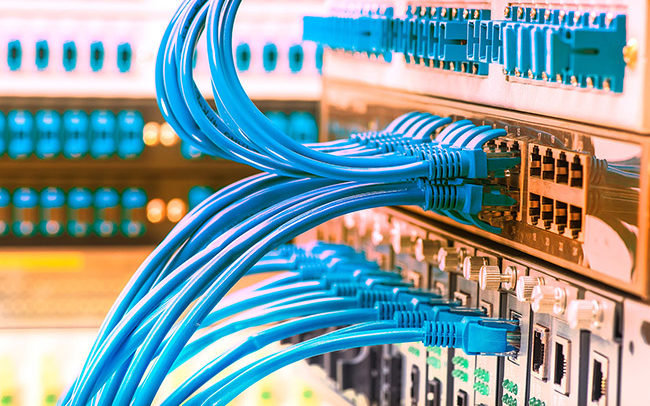
The best practices of cable management provide more benefits than just organization. Properly managing the cables on a server rack will increase airflow efficiency and cooling effectiveness, improving system performance and allowing easier scalability and maintenance.

An Overview of Cat6a for Your Next Cable Installation
Introduced in 2009, Category 6a cable (Augmented Category 6) can support data transfer rates ranging up to 10Gbps at a bandwidth of 500MHz. Superior to the preceding cable categories, the increased performance of Cat6a can be attributed to the tighter and additional twists of its wires and thicker insulation for the significant reduction of crosstalk.

Use Smart Office Cabling to Increase Performance and Efficiency – Part 2
As discussed in Part 1, infrastructure is composed of numerous components with cabling often overlooked by the majority of users when it functions well. However, it immediately gets noticed when it is faulty and affects performance and efficiency. Part 2 will discuss Long-Term Growth and BYOD (Bring Your Own Device).

Use Smart Office Cabling to Increase Performance and Efficiency – Part 1
Infrastructure is composed of numerous components, and the cabling component is often overlooked by most users when it functions well. However, it immediately gets noticed when it fails or affects performance and efficiency.

Guide to Structured Cabling for Classrooms – Part 2
As discussed in Part 1, technology is now playing a greater part in teaching, and cabling in classrooms is growing both in importance and complexity. Part 2 will discuss Traditional Cabling Systems and Choosing Between Modular and Traditional.

Guide to Structured Cabling for Classrooms – Part 1
As technology now plays a greater part in teaching, cabling in classrooms is growing both in importance and complexity. Many schools now feature wiring closets or server rooms that serve as the backbone for data communications. This includes providing Internet access to an entire facility.

Why Smart Offices Use Zone Cabling Architecture – Part 2
As discussed in Part 1, zone cabling architecture is capable of supporting both existing and future solutions in smart offices. Part 2 will discuss Keeping Pace with Newer Technologies and Change Supported by Infrastructure.

Why Smart Offices Use Zone Cabling Architecture — Part 1
In order to support the modern workforce’s demands, open floor plans and collaborative areas are now typical features of today’s offices. In addition, the trend to efficient and connected offices has led to the introduction of new technologies, and cabling infrastructure has had to evolve. The following discusses zone cabling architecture, which is capable of supporting both existing and future solutions in smart offices.

Cable Management’s Effects on Power Usage Effectiveness – Part 2
Under the Raised Floor Cable Management
Under the raised floor cable management in data centers is crucial for the following two reasons:
1) Cables can present obstructions that slow the velocity of airflows and impact the static pressure beneath the floor.
2) Bad cable management can result in air dams that severely limit airflows, decreasing static pressure and the pieces of equipment that can be cooled beyond the air dams.
Tips
• Position cable trays inside hot aisles, preventing the blockage of airflow through supply tiles.
• Position cable management trays at the greatest height possible, permitting airflow beneath them.
• Position the cable trays at consistent heights, permitting the flow of conditioned air in straight paths.
• Unused cables should always be removed as set forth by data center policy.
In the Rack Cable Management
Density increases in a cabinet when the number of components, along with their power and data cords, rises. As a result, there is a higher probability that airflow and exhaust from IT equipment will be blocked. Recirculation of hot air, higher inlet air temperatures, hot spots, greater temperature variations, and higher energy costs may result.
Tips
• Utilize wider cabinets equipped with cable management on their sides, rather than directly at the rear of exhaust ports.
• Utilize cabinets with greater depth, giving more vertical space for air to escape.
• Utilize blanking panels that alleviate increased pressure inside the cabinet.
• Prevent the blockage of exhaust from servers.
Overhead Cable Management
Transferring cable distribution from beneath the floor to overhead aids air distribution under floors. The location of overhead cable trays will be important in terms of AFM and PUE.
Tips
• In rooms lacking a ceiling plenum return, don’t locate cable management trays high over cabinets. This may result in hot air being forced to return to cooling units beneath the trays and close to IT intakes, resulting in hot spots.
• Position cable management trays a few inches over the IT cabinet, which will allow exhaust to flow over the tops of cable trays and toward the ceiling, improving AFM.
Progressive Office Cabling
Founded in 1986, Progressive Office’s success has been a direct result of years of commitment to seeking cost-effective solutions. Working together, Progressive teams are committed to getting your data cables installed and operating while minimizing disruption and downtime. Call our toll free number (800) 614-4560 today.

Through sound planning and implementation of the best practices of structured cabling, organizations can optimize the dependability and efficiency of their data center