
Structured CablingData Cabling,Washington DC

Moving Your Company’s Structured Cabling

29 Jun 2017

Structured CablingData Cabling,Washington DCMoving your company also means relocating and setting up its structured cabling at the new location. Minimizing disruption is the key for making the transition smooth, and retaining an experienced cable installation company will make this possible. Their resume should include relocation and new construction because they will need to work with vendors, moving companies, architects, and engineers who will also be involved. This will make the coordination of moving your firm’s IT infrastructure seamless.


The move will also involve working with the telecommunication and internet providers to make sure their services are included in the transition plan. The functions they provide are not suspended for an extended period, ensuring swift continuation at the new location.


Services for Relocation

  • When hiring a structured cabling company to assist with your move, be sure they can:

  • Move the network fast and efficiently.

  • Coordinate with Internet and telecommunication providers.

  • Ensure safe packing and transport, and unloading of servers, workstations, and printers.

  • Transfer e-mail and website services smoothly.

  • Set up office network, servers, workstations, and printers at new location.

  • Coordinate with outside vendors, including website, Internet, telecommunication, and e-mail services at new location.

  • Design cabling diagram for sound network foundation.

  • Set up cabling and wiring infrastructure for new location.


Summary of Expertise


Be sure to work with a structured cabling company that is knowledgeable regarding office relocation, network cabling, communications, cable management, computer data cabling, office cabling, and server racks. This depth of knowledge will help minimize unforeseen problems regarding your firm’s structured cabling needs during the relocation. Their experience and expertise will decrease the stress and pressure of moving your IT infrastructure.


Structured Cabling Services


Modern technology features advanced systems that are reliant on sound IT infrastructure that revolves around high-quality cabling and intelligent design. An experienced structured cabling company will understand the needs and requirements of a client and provide the expertise that will minimize costs and maximize infrastructure.


Union Network Cabling


When union work requires a unionized cabling group, call on Union Network Cabling for your commercial Cat5e/6/6a and fiber cabling projects. Specializing in cabling for data, voice, security and even the latest WiFi and LiFi solutions. Phone: (202) 462-4290

Network Cabling ,Data Cabling, Fiber-optic cable,New York City

Introduction to Network Cabling – Part 2

19 Jun 2017

data Cabling,Fiber optic , installationsAs mentioned in Part 1, cabling utilized for network infrastructure is a crucial aspect of networking, growing in importance as new technologies are introduced. Although wireless technology has made great advancements, existing computer networks are still using cables for transferring data. Part 2 will cover Fiber Optics, USB Cables, and Crossover Cables.


Fiber Optics


In contrast to older wiring, fiber optic network cables utilize strands of glass and pulses of light to carry data. Although composed of glass, these cables can be bent and have proven their utility in wide area network (WAN) installations in office buildings, especially when long distance runs are necessary and a high volume of communication traffic is typical.


The two main fiber optic cable standards are single mode, the 100BaseBX standard, and multimode, the 100BaseSX standard. Due to single mode's higher bandwidth capacity, it is typically used by long distance telecommunications networks. On the other hand, local networks commonly utilize multimode because of its lower cost.


USB Cables


USB (Universal Serial Bus) cables, which feature twisted pair wiring, are typically used to connect a peripheral device, such as a mouse, to a computer. Dongles or special network adapters also permit the indirect connection of an Ethernet cable to a USB port.


Serial & Parallel Cables


As numerous PCs during the 1980s and early 1990s did not have Ethernet capability, along with the fact USB did not yet exist, now obsolete serial and parallel interfaces were occasionally utilized for networking PCs together. As an example, null modem cables connected the serial ports of two PCs, allowing 0.115 to 0.45 Mbps data transfer.


Crossover Cables


A null modem cable belongs in the category of crossover cables because it joins two network devices of the identical type, like two network switches or two PCs. Ethernet crossover cable usage was most commonly found in home networks years ago when two PCs were directly connected. Currently the majority of home networks are equipped with routers featuring crossover capability, making crossover cables unnecessary.


Union Network Cabling


When union work requires a unionized cabling group, call on Union Network Cabling for your commercial Cat5e/6/6a and fiber cabling projects. Specializing in cabling for data, voice, security and even the latest WiFi and LiFi solutions. Phone: (202) 462-4290
Data Cabling,Network Cabling, Washington DC

Introduction to Network Cabling – Part 1

12 Jun 2017

 Data Cabling,Network Cabling, Washington DCCabling utilized for network infrastructure is a crucial aspect of networking, and it has grown in importance as new technologies are introduced, including virtualization, wireless access points, blade servers, network storage devices, etc.


Although wireless technology has greatly advanced, most of the existing computer networks are still using cables as the media for transferring data. Each standardized type of network cable is utilized for a specific purpose as discussed below.


Coaxial Cables


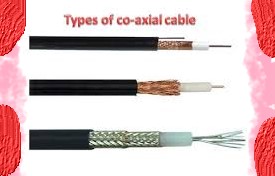
Patented in 1880 (yes, that long ago!), coaxial cable is most familiar as the cable that connects TV sets to their antennas and also as the standard for 10 Mbps Ethernet, which was common in the 1980s and early 1990s. During this time, networks utilized two coaxial cable types, thicknet, the 10BASE5 standard, or thinnet, the 10BASE2 standard. Composed of an inner copper wire surrounded by insulation and shielding, the stiff quality of these cables made them difficult to install and maintain.


Twisted Pair Cables


During the 1970s, Ethernet was developed at Xerox, which began collaborating with Intel and DEC for its standardization. The initial specifications, titled the Ethernet Blue Book or DIX from their three company initials, was published in 1980.


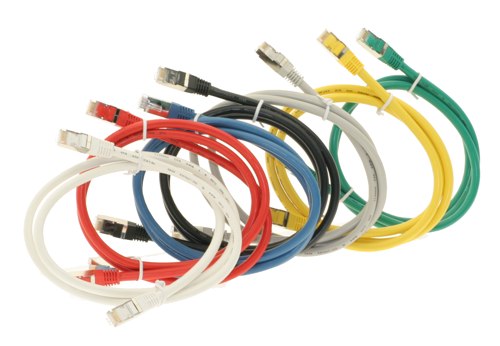
In the 1990s, twisted pair cables became the primary cabling standard of Ethernet, beginning at 10 Mbps with Category 3 or Cat3, which was followed by 100 Mbps Cat5 and Cat5e and up to 10 Gbps (10GBASE-T). Ranging up to eight wires wound together in pairs, this type of cabling is intended to minimize electromagnetic interference.


Unshielded Twisted Pair (UTP) and Shielded Twisted Pair (STP) are the two chief twisted pair cable types standardized by the industry. Due to lower manufacturing costs, modern Ethernet cables utilize UTP wiring. STP cabling is used by other types of networks like Fiber Distributed Data Interface (FDDI). Clearly the most common network cable type globally, UTP cable is utilized for both networking and for the traditional telephone (UTP-CAT1) cabling.


UTP-CAT5e or Cat5e has become the most common UTP cable as it replaced coaxial cable, which was unable to cope with the increasing demand for networks that were faster and more reliable.


Part 2 will cover Fiber Optics, USB Cables, and Crossover Cables.


Union Network Cabling


When  your work requires a unionized cabling group, call on Progressive Office Inc. for your commercial Cat5e/6/6a and fiber cabling projects. Specializing in cabling for data, voice, security and even the latest WiFi and LiFi solutions. Phone: (202) 462-4290

Structured cabling,Network Cabling, Washinton DC

Data Center Cabling Best Practices – Part 3

5 Jun 2017

cable management,Network Cabling,New York CityAs mentioned previously, modern data centers must be flexible, scalable, reliable, and manageable, making best practices required. Part 3 will cover Color Identification and Naming Scheme.


Color Identification


A method of fast visual identification, color coding makes management simpler, conserving time spent on the tracing of cables. Patch panel ports can also be coded, and various colored jacks and inserts are also coded. As determined by a particular manufacturer’s own color scheme, cables are available in numerous colors, each of which can be made applicable to the specific function of a cable or connection type.


Color schemes are expandable through the use of color bands at the end of every cable, using various colored sleeves and colored ports on the patch panel. However, it will also be necessary to use a secondary non-color scheme to make it possible for those who are color blind to identify the cables.


Naming Schemes


After determining the physical layout for the cabling that will be used, use a naming scheme that can be logically applied for facilitating fast and effortless identification of every cable component. Labeling can be an especially effective way to improve team communication among staff members because it makes confusion and uncertainty unlikely when a colleague must search for a particular component. Clear labeling is integral to the success of the naming scheme, and it should not be neglected.


A good naming scheme documents and labels every cable component. The following is the typical hierarchy for a naming scheme: Building, Room, Rack, Patch Panel, Workstation Outlet, Port, and Cable. Each should receive a designation indicating its location preceded by the area(s) above it. For example, Rack A03 would receive the designation SJ01-5D11-A03, if Room is designated SJ01-5D11, and Building is designated SJ01.


Upon the approval of the naming scheme, your team can begin labeling components. The team should prioritize drafting a manual that details the naming scheme and include it as part of the training program for newly hired data center administrators.


The Best Practices for Cable Component Selection will be discussed in the next series.


Union Network Cabling


When your work requires a unionized cabling group, call on Progressive Office Inc. for your commercial Cat5e/6/6a and fiber cabling projects. Specializing in cabling for data, voice, security and even the latest WiFi and LiFi solutions. Phone: (202) 462-4290