
Apartment Complex Network Cabling in Atlanta, GA: Fiber, Wi-Fi, Security, and Low-Voltage Infrastructure
Modern apartment communities depend on more technology than ever before. From leasing office computers and building-wide internet infrastructure to security cameras, electronic access control, and Wi-Fi in shared amenities, reliable connectivity has become an important part of multifamily property management.
For apartment developers and property managers throughout Atlanta, Georgia, professional network cabling helps establish the foundation for connected buildings and efficient daily operations.
Whether you’re developing a new apartment community, renovating an existing property, or upgrading outdated network infrastructure, commercial network cabling in Atlanta, GA can support the technology your property needs.
At Progressive Cabling, we provide professional structured cabling and low-voltage infrastructure services, including Cat6 installation, Cat6A cabling, fiber optic installation, wireless access point cabling, security camera cabling, access control infrastructure, and network rack installation.
Why Multifamily Properties Need Professional Network Cabling
Apartment complexes often contain multiple buildings, floors, shared amenities, administrative offices, and outdoor spaces.
Each area may have different technology requirements.
Common network-connected systems at multifamily properties include:
- Leasing office computers
- Property management systems
- Wireless access points
- Security cameras
- Electronic access control
- Package management systems
- VoIP phone systems
- Digital signage
- Resident amenity technology
- Building management equipment
Without properly planned infrastructure, connecting these systems throughout a large property can become difficult and expensive.
Structured cabling provides an organized approach to network connectivity, helping property owners support current technology while preparing for future upgrades.
Cat6 Cabling for Apartment Leasing Offices
The leasing office is often the central location for a property’s administrative technology.
Employees rely on computers, phones, printers, and management platforms to handle daily operations.
Cat6 cabling provides reliable Ethernet connectivity for many of these devices.
Professional data drops may be installed at:
- Leasing desks
- Administrative workstations
- Reception counters
- Conference rooms
- Printer locations
- Wireless access points
- Network cabinets
Proper cable routing, termination, labeling, and testing help create an organized network that is easier to maintain.
Fiber Optic Cabling for Apartment Communities
Large apartment complexes may require network connectivity across multiple buildings.
Fiber optic cabling is particularly useful for connecting separate telecommunications spaces and supporting high-capacity network backbones.
A multifamily property might use:
Main Network Room → Fiber Optic Backbone → Building Network Closet → Cat6/Cat6A → Connected Devices
Fiber can provide reliable connectivity over longer distances while supporting future network expansion.
For new apartment developments, planning fiber pathways early can help avoid expensive infrastructure modifications after construction is complete.
Wi-Fi Infrastructure for Apartment Amenities
Many apartment communities offer Wi-Fi in shared spaces as part of their resident amenities.
These areas may include:
- Clubhouses
- Fitness centers
- Business centers
- Leasing offices
- Community lounges
- Poolside common areas
- Outdoor gathering spaces
Commercial wireless access points require wired Ethernet connections to network equipment.
Professional wireless access point cabling in Atlanta provides the physical infrastructure needed to support dependable wireless coverage.
Depending on the equipment, Power over Ethernet can also provide compatible access points with both data and power through a single Ethernet cable.
Security Camera Cabling for Multifamily Properties
Security cameras are an important part of many apartment communities.
IP surveillance cameras may be installed in appropriate common areas such as:
- Building entrances
- Parking garages
- Leasing offices
- Package rooms
- Hallways
- Community amenities
- Building exteriors
- Parking lots
Modern IP cameras commonly use Ethernet cabling and may receive power through PoE.
Professional security camera cabling helps connect surveillance equipment to network infrastructure while keeping pathways organized.
For larger properties, fiber optic backbones may also be used to connect network equipment serving cameras in separate buildings.
Access Control for Apartment Buildings
Electronic access control has become increasingly common in multifamily developments.
Property managers may use card readers, keypads, or mobile credential systems to manage access to shared spaces.
Access control infrastructure may support:
- Main building entrances
- Parking garage access points
- Fitness centers
- Clubhouses
- Package rooms
- Maintenance areas
- Administrative offices
Depending on the selected system, low-voltage cabling may connect card readers, access controllers, door contacts, request-to-exit devices, and electronic locking hardware.
Access control installations must account for applicable building, fire, accessibility, and life-safety requirements.
Network Cabling for Package Rooms and Delivery Systems
Package delivery has become an important operational consideration for apartment communities.
Many properties use electronic package lockers or managed package rooms.
These systems may require network connections for control equipment, monitoring devices, and administrative technology.
Professional structured cabling can provide dedicated connectivity for package management equipment.
Planning these connections during construction can help avoid exposed cables and complicated retrofits after the equipment is installed.
Cat6A Cabling for New Apartment Developments
New multifamily construction projects may benefit from evaluating Cat6A cabling for certain applications.
Cat6A supports 10 Gigabit Ethernet over a compliant 100-meter channel and provides additional performance capacity for higher-bandwidth devices.
Cat6A may be worth considering for:
- High-performance network equipment
- Multi-gigabit wireless access points
- Long-term technology planning
- Advanced Power over Ethernet applications
- New commercial amenity spaces
The appropriate cabling category depends on the property’s network design, equipment requirements, and budget.
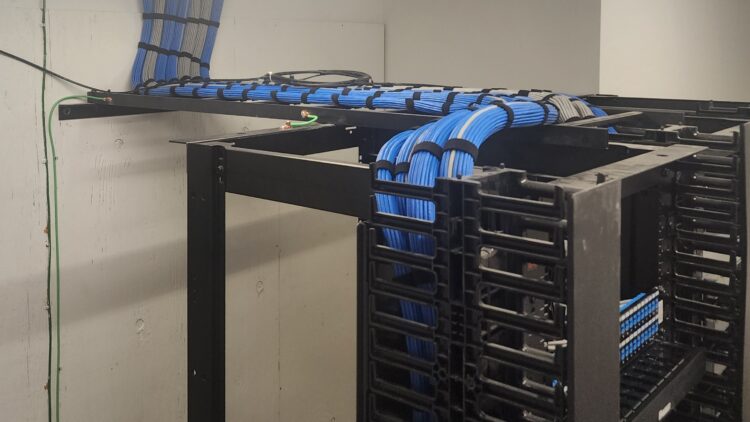
MDF and IDF Network Room Installation
Large apartment buildings may require multiple telecommunications rooms to distribute network connections throughout the property.
A main distribution frame (MDF) can serve as a central network location, while intermediate distribution frames (IDFs) provide connectivity closer to individual devices.
Professional network infrastructure may include:
- Equipment racks
- Network cabinets
- Patch panels
- Fiber optic enclosures
- Cable management
- Labeled network connections
Organized MDF and IDF spaces make it easier for technicians to maintain and expand the network.
Network Cabling During Apartment Construction
New apartment construction provides an excellent opportunity to coordinate low-voltage infrastructure before walls and ceilings are completed.
Developers and general contractors should consider the network requirements of:
- Leasing offices
- Clubhouses
- Fitness centers
- Security camera locations
- Access control equipment
- Package rooms
- Parking facilities
- Telecommunications rooms
- Building-to-building connections
Planning these requirements early can help create cleaner installations and reduce the need for additional work after the property opens.
Upgrading Network Infrastructure in Older Apartment Complexes
Existing multifamily properties may contain network cabling installed during previous renovations or technology upgrades.
Common infrastructure issues include:
- Aging Cat5 cabling
- Older Cat5e installations
- Abandoned telephone wiring
- Unlabeled network connections
- Obsolete camera cables
- Disorganized network cabinets
When upgrading cameras, access control, or community Wi-Fi, property managers should evaluate whether existing cabling can support the new equipment.
Progressive Cabling also provides commercial cabling demolition and abandoned cable removal when outdated low-voltage infrastructure needs to be cleared.
Planning for Future Multifamily Technology
Apartment technology continues to evolve.
Properties may eventually introduce additional security cameras, wireless access points, access control devices, package management equipment, and connected building systems.
A network designed only around current requirements can become difficult to expand.
Developers should consider future needs such as:
- Additional data drops
- Expanded fiber capacity
- More network cabinet space
- Additional security devices
- New wireless access points
- Available cable pathways
A scalable structured cabling design can make future technology upgrades easier.
Multifamily Network Cabling Services from Progressive Cabling
Progressive Cabling provides commercial network and low-voltage infrastructure services including:
- Apartment complex network cabling
- Multifamily structured cabling
- Cat6 installation
- Cat6A installation
- Fiber optic installation
- Building-to-building fiber cabling
- Wireless access point cabling
- Security camera cabling
- Access control infrastructure
- Commercial data drops
- Network racks and cabinets
- Patch panel installation
- MDF and IDF infrastructure
- Cable testing and certification
- Cabling demolition
These services can support apartment complexes, multifamily developments, mixed-use properties, leasing offices, and shared amenity spaces.
Apartment Network Cabling Throughout Metro Atlanta
Progressive Cabling supports commercial network infrastructure projects throughout Atlanta and surrounding Georgia communities, including Marietta, Kennesaw, Smyrna, Sandy Springs, Roswell, Alpharetta, Duluth, Norcross, Decatur, and other Metro Atlanta locations.
Whether you’re constructing a new multifamily development, renovating an established apartment complex, or upgrading technology across multiple properties, professional structured cabling can provide the foundation for reliable connectivity.
Get a Quote for Apartment Complex Network Cabling in Atlanta, GA
Modern multifamily properties depend on reliable connectivity to support leasing offices, wireless networks, security cameras, access control, package management systems, and shared amenities.
Professional structured cabling provides an organized foundation that supports these technologies while preparing the property for future expansion.
If you’re searching for apartment complex network cabling in Atlanta, multifamily Cat6 installation, apartment fiber optic cabling, commercial Wi-Fi infrastructure, apartment security camera cabling, or a low-voltage contractor in Georgia, Progressive Cabling can help.
Contact Progressive Cabling today for a quote on apartment complex network cabling in Atlanta, GA. From Cat6 and Cat6A installation to fiber optic backbones, wireless access points, security cameras, and organized network rooms, we can help build reliable technology infrastructure for your multifamily property.

