Data Cabling,Network Cabling, Washington DC

Introduction to Network Cabling – Part 1

12 Jun 2017

 Data Cabling,Network Cabling, Washington DCCabling utilized for network infrastructure is a crucial aspect of networking, and it has grown in importance as new technologies are introduced, including virtualization, wireless access points, blade servers, network storage devices, etc.


Although wireless technology has greatly advanced, most of the existing computer networks are still using cables as the media for transferring data. Each standardized type of network cable is utilized for a specific purpose as discussed below.


Coaxial Cables


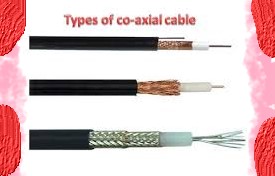
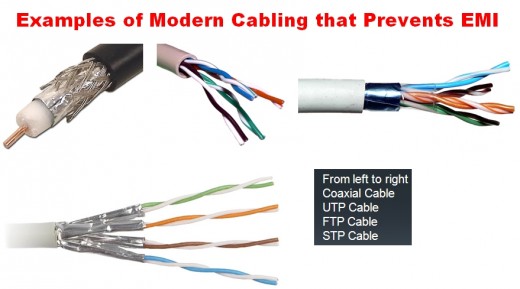
Patented in 1880 (yes, that long ago!), coaxial cable is most familiar as the cable that connects TV sets to their antennas and also as the standard for 10 Mbps Ethernet, which was common in the 1980s and early 1990s. During this time, networks utilized two coaxial cable types, thicknet, the 10BASE5 standard, or thinnet, the 10BASE2 standard. Composed of an inner copper wire surrounded by insulation and shielding, the stiff quality of these cables made them difficult to install and maintain.


Twisted Pair Cables


During the 1970s, Ethernet was developed at Xerox, which began collaborating with Intel and DEC for its standardization. The initial specifications, titled the Ethernet Blue Book or DIX from their three company initials, was published in 1980.


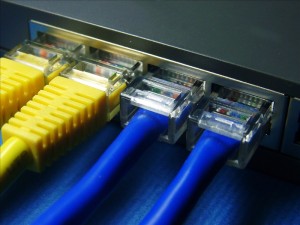
In the 1990s, twisted pair cables became the primary cabling standard of Ethernet, beginning at 10 Mbps with Category 3 or Cat3, which was followed by 100 Mbps Cat5 and Cat5e and up to 10 Gbps (10GBASE-T). Ranging up to eight wires wound together in pairs, this type of cabling is intended to minimize electromagnetic interference.


Unshielded Twisted Pair (UTP) and Shielded Twisted Pair (STP) are the two chief twisted pair cable types standardized by the industry. Due to lower manufacturing costs, modern Ethernet cables utilize UTP wiring. STP cabling is used by other types of networks like Fiber Distributed Data Interface (FDDI). Clearly the most common network cable type globally, UTP cable is utilized for both networking and for the traditional telephone (UTP-CAT1) cabling.


UTP-CAT5e or Cat5e has become the most common UTP cable as it replaced coaxial cable, which was unable to cope with the increasing demand for networks that were faster and more reliable.


Part 2 will cover Fiber Optics, USB Cables, and Crossover Cables.


Union Network Cabling


When  your work requires a unionized cabling group, call on Progressive Office Inc. for your commercial Cat5e/6/6a and fiber cabling projects. Specializing in cabling for data, voice, security and even the latest WiFi and LiFi solutions. Phone: (202) 462-4290

Structured cabling,Network Cabling, Washinton DC

Data Center Cabling Best Practices – Part 3

5 Jun 2017

cable management,Network Cabling,New York CityAs mentioned previously, modern data centers must be flexible, scalable, reliable, and manageable, making best practices required. Part 3 will cover Color Identification and Naming Scheme.


Color Identification


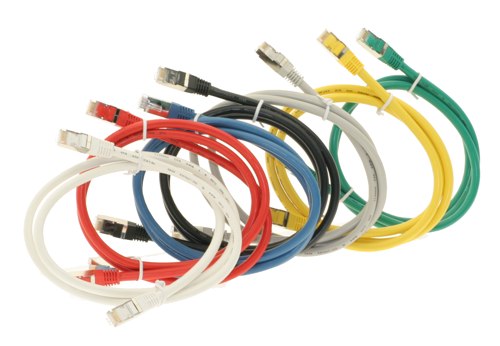
A method of fast visual identification, color coding makes management simpler, conserving time spent on the tracing of cables. Patch panel ports can also be coded, and various colored jacks and inserts are also coded. As determined by a particular manufacturer’s own color scheme, cables are available in numerous colors, each of which can be made applicable to the specific function of a cable or connection type.


Color schemes are expandable through the use of color bands at the end of every cable, using various colored sleeves and colored ports on the patch panel. However, it will also be necessary to use a secondary non-color scheme to make it possible for those who are color blind to identify the cables.


Naming Schemes


After determining the physical layout for the cabling that will be used, use a naming scheme that can be logically applied for facilitating fast and effortless identification of every cable component. Labeling can be an especially effective way to improve team communication among staff members because it makes confusion and uncertainty unlikely when a colleague must search for a particular component. Clear labeling is integral to the success of the naming scheme, and it should not be neglected.


A good naming scheme documents and labels every cable component. The following is the typical hierarchy for a naming scheme: Building, Room, Rack, Patch Panel, Workstation Outlet, Port, and Cable. Each should receive a designation indicating its location preceded by the area(s) above it. For example, Rack A03 would receive the designation SJ01-5D11-A03, if Room is designated SJ01-5D11, and Building is designated SJ01.


Upon the approval of the naming scheme, your team can begin labeling components. The team should prioritize drafting a manual that details the naming scheme and include it as part of the training program for newly hired data center administrators.


The Best Practices for Cable Component Selection will be discussed in the next series.


Union Network Cabling


When your work requires a unionized cabling group, call on Progressive Office Inc. for your commercial Cat5e/6/6a and fiber cabling projects. Specializing in cabling for data, voice, security and even the latest WiFi and LiFi solutions. Phone: (202) 462-4290

IT Support,Data Cabling,Atlanta GA

The Organizations that Set Cabling Standards

27 May 2017

Data Cabling,Network Cabling,Atlanta GAThe TIA (Telecommunications Industry Association) and the ISO (International Organization for Standardization) are the primary organizations that oversee the development of structured cabling standards for the industry. Committees formed by the IEEE (Institute of Electrical and Electronics Engineers) provide assistance through testing and setting performance specifications for various standards.


Compliance with standards ensures the functioning of systems at specified levels, backward compatibility, and a greater selection of equipment will exist. General global recognition of standards permit utilizing equipment sourced from various countries inside computer systems. Requirements for the components of optical and copper cabling including cables, assemblies, connectors, cabling spacing and pathways, administration, field testing, and installation are standardized to make worldwide acceptance possible.


Technicians in North America typically use TIA standards, while the rest of the world uses ISO standards. Examples of organizations that set regional and national standards organizations are CENELEC (European Committee for Electrotechnical Standardization), CSA (Canadian Standards Association) and JSA (Japanese Standards Association). Their standards are generally compatible with TIA and ISO.


Different terminology used by TIA and ISO Associations sometimes cause confusion because they refer to the same item. For example, what the TIA terms as Cat5e is what ISO terms to be Class D. However, adherence to standards set by TIA and ISO ensure system cabling requirements are properly implemented in the categories below.


  • Insertion Loss – Decrease of signal strength down the transmission line.

  • Return Loss – Measurement of signal reflections on the cable.

  • NEXT – Near End Crosstalk Loss due to signal coupling.

  • Propagation Delay / Delay Skew – Elapsed time for signal to reach other end of cable or the delay between signal arrival at far end on slowest and fastest cable pairs.

  • ACR – Difference between insertion loss and NEXT.

  • ELFEXT – Identical to NEXT, but for cabling system’s far end.

  • PSANEXT / PSAACRF – Power sum alien crosstalk at near end / Power sum alien crosstalk at far end.


Due to ever-increasing data rates, the efforts of the standards organizations are assuming greater importance in terms of ensuring proper system design.


Union Network Cabling


When your work requires a unionized cabling group, call on  Progressive Office Inc. for your commercial Cat5e/6/6a and fiber cabling projects. Specializing in cabling for data, voice, security and even the latest WiFi and LiFi solutions. Phone: (202) 462-4290

Data Cabling, Cat5e Cat6/6a Cabling, Washington DC

New Standards for Cabling and Category 8 Update

20 May 2017

Data Cabling, Cat5e Cat6/6a Cabling, Washington DCThe selection of proper cabling has become more crucial and also more complicated, but the process can be made easier by knowing about the choices available and updates regarding the development of Category 8 (CAT 8).


There are several organizations that determine the standards for cabling, such as the ISO (International Organization for Standardization), IEC (International Electrotechnical Commission), TIA (Telecommunications Industry Association), and CENELEC (European Committee for Electrotechnical Standardization). However, our discussion will primarily focus on ISO/IEC and TIA.


As its standard calls for 10Gb/s rates of transmission, 10GBASE-T cabling is the fastest in the market. Unable to support 10Gb/s, Category 5e does not receive 10GBASE-T standard recognition.  In addition, advisories by the TIA and ISO/IEC and TIA state that new class E/category 6 cabling should not be installed to support 10GBASE T. As a result, the cabling options for new installations that meet the 10GBASE-T standards for carrying data up to 100 meters are only found in the class EA/CAT 6A, class F/CAT 7, or class FA/CAT 7A.


Regarding data centers that are newly built, ISO, along with other standards organizations, have determined that CAT 6A should be the minimum grade. The task force overseeing IEEE 802.3 40GBASE-T have drafted the baseline objectives for the future 40 Gb/s standard, which is well beyond the capabilities of CAT 6A.


Cabling of a higher category traditionally matches and surpasses the electrical and mechanical standards of what preceded it. In addition, it is backwards compatible. Although TIA calls for cabling systems to perform at CAT 6A minimum, it will not be adopting CAT 7 or 7A as determined by ISO/IEC. TIA is naming its next class of cabling, Category 8, to differentiate it from ISO/IEC standards for CAT 7 and CAT 7A.


Interestingly, the proposed performance for CAT 8 will not be meeting or exceeding CAT 7A standards for up to 1 GHz. For example, regarding parameters for internal crosstalk, CAT 7A is superior to CAT 8 by more than 20 decibels.


Union Network Cabling


When work requires a unionized cabling group, call on Progressive Office Inc. for your commercial Cat5e/6/6a and fiber cabling projects. Specializing in cabling for data, voice, security and even the latest WiFi and LiFi solutions. Phone: (202) 462-4290
Cat5e Cat6/6a Cabling,Office Cabling

Data Center Cabling Best Practices – Part 2

13 May 2017

Cat5e Cat6/6a Cabling,Office CablingAs mentioned in Part 1, modern data centers must be flexible, scalable, reliable, and manageable, making best practices required. Part 2 will cover cabling for Modular Data, High Density/High Port Count Fiber Equipment, and Standards.


Modular Data


Increasing in popularity, modular cabling systems for fiber and copper connectivity introduces the plug-and-play concept, which simplifies cable installation and significantly decreases costs and labor. Typically, cables are factory-terminated and tested.


While modular cabling is less costly when the infrastructure is modified in-house, it will not be as flexible because of the possible required commitment to a vendor for ongoing compatibility.


High Density/High Port Count Fiber Equipment


When networking equipment gradually grows in density and port counts rise to several hundred, the proper management of the connected cabling will also require increased effort.


In the past, the direct connection of cables to individual ports of equipment with low port-counts was thought to be manageable. Unfortunately, the same task will be very time consuming for high-density/high-port-count equipment. Eventually, the addition or removal of cables directly connected to these ports will be almost impossible.


The utilization of Multifiber Push-On (MPO) cable assemblies featuring a single connector at one end of cable and multiple duplex breakout cables at the other end will ease cable management.


The concept revolves around pre-connecting high-density/high- port-count Lucent Connector (LC) equipment with LC-MPO fan-out cable to dedicated MPO modules inside a dedicated patch panel. Once completely cabled, this patch panel will work as "remote" ports. Ideally the patch panels should be located on top of the cabling equipment to facilitate access to overhead cabling. This method significantly decreases cluttering of equipment and cables, resulting in improved cable management.


Standards


The ISO (International Organization for Standardization) and TIA (Telecommunications Industry Association) are the main organizations that develop structured cabling standards for the industry. IEEE (Institute of Electrical and Electronics Engineers) committees do the testing and then set performance specifications.


Standards compliance makes sure that systems function at specified levels, allows backward compatibility, and a greater variety of equipment will be available internationally. Widespread global acceptance of standards allows the sourcing and use of equipment manufactured by different countries.


Color Identification and Naming Scheme will be discussed in Part 3.


Union Network Cabling


When union work requires a unionized cabling group, call on Union Network Cabling for your commercial Cat5e/6/6a and fiber cabling projects. Specializing in cabling for data, voice, security and even the latest WiFi and LiFi solutions. Phone: (202) 462-4290

Structured Cabling, Cabling, Washington DC

Data Center Cabling Best Practices – Part 1

4 May 2017

Structured Cabling, Washington DC, New York CityModern data centers are equipped with devices and networking equipment that connect them. These devices demand increasingly greater bandwidth, and so their fiber or copper cabling must perform at a high level. Today’s data centers must be flexible, scalable, reliable, and manageable, making best practices required.


Planning the Infrastructure


Thus, documenting the existing and planned network, along with its equipment is needed. A flexible patching structure will permit the interconnection of devices at desired locations.


Structured Cabling


The structured approach of cabling revolves around the design of runs and connections that ease cable identification, maintenance, repair, and future expansion or reconfiguration. A Main Distribution Area (MDA) and Horizontal Distribution Area(s) (HDAs), along with two-post racks that permit improved access and cable management, will be needed.


MDA and HDA components must be of high quality and capable of bearing expected future loads. Their layout should have horizontal and vertical cable managers. The MDA contains primary cross-connects and core networking equipment. The HDA contains the cross-connects for the distribution of cables to Equipment Distribution Areas (EDAs). Patch cables will connect servers and storage by utilizing patch panels at their respective EDA.


Next, the equipment racks inside the data center must have their layout determined. A horizontal cabling configuration will be used for the distribution of cables from the HDA to the EDA. Flexible connectivity is required by a dynamic data center environment. The goal is the implementation of a system that transmits fiber channel, Ethernet, and other protocols.


Future port and application requirements will also need to be considered. Expansion and technological advances must be anticipated, so the installation of ports and cabling needed in the future should be done now to save on labor costs and downtime if upgrades are needed.


Structured Infrastructure Benefits


  • Cable identification and fault isolation simplified

  • Consistent cabling lays sound foundation for future

  • Future expansions and modifications made easier

  • Standard-compliant components from multiple vendors possible

  • Flexible connections provided


Cabling for Modular Data and High Density/High Port Count Fiber Equipment will be discussed in Part 2.


Union Network Cabling


When union work requires a unionized cabling group, call on Progressive Office Network Cabling for your commercial Cat5e/6/6a and fiber cabling projects. Specializing in cabling for data, voice, security and even the latest WiFi and LiFi solutions. Phone: (202) 462-4290

Data Cabling,Structured Cabling, Cabling Design-Washington DC

Structured Cabling Benefits for Your Business

28 Apr 2017

 Structured cabling, cable, Washington DCThe structuring of cabling will result in better organization and easier management of the cables. If you are a building manager or business owner, you may already know a bit about structured cabling. You may be currently thinking about its installation in your premises. In the most basic terms, structured cabling allows for several devices like computers and telephones to be connected via a cabling system infrastructure. The following discusses several benefits of structured cabling for a facility or office. Consult with experienced structured cabling professionals to get the best results.


Adaptability


Structured cabling is technology that allows business managers to plan and prepare for the future, making its implementation a valuable investment. Structured cabling that installs a newer cable such as Cat 6 will provide adequate bandwidth, making it viable for an extended period as a business’ IT needs gradually expand. The high bandwidth of a structured cabling system will also give a business the increased ability to adapt newer applications, devices, and technologies.


Diagnosis and Repairs Made Easier


Whenever issues occur on multiple, disorganized cabling systems, determining the source of the problems will be difficult. Although structured cabling is a unified system, it is organized in segments, making it much easier for technicians to locate malfunctions and repair them.


Flexibility at Lower Costs


The people, equipment, and offices of an organization are not static. Businesses evolve and restructure as time passes. Employees of a department may have to move to another area. The entire area of an office may also need renovation. Typically, changes like these grind business to a halt, hurting the bottom line. However, a structured cabling system allows a company’s staff to move to another part of an office, connect, resume working, and remain productive without missing a beat.


Networking


Employees will also be able to connect their devices into any outlet of a structured cabling system as opposed to a particular wire, promoting flexibility and productivity. In addition, a structured cable system will be able to convey data in multiple forms, allowing staff on a network to connect with other computers, servers, printers, and telephones.


Simplified Management


One of the greatest advantages of a structured cabling system is the elimination of disorganized and unsightly wires. The replacement of a configuration using multiple cabling with a structured cabling system will result in easier and less costly management by technicians as they will save time on repairs and restructurings.


Union Network Cabling


When union work requires a unionized cabling group, call on Union Network Cabling for your commercial Cat5e/6/6a and fiber cabling projects. Specializing in cabling for data, voice, security and even the latest WiFi and LiFi solutions. Phone: (202) 462-4290

Network Cabling, Network , Structured cabling, cable, Washington DC

Network Upgrade Planning for Companies – Part 2

24 Apr 2017

 Network , Structured cabling, cable, Washington DCAs mentioned in Part 1, a good network upgrade plan will make an analysis determining each aspect of SWOT: Strengths, Weaknesses, Opportunities, and Threats, helping project managers create a clear plan consisting of five phases. Part 1 discussed the first two, Gathering of Requirements and Selection & Design. Part 2 will cover the last three, Implementation, Operation, and Review & Evaluation.


3) Implementation


Proper execution of the first two phases, will allow Implementation to be performed without major issues. However, every neglected task in the first two phases will certainly have to be addressed during Implementation. A sound schedule will provide time for unanticipated problems which will minimize disruptions of the customer’s business. Maintaining communication between project designers and the client throughout installation is crucial for making a project successful.


4) Operation


After the completion of the network implementation phase, the network transitions into a production environment. The network is live and executes the tasks it’s been programmed to perform. The proper completion of all tasks before this phase will minimize unexpected incidents during the network’s operation phase.


5) Review & Evaluation


Once operational, the network’s design and implementation must be studied and assessed in terms of the design’s objectives. Typically, these tasks are performed by design team staff with the help of network members. There will be an evaluation of costs, performance, and environmental fit.


The items below are recommended for this process:


  • Make a comparison between user experience and the documented goals, then make an assessment of the design’s performance.

  • Make a comparison between planned designs and costs and actual results of deployment, ensuring future projects will learn from these lessons.

  • Observe the operation and document all revisions, making sure the system is accountable.


Each phase should practice sound planning and conduct reviews for optimal functioning and successful installation. For ideal results, on-site technicians should participate in all phases of a network upgrade. They will have a better grasp of the project’s goals, and they will able to provide users better service.

Union Network Cabling


When union work requires a unionized cabling group, call on Union Network Cabling for your commercial Cat5e/6/6a and fiber cabling projects. Specializing in cabling for data, voice, security and even the latest WiFi and LiFi solutions. Phone: (202) 462-4290

Network, Data cabling, IT Support

Network Upgrade Planning for Companies – Part 1

12 Apr 2017

Network, Data cabling, IT SupportPlanning the network upgrade for a company requires careful consideration. Similar to other projects, a need is determined, and then the upgrade process is planned from its start to conclusion. Every sound network upgrade plan will make an analysis determining each aspect of SWOT: Strengths, Weaknesses, Opportunities, and Threats. This SWOT analysis will help project managers create a clear plan that defines the tasks required and the order of the workflow.


Overview


A network constructed as a hodgepodge of devices attached using a combination of protocols and technologies is a sign of substandard initial planning. This lack of forethought results in networks that are prone to downtime, challenging maintenance, and difficult troubleshooting. This poor kind of network is commonly found at small businesses that undergo rapid and unanticipated growth. Big companies also experience this when their networks suddenly expand after a merger with or acquisition of another company. In cases where growth is expected, a company will have a better opportunity to properly plan a network upgrade that is less problematic and provide users adequate service.


Five Phases


Network upgrade planning starts after completion of the initial site survey and report. The plan will be typically divided into five phases as listed below, and each will be then discussed individually.


  • Gathering of Requirements

  • Selection & Design

  • Implementation

  • Operation

  • Review & Evaluation


1) Gathering of Requirements


Once adequate data has been gathered from visits to the customer and site, the ISP design team will make an evaluation that will determine network requirements and write an analysis report.


2) Selection & Design


After the completion of the analysis report, equipment consisting of devices and cabling will be selected. Several designs will be drafted by the design team, and these will be submitted to other project members for feedback.


This process with allow participants to consider the LAN from a point of view of documentation and assess trade-offs in terms of cost and performance. In addition, design weaknesses will be discovered and solutions will be considered. Moreover, this phase will allow prototyping to determine optimum methodology. Prototypes let designers see how the network will operate before final implementation.


Part 2 will cover the next three phases, Implementation, Operation, and Review & Evaluation.


Union Network Cabling


When union work requires a unionized cabling group, call on Progressive Office Cabling for your commercial Cat5e/6/6a and fiber cabling projects. Specializing in cabling for data, voice, security and even the latest WiFi and LiFi solutions. Phone: (202) 462-4290

cable,Data Cabling ,Cat5e, Cat6/6a Cabling

Category 5e Cabling Becoming Obsolete

4 Apr 2017

cable,Data Cabling ,Cat5e, Cat6/6a CablingIt is inevitable that applications requiring speeds greater than 100 Mbps and 1000 Mbps will increase. The growing use of wireless devices, high resolution images, HD video streaming, surveillance, and multimedia are straining the capacity of Category 5e infrastructure, and there will come a point when it will be unable to cope.


Although it is capable of handling 1000 Mbps speeds at 100 MHz, the upgrading of Category 5e cabling will be necessary in the near future in order to support new applications and emerging technologies that will be deployed by businesses that are bandwidth intensive.


Category 5e Inadequate in Near Future


Cabling will be migrating from being behind walls to above ceilings, where it can end at a wireless access point (WAP). Much more cabling will be needed to serve an increasing utilization of WAPs for numerous users.


The advent and growth of new Wave 2 WiFi devices, which transmit at data at ranges of 1 Gbps up to perhaps 7 Gbps, will require faster Ethernet links for the connection of these WAPs. Installing Category 6A cabling may be the only effective solution for companies. The need for average speeds greater than 1G is increasing, perhaps to 10G. Category 5e is incapable of carrying speeds of 10 Gbps speeds over a required distance of 100 meters.


An emerging technology using balanced twisted-pair cabling, HDBaseT is used to transmit uncompressed HD video, audio, Ethernet, control, and power over 100 meters. Category 5e will be unable to support it, while Category 6A cabling is capable.


4-cable pair PoE, the next power over Ethernet standard, provides power more efficiently. However, the gauge of cable must grow in order for the reduction of resistance and permit higher power delivery. Consequently, 4-pair PoE has superior performance on Category 6A 23 AWG than Category 5e 24 AWG.


Cabling Standards Recommend Category 6A


For certain organizations, such as educational institutions, commercial buildings, data centers, and healthcare facilities, new installations require or recommend at least Category 6 cabling. Even though Category 6A may require greater capital expenditure than Category 5e cabling, costs will be decreased in the long term. A company’s network will be future proofed and will be capable of supporting new applications and emerging technologies.


Union Network Cabling


When union work requires a unionized cabling group, call on Union Network Cabling for your commercial Cat5e/6/6a and fiber cabling projects. Specializing in cabling for data, voice, security and even the latest WiFi and LiFi solutions. Phone: (202) 462-4290