


Cable Basket Trays – Uses and Benefits
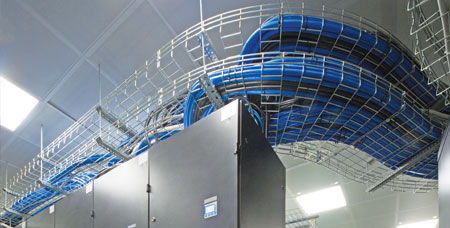
Cable basket trays are described as go-to solutions for routing and supporting numerous cable runs. The wired frame enhances air circulation and cable ventilation. This can be appropriate beneath desks, elevated floors, or hanging tray systems. You can assemble basket trays for intersections, horizontal sections, mounting braces, hardware, and tray cutters.
The cable basket tray made of welded steel wires is considered the most popular support for copper and data cabling. The basket is light-weight and easy to install with complete array of cable tray accessories. Solid basket trays are recommended for heavier wires. These baskets are fabricated to withstand natural elements. Although the material is not solid steel, it is capable of protecting cables from corrosion and last longer.
Cable Distribution and Management
The cable basket makes possible efficient dispersal and management of cables. This process is accomplished by arranging cables inside the basket trays instead of pulling them through pipe lines. The act of yanking is certainly harder and time-consuming rather than using baskets. Laying down wires in the basket take only minimal time and ensures that cables are distributed evenly around the structure.
The baskets can be stretched along the building just like pipes. However, baskets are open facilitating easier access to the cables. At the same time, it provides sufficient protection to the network cabling system. Cable baskets are lighter with easier functions compared to trays which are quite bulky. Technicians can finish more installations in one day because of fast installation.
Installation Guidelines
Incidentally, it is important to make sure that cable trays should be installed as an inclusive system. The tray should be complete with all the supports mechanisms, fasteners, guards, connections, flexible vertical and horizontal spice plates. You have to mount cable trays so the joints will be accessible for inspection and modification. Support systems are needed so the distance does not go beyond the required measurements. Install intermediary support devices in case the weight of the cable is more than tray rungs’ load capacity.
Erect supports from channel members, twisted rods and other accessories provided by the cable tray manufacturer. Organize the supports in bar or wall-bracket models as called for by the application. Make sure to take away sharp border s from cable trays. You can attach the tray to the spice pates but use square neck-carriage bolts and self-locking nuts. The cable tray should support the building structure. Finally, mount the cable trays with sufficient space to allow access for the installation of network cables.
Cable Network Trays as Support Systems
 Cable trays for networks are support systems that can be mounted on walls or hang up from ceilings. The trays are fabricated from aluminum or steel. These come in deepness of 2, 3, 4 and 6 inches. There are also multiple designs like trough (single rail), ladder, basket, and wire-mesh. The single rail is designed either with single or several options.
Types of Trays
The solid bottom trays support delicate cables. On the other hand, the center spine model is made up of a central support mechanism supporting the cable with the tray dangling from rods. This tray is important to the data communications market. The single-rail variety mounted on the wall is similar to center-spine. However, the treads can be found only on one side. Wire way is a system that is fully enclosed and provides no access to cabling inside.
Locations where cabling trays are required as well as cable types these carry have evolved during the last two decades. Cable trays are installed not only in power plants and paper mills but also in government facilities, schools and call centers. Certain manufacturers supply product categories produced for installation with uncommon requirements. For instance, the cable tray should be very robust so it can link a span of 30 feet between support systems. The short span variety supports four to five feet or limited space requirements of newly-installed components. Problems are resolved by using different types of cable trays.
Product Selection
The key to this is careful product selection since a single tray will not fit into all requirements. This offers the perfect solution. The main consideration is there are various instruments in the tool box of cable trays. You only need to match up each application for the ideal solution. Right now, there is an increasing need for big-sized trays so it will be possible to add more able in the future.
Modern installations entail manufactured support systems that can effectively hold both Category 5 and 6 cables. While cable performance becomes more efficient, cable and connector makers are also offering warranties for their performance. Along this line, the appropriate cable tray is needed so that cable performance will not be adversely affected by improper cable management.
What are the Benefits?
Contemporary cable trays have multiple benefits. These include the capacity to carry heavy weights. Installation is also faster and less complicated with reduced fitting time. Fixtures like risers, reducers and bends may be built on site. The applications have also expanded to several sectors such as industrial, infrastructure, commercial, food, and data hubs.

Resolving Vital Issues in Network Cabling
 The quality of information flow is no better than the medium that carries it. This is the cabling network. The structured cabling platform will ensure that information flows efficiently through the cabling system. It consists of transmission tools applied according to standard engineering designs that enable users to transmit voice and data signals.
The controlled cabling system is the foundation and essential investment that provides a common, mutual platform for multiple information technology systems. However, there can be problems and information flow can be obstructed because of an information technology structure that has been designed improperly. Therefore, it is necessary to tackle crucial concerns in structured cabling during the planning stage.

Things to Avoid in Running Network Cabling
What can cabling that has not been installed properly do?
It can lead to a lot of negative outcomes such as paralyzed network performance, maintenance troubles and hidden costs. Network cabling can be especially troublesome if it is installed by individuals without the proper knowledge and tools. When it comes to twisted pair cabling, there are many factors that you need to consider.
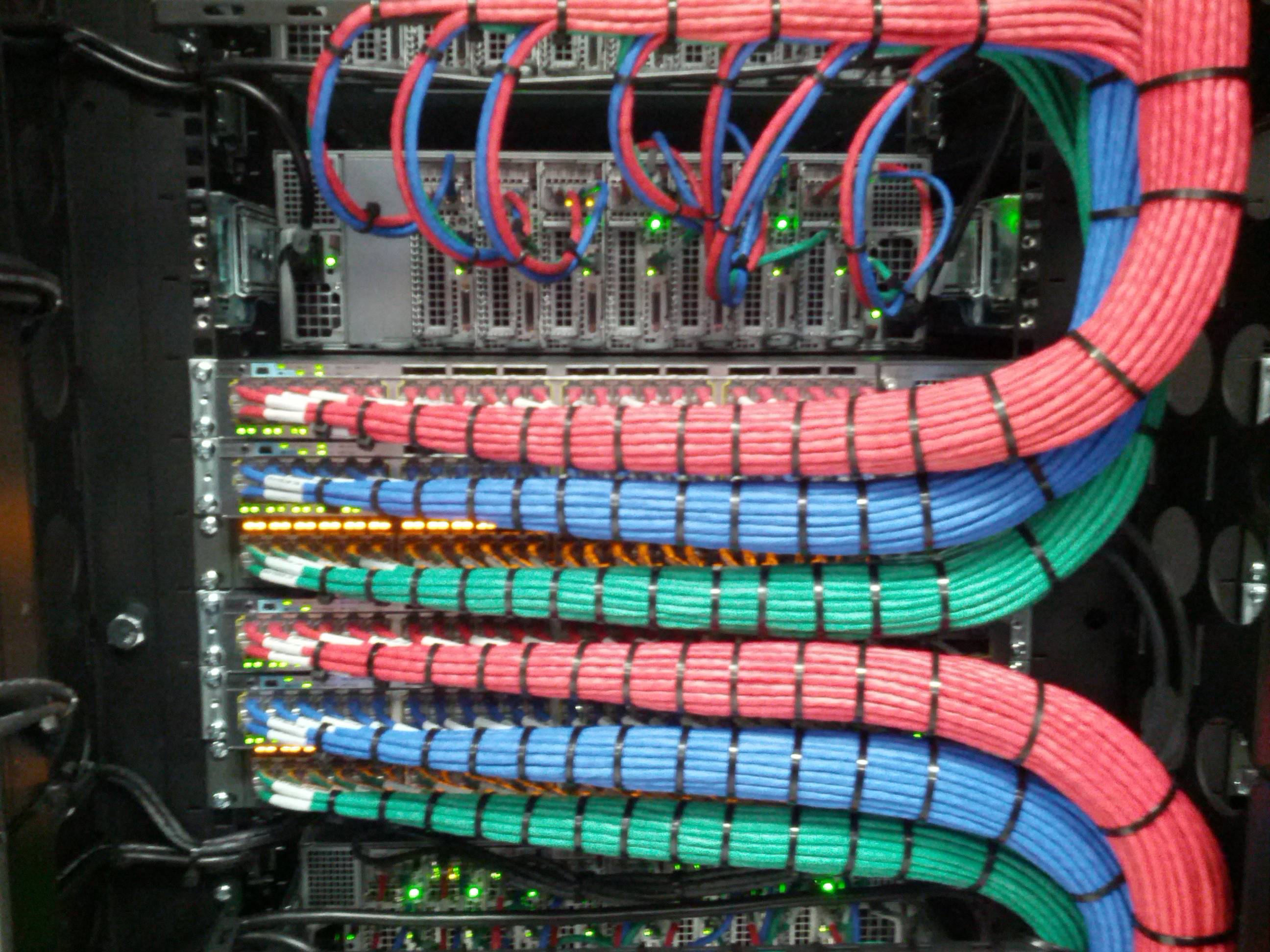
In the past, many companies installed different cable systems since twisted pair cabling was expensive. At present, full installation is still costly although a greater part of the expense is labor since raw cables is not pricey. Cable management is another concern. Use of ladder racks means additional cost but it reduces upkeep. Also be sure you label cables and to make use of color codes.
Unshielded twisted pairs are more practical in terms of usage. Magnetic fields are produced by low voltages that pass through your cables. This is a vital property of the communications cycle. And if you run unshielded cables along with electrical wires, the magnetic field can be interrupted. The communications becomes corrupted or noisy. You can expect that transmissions will not make it from one point to the other. Another possibility is that transmission rates will become slower. The cables should be perpendicular with electrical lines instead with the electric wires inside of shielded tubes at cross points.
Do not attempt to run cable alongside fixtures that create “noise”. Fluorescent lamps, motors and devices that generate electrical or magnetic interference will distort your cabling infrastructure. Install a data cable conduit that will create a buffer from these hazards. Also figure out the total distance of each cable. This is usually up to 100 meters. However, if cabling data rates reaches 10 to 40 GBPs, be attentive about distance restrictions related to the kind of cabling you plan to use. If you will run 10 GBPs for a maximum of 100 meters over twisted pair cabling, it is best to use Category 6 cabling.
Be aware of local codes.
This is important for safety concerns. In many areas, using PVC-covered cables is not allowed in air-handling spaces. When PVC burns, there is toxic emission that may prove dangerous to firefighters and other safety personnel who will try to navigate the location during emergencies. Failure to follow rules can lead to fines and forced replacement of cabling infrastructure. Contractors must be mindful of these regulatory standards.
Things to Avoid in Running Network Cabling
What can cabling that has not been installed properly do?
 It can lead to a lot of negative outcomes such as paralyzed network performance, maintenance troubles and hidden costs. Network cabling can be especially troublesome if it is installed by individuals without the proper knowledge and tools. When it comes to twisted pair cabling, there are many factors that you need to consider.
In the past, many companies installed different cable systems since twisted pair cabling was expensive. At present, full installation is still costly although a greater part of the expense is labor since raw cables is not pricey. Cable management is another concern.
Cabling Pointers for Effective Data Center Management
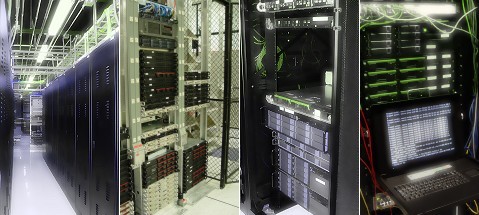
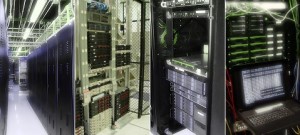 The data center supports the lifeblood of corporate enterprises. Communications stop due to the malfunction of this facility. Unfortunately, multiple issues can affect the data hub and incorrect cabling can be one of them. Planning is the key to boosting the efficiency of data center cabling.
Here are some things to consider:
- Measure cables with care. Otherwise, you produce a twisted “rat's nest” and an unnecessary waste of money.
- Put a label on both tips of your cables which include patch and short runs. This will be useful if you need to test a cluster of circuits. It will not be confusing if you unplug several patch cables. You know where each single cable is connected. The marking system must be consistent at all times.
- Never rush on termination of cables. And redo in cases where cables lose connectivity. Avoid purchasing and using cheap products. You will end up spending more in the long-term.
- Test the cables first and make sure it passes the mark for continuity. If not, you have to do it all over again. And always use a high-quality tester to avoid unwarranted work.
- Patch cables must be kept short. Remember that rack servers are only one foot away from each other. Patch cables with a length of three feet are definitely not appropriate. Combine testing and terminating capabilities to make sure that patch cables connect accurately. Additional lengths will cause a lot of twisting.
- Come up with a color coding technique. A single color is ideal for patch cables and cable runs. However, it is possible to utilize specific color cables for specific purposes. Avoid random colors. It will be easier to follow cable functions and resolve problems if your color has a purpose. Blue for data, white for voice is a common standard.
- Your design must be cable-friendly. Do not put a rack in a place where it is not possible to run your cable effectively. You may end up with cables dropping from the ceiling or scattered on the floor. Expansion should also be in your planning so you know when and how to make adjustments.
- Separate electric wires from Cat5/6 cables. Power lines can distort communications. The effects will be to have connection and data transmission issues that can result in data corruptions.
- Be careful about excessive temperature. Make sure that the cables are cool and not hot since this can result in cabling decomposition. The data center should be designed in a way that servers and networks are always at a comfortable temperature.
If you need help in designing your structured data cabling system, please feel free to call or contact us. We do free cabling site proposals.

Types Of Cabling Racks
 Effective cable management is vital to maintaining tidiness in a data facility. Cabling racks are used to prevent twisting of optical cables and communications wiring. Remember that the cabling process is very clear-cut. Hence, if a single cable becomes misplaced, it can affect the whole bundle is and the repair process can involve a lot of troubleshooting. This is expensive and a waste of time.
The Local Area Network or LAN is made up of multiple networking devices. Some of these components are Unified Threat Management solutions, routers, servers, switches, modems, and cables.

Ladder Trays For Cable Management
Cable management is an important function. There are numerous concerns that you need to consider regarding proper usage and arrangement. Having too many cables in a tray is a safety issue. It can also cause poor operational performance. And it can also make replacing and relocating a cable very difficult. So please refrain from overloading cable trays. Overhanging cable trays are mounted on ceilings or supported by a bracket at the bottom. Again, be careful because a heavy tray can fall.
Ladder trays are sometimes fitted with solid covers. They serve as protection

Basket Trays
The basket type of cable tray is made from wire lattice. The tray provides a foundation for data cables and it facilitates cable management since wires are mounted along and inside the tray. Data cabling is generally smaller but heavier than electrical wires because they are bundled and carried by these trays. A solid steel tray is preferred if heavier cables will be installed but steel is more vulnerable to rusting and exposure to elements. On the other hand, basket trays are lighter than solid racks.
The basket makes cable management and distribution less complicated