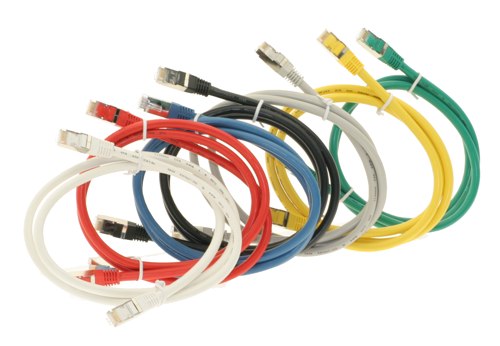
Structured Cabling, Cabling, Washington DC

Data Center Cabling Best Practices – Part 1

4 May 2017

Structured Cabling, Washington DC, New York CityModern data centers are equipped with devices and networking equipment that connect them. These devices demand increasingly greater bandwidth, and so their fiber or copper cabling must perform at a high level. Today’s data centers must be flexible, scalable, reliable, and manageable, making best practices required.


Planning the Infrastructure


Thus, documenting the existing and planned network, along with its equipment is needed. A flexible patching structure will permit the interconnection of devices at desired locations.


Structured Cabling


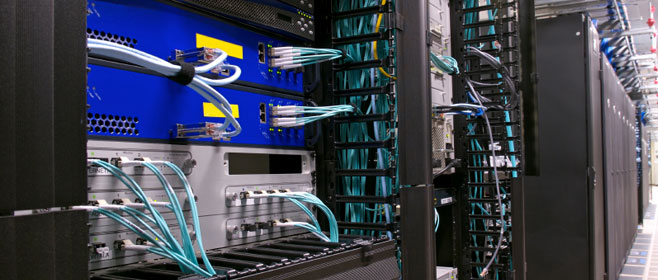
The structured approach of cabling revolves around the design of runs and connections that ease cable identification, maintenance, repair, and future expansion or reconfiguration. A Main Distribution Area (MDA) and Horizontal Distribution Area(s) (HDAs), along with two-post racks that permit improved access and cable management, will be needed.


MDA and HDA components must be of high quality and capable of bearing expected future loads. Their layout should have horizontal and vertical cable managers. The MDA contains primary cross-connects and core networking equipment. The HDA contains the cross-connects for the distribution of cables to Equipment Distribution Areas (EDAs). Patch cables will connect servers and storage by utilizing patch panels at their respective EDA.


Next, the equipment racks inside the data center must have their layout determined. A horizontal cabling configuration will be used for the distribution of cables from the HDA to the EDA. Flexible connectivity is required by a dynamic data center environment. The goal is the implementation of a system that transmits fiber channel, Ethernet, and other protocols.


Future port and application requirements will also need to be considered. Expansion and technological advances must be anticipated, so the installation of ports and cabling needed in the future should be done now to save on labor costs and downtime if upgrades are needed.


Structured Infrastructure Benefits


  • Cable identification and fault isolation simplified

  • Consistent cabling lays sound foundation for future

  • Future expansions and modifications made easier

  • Standard-compliant components from multiple vendors possible

  • Flexible connections provided


Cabling for Modular Data and High Density/High Port Count Fiber Equipment will be discussed in Part 2.


Union Network Cabling


When union work requires a unionized cabling group, call on Progressive Office Network Cabling for your commercial Cat5e/6/6a and fiber cabling projects. Specializing in cabling for data, voice, security and even the latest WiFi and LiFi solutions. Phone: (202) 462-4290
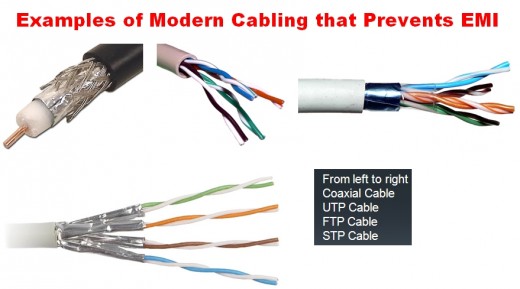
Structured Cabling, Washington DC, New York City

Resolving Vital Issues in Network Cabling

5 Jun 2015

 Structured Cabling ,Washington DC New York CityThe quality of information flow is no better than the medium that carries it. This is the cabling network. The structured cabling platform will ensure that information flows efficiently through the cabling system. It consists of transmission tools applied according to standard engineering designs that enable users to transmit voice and data signals.
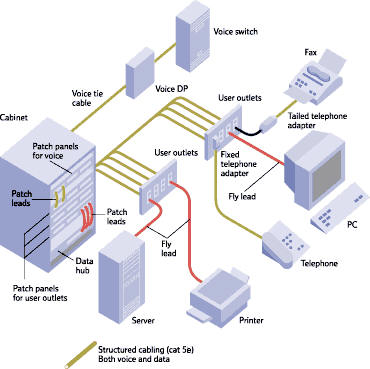

The controlled cabling system is the foundation and essential investment that provides a common, mutual platform for multiple information technology systems. However, there can be problems and information flow can be obstructed because of an information technology structure that has been designed improperly. Therefore, it is necessary to tackle crucial concerns in structured cabling during the planning stage.

Read More

structured cabling, Data Cabling ,Cat5e, Cat6/6a Cabling

Powerful Networks in Structured Cabling

16 May 2015

structured cabling, Data Cabling ,Cat5e, Cat6/6a CablingIt is known that structured cabling systems are fabricated to guarantee that information flows efficiently through the network. Such system are made up of transmission products installed based on appropriate guidelines in engineering design. These enable users to put into operation voice and data systems that capitalizes on speed.


This particular configuration has emerged as shared platform for multiple information technology applications. These include voice and data, building automation, security mechanisms, telecommunications conferencing, and fire alarms. This union transformed the structured cabling platform into the most essential network element. Therefore, it calls for a crucial investment in a very reliable, adaptable and scalable cabling structure.


High-performance Networks


This efficient and complex cabling scheme segregates the whole infrastructure into controllable blocks. After that, it puts them together to come up with a high-performance network. This end product is the vital link for many enterprises and all data hubs. Such a system facilitates consistency across the network particularly for commercial building structures. Consistency generates cost-effectiveness by standardizing maintenance processes, cutting down on manpower requirements, and improving reliability.


The “structured” design makes possible easy management by identifying specific distribution points, regular labeling and color codes, cabling management, and distribution techniques. As a rule, data facility managers use dynamic methodologies to fill the center with information technology equipment. This accommodates the evolving needs of business operations which frequently compel the need for the most modern IT equipment. Since companies rely on equipment as well as infrastructure, management believes requirements for additional IT capability should be made promptly. If the infrastructure is below par, upgrades will be much more difficult.


Crucial Concerns


The best IT specialists see to it that problems in structured cabling systems are dealt with immediately. One of the primary concerns is to employ highly competent service providers and coordinate entry points/space for each provider. This procedure enhances flaw tolerance of the overall system design. The high-performance model supports aggregate telecommunications requirements and thereby leads to a maximum returns on investments.


Centralized Intermediate Distribution Frames (IDFs) should be in centralized locations in the office facility. This will produce efficient cable management and will ease the addition of new equipment. This design technique has been adopted to avoid any disruption of the data unit or minimized once changes or upgrades are implemented. Telecommunications rooms contain the IDFs, main distribution frames and entrance facilities. Switches are installed in the middle of server rows for economical management.


Please contact us if you have any questions or concerns about your office network cabling.

Structured Cabling,Office Cabling

Cabling Pointers for Effective Data Center Management

5 Feb 2015

Structured Cabling,Office Cabling,datac enterThe data center supports the lifeblood of corporate enterprises. Communications stop due to the malfunction of this facility. Unfortunately, multiple issues can affect the data hub and incorrect cabling can be one of them. Planning is the key to boosting the efficiency of data center cabling.


 Here are some things to consider:


  1. Measure cables with care. Otherwise, you produce a twisted “rat's nest” and an unnecessary waste of money.

  2. Put a label on both tips of your cables which include patch and short runs. This will be useful if you need to test a cluster of circuits. It will not be confusing if you unplug several patch cables. You know where each single cable is connected. The marking system must be consistent at all times.

  3. Never rush on termination of cables. And redo in cases where cables lose connectivity. Avoid purchasing and using cheap products. You will end up spending more in the long-term.

  4. Test the cables first and make sure it passes the mark for continuity.  If not, you have to do it all over again. And always use a high-quality tester to avoid unwarranted work.

  5. Patch cables must be kept short. Remember that rack servers are only one foot away from each other. Patch cables with a length of three feet are definitely not appropriate. Combine testing and terminating capabilities to make sure that patch cables connect accurately. Additional lengths will cause a lot of twisting.

  6. Come up with a color coding technique. A single color is ideal for patch cables and cable runs. However, it is possible to utilize specific color cables for specific purposes. Avoid random colors. It will be easier to follow cable functions and resolve problems if your color has a purpose. Blue for data, white for voice is a common standard.

  7. Your design must be cable-friendly. Do not put a rack in a place where it is not possible to run your cable effectively. You may end up with cables dropping from the ceiling or scattered on the floor. Expansion should also be in your planning so you know when and how to make adjustments.

  8. Separate electric wires from Cat5/6 cables. Power lines can distort communications. The effects will be to have connection and data transmission issues that can result in data corruptions.

  9. Be careful about excessive temperature. Make sure that the cables are cool and not hot since this can result in cabling decomposition. The data center should be designed in a way that servers and networks are always at a comfortable temperature.


If you need help in designing your structured data cabling system, please feel free to call or contact us. We do free cabling site proposals.

Structured cabling,Network Cabling, Washinton DC

Continued Dominance of Structured Copper Cabling Systems

28 May 2014

Copper cablingNetwork Cabling ,Data Cabling,copper cabling system will remain dominant in the structured cabling systems industry. This conclusion is based on analysis and forecasts made by several cabling installation companies worldwide. Both copper and optic fiber cabling are used for key structured cabling systems applications like LAN, data centers, and Voice over Internet Protocol (VoIP). Optic fiber is gradually gaining in popularity, but copper cable still seems to be the major preference of most companies.

Read More

Cat5e, Cat6/6a Cabling ,Structured Cabling

Do Not Use Basket Tray against a Tight Ceiling

8 Aug 2012

When a new office design is in its initial stages, it is critical to consider proper handling of utilities, power water and cabling inside the walls and ceiling. For cabling, it is necessary to use hooks to hold the cables above the drop ceiling. When the installation of cable involves large numbers of cables traversing lengthy expanses, it is normal to install cable ladder trays up in the ceiling to carry the bulk of the cable along the main corridors of the office. Cable ladders vary in quality and cable handling capabilities. The amount of cable and the budget of the project will determine the type of cable ladder that will be built.


A higher quality cable ladder will, in the long run, save time and money during the installation phase of a cabling project. The alternative to a cable tray is to install cable conduit. Considerations in choosing to use a cable ladder tray system include the following:

Read More