Cabling, Installations, Network Cabling

Cat6 Installation Tips

9 Jan 2013
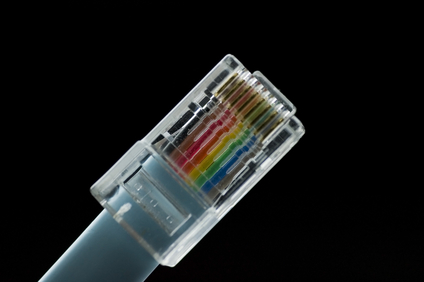
 Data Cabling, Cat5e Cat6/6a CablingAlways study and document the required cabling layout and the distances between the equipment to be cabled before starting a Cat6 cable installation.

Refer to ANSI/TIA/ EIA 606 Document for color coding the different functions used in the system guidance. Use either PVC or plenum cable as required depending on where the cables are run. Fiber optic and/or copper cable may be required depending on the transmission speed and type of equipment.
Read More
Network Cabling,data cabling,,DC

Network Cabling Issues

4 Jan 2013

Cat5 ,Cat6 ,lan cableGiven that labor costs for installation are much higher than the material cost for cable; your first requirement is to use the highest grade cable available. Cat5e is the most common, but Cat6 is becoming the standard as it is rated for a higher frequency signal, a somewhat higher cable quality, and has tighter specifications for noise and crosstalk. Both Cat5e  and Cat6 can handle gigabit speeds.


Both Cat5e and Cat6 use 10BaseT “twisted-pair” cabling, because it is ideal for either small, medium, or large networks that need flexibility and the capacity to expand as the number of network users grow.  In a twisted-pair network, each PC has a twisted-pair cable that runs to a centralized hub. Twisted-pair is generally more reliable than thin coax networks because the hub is capable of correcting data errors and improving the network's overall transmission speed and reliability. Also known as “up linking” hubs, they can be chained together for even greater expansion.


Should you install the cabling yourself, or hire a contractor? The smaller the office network, the more tempting it is to install cabling in-house. While this will save installation costs, it is important to be sure that all the cabling is installed and tested to professional standards. If your network encompasses multiple rooms-and/or floors, then hiring a professional cable installer that has experience with data communications networks is the safest and most practical route.  General electricians may not be familiar with all the requirements. Experienced cable installers such as Progressive Cabling will know the right grades of cables and connectors and have the knowledge and equipment to install and test a cabling system.

Cabling Network Cable Twisted Pairs

Cat5, 6 and 7 – What the Numbers Mean

2 Jan 2013

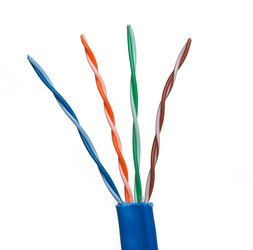
Category 6 Network Cable Twisted PairsCategory (Cat)5, 5e, 6 and 7 are different standards for cables used to transmit data through networks. All are twisted copper cables. The difference is based on their performance level.


Cat5 has become the world standard for connecting Ethernet devices. It is inexpensive and very effective; making it the most commonly used cable for connecting Ethernet devices. There are  two types, the Unshielded Twisted Pair (UTP), and the Screened Twisted Pair (SCTP).  SCTP adds a protective covering to protect against interference.  Cat5 is ideal For long distance communications as it is rigid and has the capacity to support 10-100 Mbps and 100MHz.
The gradual shift from standard 10/100 networks to gigabit networks has challenged Cat5 as it  cannot support high speeds. This led to an upgraded version, Cat5e.


Cat5e was developed to makeCat5 compatible with gigabit networks and provide extra protection from interference. However Cat5e does not completely remove interference, which results in slow and often poor performance, but Cat5e does makes networks more reliable and faster.

Cat6 is more advanced than Cat5 and Cat5e.  Like Cat 5 and 5e, it uses 4 twisted pairs of copper cables, but with much better performance. The difference comes from a longitudinal separator that keeps all 4 wires separate from one another, reducing interference or “cross talk”, and a faster rate of data transfer.  Cat6 can be used in any network that employed Cat5 and Cat5e. Cat 6 is the next level standard for Ethernet connection.

Cat7 is the next generation cabling device for Ethernet connections. It improves internal signaling and exterior protection over Cat5 and Cat6 and can support 10gigabit connections  adaptable to standard Ethernet connectors.

IT support, network infrastructure

What is “Structured Cabling”?

27 Dec 2012

data cabling,structured network cables Traditionally computer network designers developed their systems with the assumption that they will operate on a specific type of cable using a specific type of connector. Thus, each manufacturer has its own cable and connector "standard," but that standard was for their own system only. For example, here are some “standard” cable/connector systems in use:

Read More

Data Cabling, Cat5e ,Cat6/6a Cabling

Pulling cable through a basket tray via remote control tank

30 Aug 2012

This video demonstrates how we used a remote control tank named Brutus to pull cable through a basket tray that is installed above the ceiling tiles in an office. For large cabling projects it is typically useful and necessary to install a ladder tray above the ceiling tiles to carry the large bundles of cables along the corridors of a floor. At this project, the General Contractor installed basket tray. Basket tray does not provide for easy access underneath which made it especially difficult to pull the cable along. Even getting a pull string through this tray was challenging. So, we bought a remote control tank. We named him Brutus. And we attached the pull string to his back and had him drive the string along the entire length of the tray.


Go Brutus!


Data Cabling, Network cablingVOIP

Why Businesses should use VoIP

27 Jun 2011

VOIP FOR YOUR BUSINESSCompanies across the nation are reducing their cost of doing business and improving customer service by using VoIP. Companies send all their information over their broadband Internet connection, including voice calls from employees and information from PCs. Companies gain savings in areas such as start up, long distance, conferencing and network infrastructure.


VoIP turns Internet infrastructure into a huge global telephone network. All phone systems can take advantage of VoIP lines. Companies don't need an IP based (IP PBX) or an IP compatible phone system.

Read More

Network Cabling ,Data Cabling ,Cat5e, Cat6/6a Cabling

Consider the Big Picture of VOIP Savings

20 Jun 2011

 Network Cabling ,Data Cabling, Cat5e ,Cat6/6a CablingThere are a number of strategies that small business owners can employ to improve their bottom line, but few can have the profoundly positive immediate and long term impact of switching to VOIP service. In fact many commonly employed strategies for trimming costs or boosting profits can actually have a negative effect on either customers or employees.


Raising the prices of your products will most certainly increase your profit per sale, but customers who

Read More

Extending your Reach with VOIP

1 Jun 2011

voip phoneIf you are hoping to maximize the success of your small business there is a good chance that you’ll need customers or clients that extend beyond your town, region or state.  The problem for many small businesses lies in the fact that reaching out to these non local customers (and vendors) can be exceedingly expensive with traditional telephone service.
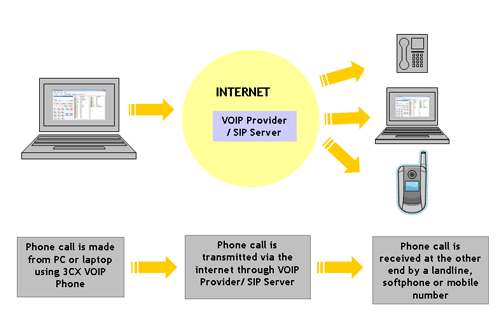

Frequent long distance calling can have a profound impact on what is likely to be an already reasonably high phone bill.   With traditional phone service you probably pay extra for features like voicemail, caller ID, conference calling and an additional rate per minute for calls outside

Read More

Office Cabling, Network CablingVOIP-Phone-

Taking Connectivity with You with VOIP

20 May 2011

Office Cabling, Network Cabling,VOIP-Phone Your current business phone system may be reliable and have plenty of features that you feel your business can’t do without, but even the greatest traditional business phone systems have limitations.  That crowded closet full of phone equipment nestled in some corner of your office, that your business phone service needs to function, allows you to only use within the office setting.


By switching your current business phone service to a much more convenient VOIP service you’ll be giving your most important form of communication portability.  You can connect with your customers and vendors via your VOIP service from your office,

Read More

Express the Highest Level of Professionalism with VOIP

18 May 2011
telephoneIn order to be successful in the business world you’ve got to be able to evoke the image of being the consummate professional every single time you communicate with a customer.  The first impression of communication could very well be through your phone system and if anything goes awry during that first call you may never get the opportunity to take another.  This is why you need to have a business phone system that fits your needs as well as it fits your budget.

Your current business phone service
Read More