How Professional Network Cabling Improves Business Productivity

17 Mar 2026

In today’s connected business environment, productivity depends heavily on reliable network infrastructure. From cloud applications and video conferencing to security systems and wireless connectivity, nearly every aspect of daily operations relies on a stable network. However, many businesses underestimate how much professional network cabling impacts performance and efficiency.


For companies nationwide, investing in properly installed structured cabling can dramatically improve reliability, reduce downtime, and help employees work more efficiently. At Progressive Cabling, we design and install network infrastructure that supports productivity, security, and long-term growth.


The Foundation of Every Business Network


Behind every high-performing network is a structured cabling system that connects all devices and systems throughout a building. This includes connections for:


  • Workstations and office computers


  • Wireless access points


  • VoIP phone systems


  • Security cameras and surveillance systems


  • Door access control devices


  • Servers and network equipment


When cabling is installed correctly, these systems communicate smoothly and consistently. When it’s poorly installed, network interruptions and slow performance become common problems.


Reducing Network Downtime


One of the biggest threats to productivity is network downtime. When connections drop or systems fail, employees are unable to complete tasks, communicate with clients, or access important information.


Professional network cabling reduces downtime by ensuring:


  • Stable and consistent connectivity


  • Proper termination and testing of cables


  • Reduced interference and signal loss


  • Organized and clearly labeled infrastructure


A reliable network allows businesses to operate without interruptions.


Supporting Faster Data Speeds


Modern businesses rely on high-speed data transfer for everyday operations. Video meetings, file sharing, cloud applications, and remote collaboration all require strong network performance.


Upgrading to modern structured cabling such as Cat6 or Cat6A allows organizations to support:


  • Faster workstation connections


  • High-performance wireless networks


  • Reliable video conferencing


  • Cloud-based platforms and applications


Faster data speeds mean employees spend less time waiting for systems to respond.


Improving Wireless Network Performance


Even wireless networks rely on wired infrastructure. Each wireless access point must connect back to the network through data cabling.


Professional cabling ensures:


  • Access points are placed strategically


  • Reliable Power over Ethernet (PoE) delivery


  • Stable backhaul connectivity


  • Consistent Wi-Fi coverage throughout the building


This leads to stronger wireless performance and fewer connectivity complaints from employees or customers.


Simplifying Troubleshooting and Maintenance


Disorganized cabling often leads to complicated troubleshooting. Without proper labeling or structure, technicians must spend time tracing cables or testing ports to locate issues.


Structured cabling simplifies maintenance by providing:


  • Organized network closets


  • Clearly labeled patch panels


  • Logical cable pathways


  • Documentation of connections


This allows IT teams to resolve issues quickly and keep operations running smoothly.


Supporting Security and Smart Building Systems


Today’s commercial buildings depend on connected security systems. Cameras, access control readers, alarms, and building automation devices all rely on network infrastructure.


Professional cabling supports these systems by providing:


  • Stable PoE connections for cameras and access control


  • Reliable communication between devices and monitoring systems


  • Secure network pathways for sensitive data


This ensures that security systems remain functional and dependable.


Preparing for Business Growth


Technology needs rarely stay the same. As companies grow, they add more employees, devices, and systems. Without scalable infrastructure, expanding a network becomes expensive and disruptive.


Professional cabling installations are designed with growth in mind, including:


  • Extra data drops for future devices


  • Expandable network closets


  • Fiber backbones for high-speed connectivity


  • Structured layouts that support new technologies


Planning ahead prevents costly upgrades later.


Industries That Depend on Reliable Network Cabling


Reliable network infrastructure is essential for nearly every industry, including:


  • Corporate offices


  • Warehouses and logistics facilities


  • Healthcare organizations


  • Educational institutions


  • Retail businesses


  • Hospitality environments


In each of these industries, network performance directly affects productivity and customer experience.


Why Businesses Choose Progressive Cabling


Progressive Cabling provides professional network infrastructure services nationwide. Businesses trust us because we deliver:


  • Certified Cat6 and Cat6A installations


  • Fiber optic backbone solutions


  • Clean and organized cable management


  • PoE-ready infrastructure for cameras and access control


  • Code-compliant commercial installations


  • Scalable solutions designed for long-term growth


Our goal is to build networks that support efficiency, security, and reliability.


Build a Network That Supports Productivity


Reliable network infrastructure is one of the most valuable investments a business can make. When cabling is installed professionally and designed for performance, employees can work faster, systems remain stable, and organizations can focus on growth.


If your business is planning a network upgrade, expansion, or new construction project, professional structured cabling is the foundation for success.


Contact Progressive Cabling today to learn how expert network cabling can improve productivity and support your business operations.

Network Cabling, Progressive Office Cabling

Enhancing Office Suite Connectivity: Fiber Installation Services by Progressive Office Cabling in Las Vegas

1 Oct 2024
In the digital age, reliable, high-speed connectivity isn’t just a convenience for businesses—it’s a necessity. Whether it’s video conferencing, data processing, or secure file sharing, robust internet speeds and dependable connections power essential daily tasks and ensure smooth operations. Fiber optic installation has emerged as the top solution for office suites due to its unparalleled speed, reliability, and security. For Las Vegas businesses ready to make the shift to fiber, Progressive Office Cabling offers specialized fiber installation services to equip your office suite with the best in connectivity technology.
Read More
Fiber Cabling Installation Washington DC

Why Cable Pros Select Fiber Optic Over Copper Cabling

29 Aug 2018

cable,cabling,installation ,Washington DCDuring your consideration of the kind of cable that should be selected for your IT network, several factors come into play. One of the decisions you will need to make is whether to use copper or fiber optic cabling.

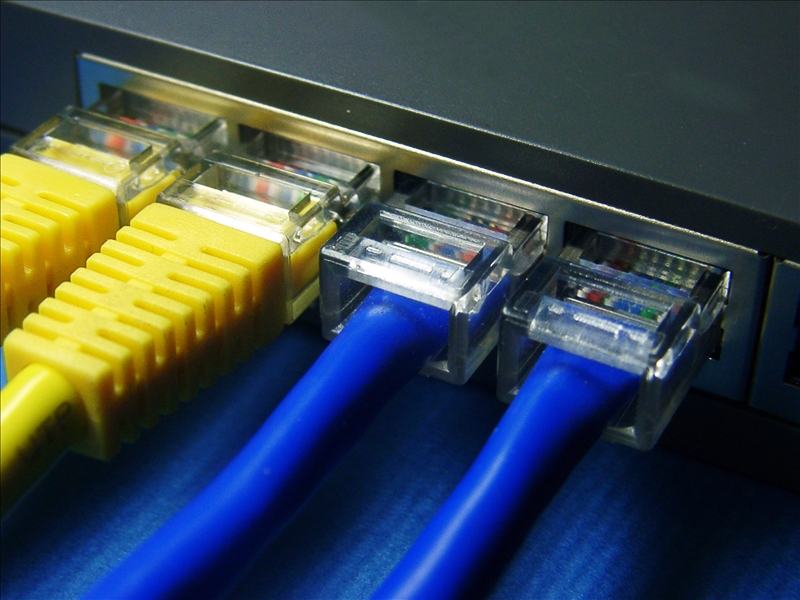
Copper certainly has plusses. It is already installed in numerous sites and is less costly for connecting network components. Although fiber optic cabling has a higher price tag, it has key advantages that make it more attractive than copper for creating structured cabling infrastructure.


The following are five reasons why most cable professionals select fiber optic over copper cabling.


Durability


Fiber optic cables have longer service lives than copper, decreasing maintenance costs and downtimes from replacements. Although fiber optic wires are made of glass, copper wires are more susceptible to being damaged.


Fiber Optic is Faster


When evaluating the transmission of copper wire to that of fiber optic, the contest can be simplified to the comparison of the speed of electrons to the speed of photons. Although C transmissions do not move at the speed of light, they are still extremely fast by moving just 31% slower than the speed of light!


Low Attenuation


Over long distances, fiber optic cables will undergo much less signal loss than copper. This quality is termed “low attenuation.” Due to attenuation, copper cables are capable of transmitting information up to a maximum of 9,328 ft, when it then loses power. In contrast, fiber optic cables are capable of transmissions up to 24.8 miles.


Resistance to EMI (Electromagnetic Interference)


If improperly installed, copper cables will generate electromagnetic currents that result in EMI inside nearby wires, which can cause serious problems throughout a network. On the other hand, fiber optic cables are not conductors of electricity.


Safer


Fiber optic cabling is safer because it won’t be a fire hazard. The reason is no electrical current travels through fiber optic cables.


Progressive Office Cabling


Founded in 1986, Progressive Office’s success has been a direct result of years of commitment to seeking solutions on behalf of our clients in the Washington, D.C. and New York City areas. Efficiently working together, Progressive teams get cabling installed and operating as fast as possible while minimizing disruption and downtime. Call our toll free number (800) 614-4560 today.

Data Cabling Network Cabling Installations

Emerging Data Center Trends for 2018 – Part 2

14 Apr 2018

cabling, Network cabling Data Cabling Network Cabling InstallationsAs discussed in Part 1, 2018 is turning into a year with several exciting emerging data cabling trends. Part 2 will discuss Low Voltage Lighting Over POE and Passive Optical Networks. Before starting your company’s data cabling project, consult with an expert and experienced team to get the best results.


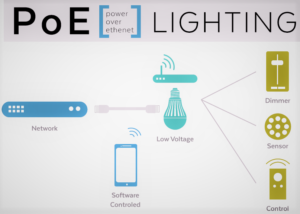
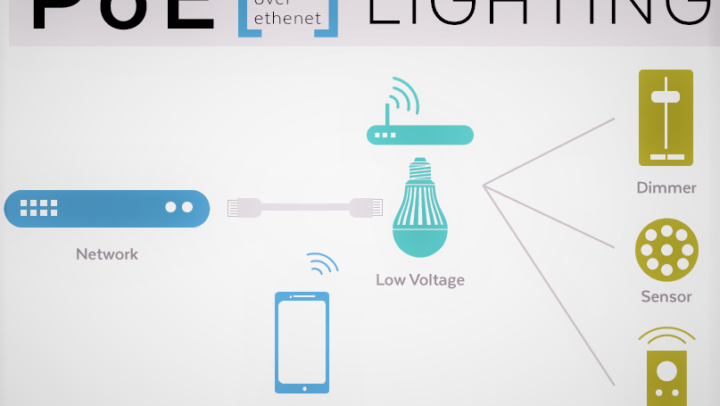
3) Low Voltage Lighting Over POE


Certain to be used increasingly in the future, low voltage lighting powered by POE (Power Over Ethernet) networks will provide several benefits. Efficient, low voltage lights need less electricity, saving on utility bills and lessening environmental impact. 

Read More

Cabling, network cabling, cable Installations

Fiber Optic Cabling for Your Business – Part 2

14 Oct 2017

Fiber Optic Advantages


Cabling, network cabling, cable InstallationsAs discussed in Part 1, fiber cables provide a number of advantages that make them superior to copper cables. This includes longer distance effectiveness, greater bandwidth capacity, resistance to electromagnetic interference, safer usage, and stronger security. Part 2 will discuss how fiber optic functions, its two main types, and fiber networks.


How Fiber Optic Cables Function


Fiber optic cables transmit data through the generation of pulses of light by light-emitting diodes (LEDs) or lasers. A fiber optic cable is composed of either a single strand or several strands of glass, each measuring slightly thicker than human hair.


The core is located in every filament’s center, and it is where light travels. Covered by cladding made of a glass layer, the core is able to reflect light inward, preventing signal loss and letting light travel through the cable’s bends.


Two Main Types


There are two main types of fiber optic cabling, single mode and multimode. Using extremely thin glass filaments, single mode fiber optic uses a laser to generate pulses of light, while multimode utilizes LEDs.


By utilizing the technique of Wave Division Multiplexing (WDM), single mode fiber networks raise the volume of data traffic transmitted over a filament. Combining light at various wavelengths is termed multiplexing, while separating them is called de-multiplexing. Thus, several streams of communication can be transmitted on a single pulse of light.


Fiber Networks


The installation of the majority of fiber cabling is intended to support long distance connections between national and international geographical locations. However, a number of internet service providers (ISPs) have made investments in the expansion of fiber to provide direct access to homes in suburban neighborhoods. These are termed "last mile" installations.


FTTH (Fiber to the Home) services, such as Google Fiber and Verizon FIOS, are becoming more common. They can provide homes with gigabit (1 Gbps) internet speeds. Direct fiber cabling runs directly from a main office to a single client, providing maximum bandwidth. In contrast, shared fiber cabling is ultimately distributed among several groups of users who are in close proximity.


Progressive Office Cabling


Founded in 1986, Progressive Office’s success has been a direct result of years of commitment to seeking solutions on behalf of our clients in the Washington, D.C. and New York City areas. Efficiently working together, Progressive teams get cabling installed and operating as fast as possible while minimizing disruption and downtime. Call our toll free number (800) 614-4560 today.

Technology,Network Cabling, cables

Fiber Optic Cabling for Your Business – Part 1

8 Oct 2017

Technology,Network Cabling, cablesThe widespread use of fiber optic cabling stems from 1950s research. These studies eventually made transmitting visible images via glass filament possible. This new technology was eventually used for viewing instruments and remote illumination for surgery. Subsequently, George Hockham and Charles Kao successfully achieved data transmission through glass fiber in 1966.


Fiber optic cabling is composed of glass fiber filaments housed within insulated casing, and these cables were designed for long distance, large capacity, and high performance data networking and telecommunications. In comparison to wired cables, fiber optic has high-bandwidth capability and is capable of data transmission over longer distances. Due to these properties, fiber optic cabling is used for a great portion of telephone, internet, and cable television systems around the world.


Fiber Optic Advantages


Fiber cables provide a number of advantages that make them superior to copper cabling. Due to properties of high bandwidth and low-loss, fiber optic cabling can be utilized over much greater distances than copper cables. Fiber optic cables can run up to 2 kilometers for data networks without repeaters. This is because light can travel much further on fiber cable and still retain its strength.


Fiber optic cables have greater capacity. Through the use of multiplexers, a single fiber optic cable can have the same network bandwidth as several hundred copper cables. It is now standard for fiber cables to be rated at 10 Gbps, 40 Gbps, and 100 Gbps.


Although it has special shielding as protection against electromagnetic interference, copper network cable is still susceptible when numerous cables are close to each other. This is in contrast to the physical properties of the glass used in fiber optic cables.


Fiber optic is also safer to use than copper in volatile spaces, where sparks can lead to disaster. It also has the upper hand in terms of security because tapping fiber cable to steal data transmission is very difficult.


Part 2 will discuss how fiber optic functions, its two main types, and fiber networks.


Progressive Office Cabling


Founded in 1986, Progressive Office’s success has been a direct result of years of commitment to seeking solutions on behalf of our clients in the Washington, D.C. and New York City areas. Efficiently working together, Progressive teams get cabling installed and operating as fast as possible while minimizing disruption and downtime. Call our toll free number (800) 614-4560 today.

IT Support,Data Cabling,Atlanta GA

Why Structured Cabling is Important for Business Phones

27 Sep 2017

IT Support, Data Cabling,Atlanta GAIf your organization is considering a new VOIP (Voice Over Internet Protocol) system, you should think about the structured cabling system needed to support it and maximize its potential. The following summarizes the advantages your digital phone system will have with a well-designed structured cabling system.


Decreased Noise


CAT 6 and CAT 6A cable provides more noise reduction than older cables. Fiber optic cabling is even better. Less noise resistance results in more static and faulty connections during phone conversations. Higher levels of noise also decrease network speed because the system is forced to retransmit data until it is no longer corrupted. Although purchasing lower quality cable saves money in the short run, it may result in long term business losses because of slower response times and annoyed customers.


Lengthened Runs


Higher quality cable will be capable of supporting longer runs that are free of artifacts and errors. Fiber optic cables are not restricted by the length of runs. It is the superior option for a data center or business telephone system because of its excellent noise resistance and high speed. Although second choices, CAT 5e to CAT 6A cabling are capable of supporting runs to 100 meters without noise. Cables that can support long runs provide greater flexibility for layouts, decreasing the need for data hubs or repeaters and increasing reliability.


Maintenance Savings


CAT 5e, CAT 6, and fiber optic cables are highly dependable. However, if they ever become faulty or the network needs to be reconfigured, a structured cabling system that is well organized and diligently marked will save time spent on maintenance. While a company’s network is down, business may be impacted, resulting in lost revenue. Tracing faults is made much easier by a sound structured cabling system.


Transmission Speed


Business is often time-sensitive, and you will want to use the highest quality cable your company can afford. CAT 6A cable is capable of supporting a maximum of 10 Gigabits per second while CAT 5e can only achieve 100 mbps. Older, less capable cables are not recommended because their slow data transmission and high noise levels cannot meet current VOIP demands.


Progressive Office Cabling


Founded in 1986, Progressive Office’s success has been a direct result of years of commitment to seeking solutions on behalf of their clients in the Washington, D.C. and New York City areas. Efficiently working together, their teams get cabling installed and operating as fast as possible while minimizing disruption and downtime. Call their toll free number (800) 614-4560 today.

Network Cabling,Washington DC New York City Atlanta GA

Cabling Tips for Data Center Management

1 Sep 2017

Network Cabling,Washington DC, New York City, Atlanta GAWhenever there is an IT systems issue, the resolution can often be delayed by poorly structured cabling. Enterprises often turn to their IT staff or an electrical contractor for cabling, but they would be wiser retaining a professional cabling service with years of experience. The following are important cabling tips for data center management.


Highest Quality for Budget


As expected, higher quality cabling materials are more costly, but have superior performance. For example, gold connectors have greater resistance to corrosion, but they will also be more expensive than lower-quality connectors. If your firm’s cabling will be difficult to access or located in a corrosive environment, cables with gold connectors will be the right choice.


Cabling Capable of Company Volume


Category 5, 5E and 6 are cable types and each has its own capabilities in terms of the amount of data carried, speed of transmission, and distance covered. Consult with a professional network cabling service to discuss your present and future requirements in order to select the proper cabling.


Fiber Optic for the Future


Companies expecting large data volumes in the future or requiring longer distances should select fiber optic cables. Retain expert cabling professionals because fiber optic installation will entail particular requirements that can be complex.


Accurate Measuring for Planning


When the recommended span is exceeded, cable becomes more vulnerable to distortion, degrading data quality and speed. IT staff with limited experience may not properly measure the entire distance by not accounting for corners or obstacles.


Margin for Future Modifications


The office may be reconfigured or cable connections may be moved in the future. Thus, it would be wise to allow some margin for future modifications by providing plentiful slack for each cable installed.


Labeling for Organization


An IT team should know precisely where a cable starts and terminates. Clear labeling enables faster tracing of faults, minimizing downtime and resulting losses in revenue. Cabling service professionals carry out proper labeling as a matter of routine.


Progressive Office Cabling


Founded in 1986, Progressive Office’s success has been a direct result of years of commitment to seeking solutions on behalf of their clients in the Washington, D.C. and New York City areas. Efficiently working together, their teams get cabling installed and operating as fast as possible while minimizing disruption and downtime. Call their toll free number (800) 614-4560 today.

Network Cabling ,Data Cabling, Fiber-optic cable,New York City

Modern Cabling System Design Trends – Part 2

17 Aug 2017

Office Cabling,New York CityAs discussed by Part 1, the most significant trend in IT (information technology) is the greater reliance of organizations on high-performance data communications (datacom) cabling. Part 2 will cover High Performance Cabling and Aesthetics of Cabling.


High Performance Cabling


The use of high performance cabling of copper and fiber optic cabling is influencing the design of wiring and cabling management systems. Data transmission integrity must be maintained by cable bend radius specifications. Now available are specialized fittings for raceways and other management systems that ensure minimum cable bend radius, preventing damage and maintaining effectiveness. Upcoming technologies such as 10 G/s Ethernet will result in greater demands, making it even more important that every aspect of a structured cabling system ensures high performance.


Being able to provide adequate space for the accommodation of bend radius needs to work in conjunction with the goal of being unobtrusive visually. This objective is affected by the necessity of physically separating power and low-voltage channels to prevent EFT (electrical fast transient) disturbances. Fortunately, a new raceway design maintains complete separation through crossover fittings that provide more space inside the raceway, allowing the bend radius of 10G/s cable’s larger diameter.


Aesthetics of Cabling


The design of modern wiring and cable management systems now aspire to both form and function. Non-metallic raceways with visually attractive profiles in a variety of colors are now available in the marketplace. Stainless steel is also trending, featuring plates that conceal seams. Moreover, components can be combined in matching colors and styles. This ongoing aesthetic drive has led to almost invisible activations that are recessed and flush. Poke-through devices now feature datacom ports and receptacles with sleeker profiles. Accommodating a greater number of outlets, high-capacity service activations are much less obvious than dated low-capacity fittings.


Summary


Product development for wiring and cabling management systems must unceasingly keep pace with increasingly complex datacom requirements. Solutions from manufacturers must be compatible with a wide variety of datacom cabling, allow for both system and operational flexibility, and deliver eye-pleasing aesthetics in the workplace.


Progressive Office Cabling


Founded in 1986, Progressive Office’s success has been a direct result of years of commitment to seeking solutions on behalf of their clients in the Washington, D.C. and New York City areas. Working together, their cabling teams get cabling installed and operating as fast as possible while minimizing disruption and downtime. Call their toll free number (800) 614-4560 today.

Data Cabling,Structured Cabling,Washington DC

Setting Up a Campus Network

23 Jul 2017

Data Cabling,Structured Cabling,Washington DCAcademic institutions can garner all the benefits of the Internet age by integrating information and communications technology (ICT) with their teaching and learning environments. ICT is an extension of the term for information technology (IT), emphasizing the unification of telecommunications, computers, software, storage, and audio-visual components within a network.


The quality of education can be significantly improved through the sharing of skills, resources, content, and faculty development. IT content and resources should be available to both faculty and students throughout the campus. To this end, academic institutions must establish a network in each of their campuses, achieving the same speed of data transfer at each building.


Typically, a campus network is comprised of several local area networks (LANs) that are interconnected inside a specific geographical area. Networking components, such as switches, routers, and firewalls, and transmission media, such as copper cable and optical fiber, are utilized for interconnection and communication between connected devices.


Campus Network Topology


For academic institutions like colleges or universities, a campus area network should be interconnected to various types of buildings, including administrative, academic, library, student center, hostel, guest house, sports facility, conference, technology, training, and laboratory.


A campus network will be interconnected via high-speed Ethernet cabling over optical fiber of up to 10GB capability. For the efficient processing of data and information traffic using distribution, access and core segments, tiered hierarchal architecture is utilized.


Every building, block, center, and residential complex will be connected by high-speed optical fiber cable. Moreover, every node within a building will be connected with UTP copper cable that supports gigabit speed.


The conference rooms, teaching halls, and common areas inside each campus will be Wi-Fi enabled through the deployment of 802.11 based wireless access points with central authentication, permitting secure network access via laptops, tablets, smartphones, and other Wi-Fi enabled devices.


Internet services, along with common applications, will also be installed at key locations, such as library study halls, allowing students, faculty, and staff easy access via desktop computers and laptops around the clock.


Network Cabling


When  work requires a unionized cabling group, call on Progressive Office Inc.   for your commercial Cat5e/6/6a and fiber cabling projects. Specializing in cabling for data, voice, security and the latest WiFi and LiFi solutions. Phone: (202) 462-4290