Network Cabling,Cat6 Cable New York City

Basics and Benefits of Zone Cabling – Part 2

14 Dec 2017

Network Cabling,Cat6 Cable New York City As mentioned in Part 1, zone cabling designs provide benefits in materials savings, decreased installation times, and easier MACs (moves, adds, and changes). Part 2 will continue discussing the basics and benefits of zone cabling.


Designs


Experts recommend CAT 5e and 6 UTP (unshielded twisted pair) zone cabling topology with a connecting block system within the ZE (zone enclosure). This configuration will render unnecessary the stocking of factory pre-terminated and tested interconnect cords for connections in the ZE, simplifying cable management through the elimination of cable slack.


Please note that CAT 6A UTP media is not recommended for zone cabling due to reasons involving performance and flexibility. UTP cabling is vulnerable to crosstalk in particular installation scenarios. In addition, it is not the best media for supporting remote power applications with loads of 30W or more. Because CAT 6A UTP zone deployment is dependent on modular connections inside the ZE, connections provided by pre-terminated and tested interconnect cords need to be available for rapidly enabling MACs. Affordable shielded zone cabling solutions are recommended to address these situations.


Cost Savings


Even though more CAPEX (capital expenditure) will be necessary for a zone cabling installation, assessing total costs should also account for OPEX (operating expenditure). The performance of MACs is classified as OPEX, and studies by Siemon found there are hundreds of dollars in savings from each move, addition, or change when using a zone cabling design versus a traditional cabling design. Their study also discovered a tipping point when ROI begins accruing from utilizing a zone cabling design.


IT (information technology) needs for many organizations evolve constantly, which requires being able to quickly reconfigure floor space. An improved capability of supporting MACs will allow owners of facilities to achieve considerable ROI benefits from deploying zone cabling systems in a two to five year period. According to Siemon, the combined costs of CAPEX and OPEX for zone cabling designs will be invariably less than traditional cabling designs


Part 3 will continue discussing the basics and benefits of zone cabling.


Progressive Office Cabling


Founded in 1986, Progressive Office’s success has been a direct result of years of commitment to seeking solutions on behalf of our clients in the Washington, D.C. and New York City areas. Efficiently working together, Progressive teams get cabling installed and operating as fast as possible while minimizing disruption and downtime. Call our toll free number (800) 614-4560 today.

Structured Cabling, Cabling, Washington DC

Improve Data Center Reliability with Structured Cabling – Part 2

29 Nov 2017

Structured Cabling, Cabling, Washington DCAs mentioned in Part 1, data center efficiency can be improved by properly planning and implementing structured cabling principles. In addition, structured cabling best practices should be the foundation of every data center. Part 2 will discuss Cabling Infrastructure and Improved Network Function.
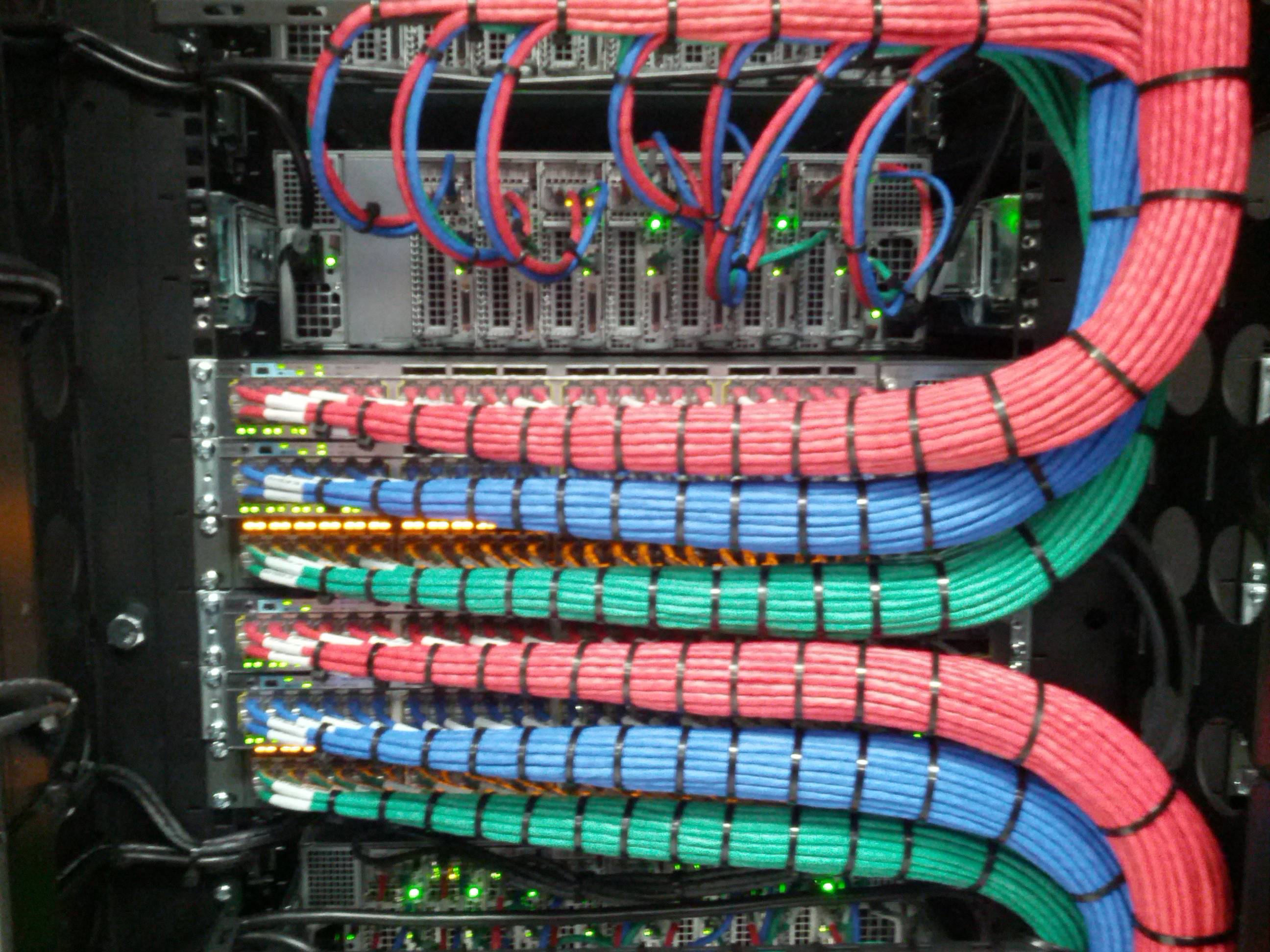


Cabling Infrastructure


It would be wise to constantly keep the future in mind while you are installing your cabling infrastructure. Setting aside space will allow for expansion. The goal is to make your structured cabling both sound and dependable.


Testing Policy – After the addition or removal of equipment, testing every connection makes sure that a data center will be reliable over time. Performing these tests as a standard practice will help prevent issues that result in downtime. Inconsistent testing practices will result in an unreliable data center.


Standardization – The standardization of cable and rack usage will significantly facilitate maintenance. When there is a meltdown, the managers and engineers of a data center won’t have any doubts as to the types of cables and configuration of racks that are being utilized.


Documentation – When proper documentation is neglected, the training of new staff members will be much more difficult and take longer. The addition of equipment and related components will also result in more errors. Good documentation is integral for every sound structured cable system.


Spare Cables – The stocking of spare cables to prepare for contingencies will help prepare a data center for crises that may strike a structured cabling system.


Improved Network Function


A data center will have losses of up to $10,000 for each minute of unplanned outage. Implementing the best practices of TIA/ISO standards will raise the performance of a structured cabling system and make a data center more reliable. Its computer network will have the following benefits:


  • Greater responsiveness

  • Increased reliability and overall performance

  • More secure data backup, storage, and retrieval

  • Flexibility for accommodating additional computer terminals and components

  • Capable of supporting telephony and other network-dependent systems


Progressive Office Cabling


Founded in 1986, Progressive Office’s success has been a direct result of years of commitment to seeking solutions on behalf of our clients in the Washington, D.C. and New York City areas. Efficiently working together, Progressive teams get cabling installed and operating as fast as possible while minimizing disruption and downtime. Call our toll free number (800) 614-4560 today.

Data Cabling,Structured Cabling, Cabling Design-Washington DC

Improve Data Center Reliability with Structured Cabling – Part 1

22 Nov 2017

Data Cabling,Structured Cabling, Cabling Design-Washington DCCabling systems were once proprietary prior to the 1990s, which was a major problem for data centers. Each modification required vendor-specific knowledge of each component of the cabling system. In 1991, the TIA/EIA-568 standard was introduced to bring about structured cabling systems.


Although 5% percent of a network budget is currently spent on structured cabling, 59% of downtime can be attributed to it. Most downtime results from not adhering to standards. Data center efficiency can be increased by proper planning and implementing structured cabling principles. Structured cabling best practices should be the foundation of every data center.


Proper Planning


Designing proper cable runs, identification of cable types, the process of network verification, planning for future expansion, and accurate documentation are all part of the proper planning for structured cabling. Lacking these, a data center would be disorganized and chaotic.


A data centers begin at the MDA (Main Distribution Area), single or multiple HDA(s) (Horizontal Distribution Area), as well as the required equipment and spacing to allow cable access. The Main Distribution Area is the location of core networking equipment. The cross-connects of HDAs are utilized for the distribution of cables to the EDA (Equipment Distribution Area). A well-organized data center is the product of a structure that is well-planned.


Best Practices


Proper Standards –To attain high levels of proficiency, cabling standards, which are revised every five to ten years, must be followed. Remaining up-to-date will allow a data center to be more adaptable to changes of technology. American data centers now comply with the TIA/EIA-568 standard developed by the TIA (Telecommunications Industry Association), while business and companies located overseas comply with the ISO/IEC IS 11801.


Cable Identification System – In addition to standards, implementing an identification system utilizing colors and labels will assist managers in data center organization. A sound system will conserve both time and money over the long term. Addressing problems or even maintaining aging equipment is eased by a well-defined and easily understandable cable identification system.


Part 2 will discuss Cabling Infrastructure and Improved Network Function.


Progressive Office Cabling


Founded in 1986, Progressive Office’s success has been a direct result of years of commitment to seeking solutions on behalf of our clients in the Washington, D.C. and New York City areas. Efficiently working together, Progressive teams get cabling installed and operating as fast as possible while minimizing disruption and downtime. Call our toll free number (800) 614-4560 today.

Cat5 Cat6 Network Cabling,Washington DC

8 Network Cabling Mistakes to Avoid – Part 1

9 Nov 2017

Cat5 Cat6 Network Cabling,Washington DC Improperly installed twisted pair cabling can result in poor network performance, maintenance issues, and concealed expenses. The following article discusses eight network cabling errors to avoid. To get the best results for your cabling project, make sure to consult with a company that is experienced and provides excellent service.


Mistake No. 1: No Future Planning


If your company is moving to a new office space and new cabling will be required, it would be wise to avoid outdated technology and install equipment that will meet both your current and future needs. Labor costs will likely be the costliest aspect of the project. Although high-quality cable will not be cheap, it will be well worth the investment for your firm’s network requirements the next several years.


Mistake No. 2: Poor Cable Management


Implementing rack-based and ladder rack cable management will certainly raise the outlay for a project. However, sound cable management will ease maintenance and decrease downtime. You should be aware that cabling tasks do not end after installation. Additional cables will probably be needed, and configurations may be revised. Use a standard system for labeling and color coding cables for faster and easier identification. Doing so will speed tasks like repair, reconfiguration, and replacement.


Mistake No. 3: Parallel with Electrical Wiring


Generated by low voltage, the magnetic field conducted by data UTP (unshielded twisted pair) cables is an important feature for the conveyance of data. However, when UTP cables run parallel to electric wiring, there will be a disruption of its magnetic field. This results in garbled and noisy communication. Sometimes transmissions completely fail from point to point. Another negative effect is the extreme slowing of transmission.


Mistake No. 4: Nearby Devices and Fixtures


Noise can be introduced onto data cabling by more than just electrical wires. Fluorescent lighting, motors, and similar items that shed electrical or magnetic interference will wreak havoc on your cabling infrastructure as well. Make sure that in your planning, you leave a data cable pathway that avoids these kinds of hazards.


Part 2 will discuss four more network cabling errors to avoid.


Progressive Office Cabling


Founded in 1986, Progressive Office’s success has been a direct result of years of commitment to seeking solutions on behalf of our clients in the Washington, D.C. and New York City areas. Efficiently working together, Progressive teams get cabling installed and operating as fast as possible while minimizing disruption and downtime. Call our toll free number (800) 614-4560 today.

Structured Cabling,Washington DC New York City

The 5 Most Common Structured Cabling Errors – Part 2

28 Oct 2017

Structured Cabling,Washington DC New York CityAs mentioned in Part 1, structured cabling systems are so standardized that good practices should merely entail following ISO/IEC, CENELEC or Telecommunications Industry Association (TIA) documentation. Part 2 will discuss three more common errors of structured cabling.


Error No. 3


Failing to properly test a structured cabling system after installation is the third error. Structured cabling represents a large commitment of capital expenditure and will typically have the same length of service life as the facility itself. Ensuring that the entire system is installed to specification and the data is at the capacity and speed expected is crucial. Finally, properly testing the cabling system is required to validate the warranty.


Cables installed during the early period of construction may have been subsequently damaged by other workers performing their roles later during the project. Moreover, new cables that appear fine on the exterior may actually be faulty because of damage underneath the coating as a result of being mishandled. All cables require calibrated testing.


Error No. 4


Using unqualified technicians for installation is the fourth error. Scrimping on the quality of workers installing cabling is an unwise way to save money. Problems will eventually be revealed over time. Prior to committing to a service contract with a structured cabling service, review their credentials and confirm their references. Have conversations with previous customers whose project is similar in scope to yours. Working with a reputable structured cabling firm will help make sure your project will be successful for the long term.


Error No. 5


Letting structured cabling patch panels become disorganized is the fifth error. It will harm both the performance and reliability of a company’s IT systems. As time passes, the patch panel or switch ports may be damaged, causing intermittent problems that are very hard to pinpoint. The use of proper cable management hardware for supporting patch cables is good practice. Complying with the specified patching standards required for a particular structured cabling system will result in a sound and reliable network.


Progressive Office Cabling


Founded in 1986, Progressive Office’s success has been a direct result of years of commitment to seeking solutions on behalf of our clients in the Washington, D.C. and New York City areas. Efficiently working together, Progressive teams get cabling installed and operating as fast as possible while minimizing disruption and downtime. Call our toll free number (800) 614-4560 today.

Technology,Network Cabling, cables

Fiber Optic Cabling for Your Business – Part 1

8 Oct 2017

Technology,Network Cabling, cablesThe widespread use of fiber optic cabling stems from 1950s research. These studies eventually made transmitting visible images via glass filament possible. This new technology was eventually used for viewing instruments and remote illumination for surgery. Subsequently, George Hockham and Charles Kao successfully achieved data transmission through glass fiber in 1966.


Fiber optic cabling is composed of glass fiber filaments housed within insulated casing, and these cables were designed for long distance, large capacity, and high performance data networking and telecommunications. In comparison to wired cables, fiber optic has high-bandwidth capability and is capable of data transmission over longer distances. Due to these properties, fiber optic cabling is used for a great portion of telephone, internet, and cable television systems around the world.


Fiber Optic Advantages


Fiber cables provide a number of advantages that make them superior to copper cabling. Due to properties of high bandwidth and low-loss, fiber optic cabling can be utilized over much greater distances than copper cables. Fiber optic cables can run up to 2 kilometers for data networks without repeaters. This is because light can travel much further on fiber cable and still retain its strength.


Fiber optic cables have greater capacity. Through the use of multiplexers, a single fiber optic cable can have the same network bandwidth as several hundred copper cables. It is now standard for fiber cables to be rated at 10 Gbps, 40 Gbps, and 100 Gbps.


Although it has special shielding as protection against electromagnetic interference, copper network cable is still susceptible when numerous cables are close to each other. This is in contrast to the physical properties of the glass used in fiber optic cables.


Fiber optic is also safer to use than copper in volatile spaces, where sparks can lead to disaster. It also has the upper hand in terms of security because tapping fiber cable to steal data transmission is very difficult.


Part 2 will discuss how fiber optic functions, its two main types, and fiber networks.


Progressive Office Cabling


Founded in 1986, Progressive Office’s success has been a direct result of years of commitment to seeking solutions on behalf of our clients in the Washington, D.C. and New York City areas. Efficiently working together, Progressive teams get cabling installed and operating as fast as possible while minimizing disruption and downtime. Call our toll free number (800) 614-4560 today.

Structured Cabling,Washington DC New York City

Important Considerations for Structured Cabling

13 Sep 2017

 cables,structured cabling, Network CablingAn infrastructure for enterprise communications, structured cabling is a system of hardware and cables designed for flexibility and future capability. Complying with the Electronic Industry Alliance/Telecommunications Industry Association (EIA/TIA), conventional structured cabling meets the organization’s standards internationally. The following are three important aspects of structured cabling that every organization should consider.


Savings


Over time, IT infrastructure has become more condensed and more sophisticated, and the importance of structured cabling has grown. Structured cabling eases a company’s expansion via a design that allows the adoption of additional hardware and software. As it has consistent network architecture, structured cabling allows the simplification of maintenance and repair, decreasing costs of upkeep. A study by the International Engineering Consortium discovered that standardizing cabling components and reducing cable delivery methods decreased startup construction outlay by almost a third. Moreover, expenses for network maintenance are lowered 40%.


Trends


Structured cabling is gradually making the transition from copper cabling to fiber optic because companies desire greater speed and better air circulation for the reduction of cooling costs. Lighter and narrower cables allow an overhead system of cabling to be installed instead of raised-floor cabling. The installation and management of cabling is made easier by less cumbersome cables, and so this trend will grow over time.


Planning


Sound planning is crucial for the success of IT projects. The future number of users, their locations, and required bandwidth must be diligently considered. How PoE (Power over Ethernet) will provide power to devices via must be studied. As Wi-Fi use grows, the number of wireless access points must be determined by every enterprise. Where will cables be located inside and outside the premises? Will the structured cabling be able to cope with moves and changes within the premises? Scalability and flexibility are both important, and so the locations of furniture and server racks must be carefully planned with respect to cabling. IT staff should also understand that different types of cable have limitations as to the length of their respective runs. Finally, there may be government regulations for structured cabling that require compliance.


Progressive Office Cabling


Founded in 1986, Progressive Office’s success has been a direct result of years of commitment to seeking solutions on behalf of their clients in the Washington, D.C. and New York City areas. Efficiently working together, their teams get cabling installed and operating as fast as possible while minimizing disruption and downtime. Call their toll free number (800) 614-4560 today.

structured cable management

Structured Cabling’s Six Subsystems – Part 2

28 Aug 2017

structured cable management,DCAs mentioned in Part 1, a structured cabling system is a type of open network structure that can be used by data, telephony, access control, building automation, and other systems. Its advantages are operational flexibility and economy. Part 2 will describe each of structured cabling's six subsystems below.


The Six Subsystems


1. Entrance Facilities


Entrance facilities house the protection devices, network demarcation points, cables,  connecting hardware, and other equipment that connect to private network cabling or the access provider. Connections between the inside building and outside plant cabling are included.


2. Equipment Room


Featuring environment control, the centralized area for telecommunications equipment is typically more complex than a telecommunications room. Usually containing the main cross-connect, it may also house the horizontal and intermediate cross-connects.


3. Backbone Cabling


Backbone cabling provides the interconnections between entrance facilities, telecommunications rooms, equipment rooms, etc. Typically, backbone cabling is comprised of fiber optic cables, intermediate and main cross-connects, mechanical terminations, and patch cables utilized for backbone-to-backbone cross-connections.


4. Telecommunications Room


Housing the terminations of backbone and horizontal cables to connecting hardware with patch cords or jumpers, a telecommunications room may also house the intermediate cross connects or main cross connect for different portions of the backbone cabling system. This space is a controlled environment containing telecommunications equipment, connecting hardware, and splice closures.


5. Horizontal Cabling


Extending from the work area’s telecommunications information outlet to the telecommunications room, the horizontal Network Cabling consists of horizontal cables and mechanical terminations, along with the jumpers and patch cords located in the telecommunications room. The system may also incorporate consolidation points and multi-user telecommunications outlet assemblies.


6. Work Area


The work area’s components typically extend from the telecommunications outlet/connector end of the horizontal cabling system to the work area equipment. At least two telecommunications outlets should be installed in every work area. If utilized, multi-user telecommunications outlet assemblies (MUTOAs) are a component of the work area.


Progressive Office Cabling


Founded in 1986, Progressive Office’s success has been a direct result of years of commitment to seeking solutions on behalf of their clients in the Washington, D.C. and New York City areas. Working together, their cabling teams get cabling installed and operating as fast as possible while minimizing disruption and downtime. Call their toll free number (800) 614-4560 today.

Cable Management,Cable Management ,Data Cabling ,Cat5e, Cat6/6a Cabling

Security Aspects of Structured Cabling – Part 1

11 Jul 2017
 

structured Cable Management/ BlogCabling system designed for the purpose of security have hardly changed the last decade and a half. Delivering video images and access control data to a control room utilizing standard transmission technology is basic and familiar. What has recently changed is the transition to IP-based security products and the rapid increase in business applications, resulting in end-users expecting a greater video, audio, and data integration. All of these items require delivery over one standardized structured cable system.


As opposed to traditional video and access control systems, voice and data communications cabling systems have had numerous transformations. Functioning on structured cable systems, data networks have shifted from the pioneering 1980s proprietary cabling to standards-based cabling using optical fiber and balanced twisted pair. This has resulted in greater transmission speeds and significantly increased network bandwidth. These two elements allow a security installer to achieve integration that is demanded by clients for CCTV, access control, and other applications. Through the adoption of standardized structured cabling, installers will be able to access new streams of revenue and provide tangible benefits to users by unifying all of their systems within one cabling infrastructure.


This change in the utilization and deployment of structured cabling systems was recognized by ANSI/TIA-862-B “Structured Cabling Infrastructure Standard for Intelligent Building Systems”, which was developed by the TIA TR-42.1 Commercial Building Cabling Subcommittee and released February 2016. This standard features the requirements of several standard and developing systems that are able to use the existing cabling of buildings. It also includes Distributed Building Services that do not utilize a building’s infrastructure cabling because of application, connector, historic, and topographic limitations.


A company’s network infrastructure is crucial in the distribution of information using electronic media, including CCTV, access control, data, and voice. Functioning over a structured cabling system, this distribution network is developed for the perpetual flow of data, featuring redundancy at the heart.  Installed with centralized topology, this enabled the most facile sharing of resources achievable, along with the greatest flexibility and expandability possible.


Part 2 will cover Structured Cabling Benefits for Your Business.


Network Cabling


When work requires a unionized cabling group, call on  Progressive Office Inc.,   for your commercial Cat5e/6/6a and fiber cabling projects. Specializing in cabling for data, voice, security and the latest WiFi and LiFi solutions. Phone: (202) 462-4290

structured cabling,Network Cabling,Washinton DC

Challenges and Planning of a Structured Cable System – Part 3

5 Jul 2017

 structured Cabling, Network Cabling, Washington DCAs previously discussed, the transition to IP-based security products and the rapid increase in business applications has resulted in end-users expecting greater video, audio, and data integration. These items require delivery over a standardized structured cable system. The following are the benefits offered by structured cabling for security systems. Part 3 will cover the Challenges and Planning of a Structured Cabling System.


Challenges


Typically, customers exploring the security market are advised that the only method for deploying a new access control system or an IP video surveillance system is through the removal of all current coaxial or UTP cable and then the installation of an entirely new Cat 5/6 structured cabling network.


Another method is much less disruptive and cheaper. It uses existing cable and employs an IP transmission system that is a hybrid. There are numerous hybrid transmission systems available that enable installers to make good use of extended Ethernet and PoE power distances through existing cable.


Planning


An effective, structured cabling system supports all the communication needs of a company with the integrated flexibility that enables users to link to CCTV cameras, VoIP telephones, access control points, and data devices. Planning a security system upgrade will include several crucial considerations as summarized below.


  • Applications: What will the system accommodate now as far as data, video, voice, and multimedia applications? What emerging technologies will be adapted in the future?

  • Service Lifetime: The service lifetime of a structured cabling system should be 15 to 20 years because it will be the spine of an organization’s communications network.

  • Compatibility: The applications that will function on the structured cabling system for the foreseeable future should be compatible with it.

  • Bandwidth: As bandwidth demand will usually increase because of business growth, a company must consider present and future demand.

  • Users: For the 15 to 20 year service lifetime of the structured cabling system, the estimated number of users during this period should determine the capacity required.

  • Modifications: Fiber-optic technologies are being developed rapidly, and the design of a structured cabling network should include flexibility in order to accommodate modifications and additional users.


Union Network Cabling


When union work requires a unionized cabling group, call on Union Network Cabling for your commercial Cat5e/6/6a and fiber cabling projects. Specializing in cabling for data, voice, security and the latest WiFi and LiFi solutions. Phone: (202) 462-4290