Network Cabling ,cat5 cat6 cabling

How Does Structured Cabling Work?

10 Nov 2023

CablingNetwork Cabling, Data Cabling,cat5 cat6 cabling is an essential component in your network. It also has a long life span, from 15 to 20 years, so it may be necessary to replace your network equipment at least three times during the life of the cabling configuration. Cable installation is roughly 15 percent of the total network outlay. So it is advisable to invest in premium cabling systems, particularly to reduce maintenance costs and downtime while also achieving improved network performance. Entrepreneurs are always advised to look at the long-term scenario and acquire the best cable installation available.


Uninterrupted Flow of Information


There is no doubt regarding the importance of a structured cabling system in the operations of a business organization. This complete system with related hardware provides far-reaching telecommunications; it has a broad range of uses like supplying phone services or transmitting information through a network of computers. Each structured cabling system is unique depending on a number of factors, including the architectural formation of edifices that houses cabling installation, cable and connection components, equipment variety that cabling supports, configuration including upgrades and retro-fitting, requirements of clients, and manufacturers’ warranties.


The assembly that has been planned carefully and installed according to this plan ensures an unbroken network of information and communications. Aside from this advantage, structured cabling facilitates sharing of resources, enables smooth operations, and adapts to evolving technology. In fact, it is expected to last longer than computer servers and network switches. The types of network installations are the Local Area Network (LAN), Metropolitan Area Network (MAN) and Wide Area Network (WAN).


Cabling installation firms design and install LAN systems consisting of data and voice as well as support equipment for computer networks and mainframe programs of PCs. All installations must comply with state and city codes together with manufacturers’ specifications.


Other Benefits


Structured cabling offers users more flexibility. It takes the place of multiple wiring systems with a single and cohesive infrastructure. This conveys data in various formats ranging from voice to video. You only need to plug the correct adapter into the socket whether you want to connect a computer, telephone or fax machine.


It affords users peace of mind since each cabling comes with full on-site warranty, covering component or performance faults. It is also possible to make changes in a matter of minutes. This built-in ensures that your organization can be very cost-effective. Furthermore, structured cabling has the capacity to hold high bandwidth, guaranteeing that you've invested in a solution that fully supports new applications. In other words, your cabling infrastructure will not become obsolete within the next few years.


Take care to deal only with cabling companies that employ highly competent technicians and make use of superior cable management equipment.

Data Cabling Cat5e Cat6/6a Cabling

Abandoned Cable Liability Issue

17 Oct 2013
 Cabling,Data Cabling Cat5e Cat6/6a Cabling

As tenants come and go in a commercial building, the cabling infrastructure sometimes leaves behind abandoned Cat5, Cat6 and coax cabling. All that needs to happen is for the new tenant to request a reconfigured layout that relocates the main wall closet. Or, sometimes the old tenant will cut away the cabling in order to take the patch panels with them. If possible, keep the wall closet location. And always offer to buy the patch panels from a departing tenant.


Read More

Network Cabling,data cabling,,DC

Cabling Issues

11 Apr 2013

data cabling,,DCOne of the most important things about cabling is to purchase cable not just for what you’re using now but for what you may run in the future.   A rule of thumb is to install the highest-grade cable that your budget allows.


The standard is Ethernet. That means there are two basic types of cables to use: copper Ethernet and fiber optic Ethernet. Copper Ethernet cabling is generally used to connect the data center equipment to the end-user, while fiber optic cabling is used to network the infrastructure and to

Read More

Washington DC,Network Cabling, Data Cabling

Network Cabling Issues

31 Mar 2013
Network Cabling, Data Cabling ,Washington DCA major part of creating a viable network involves the installation of a cabling system. A solid cabling system is a good investment that will not only meet your current networking needs, but will last through your next-generation network as well.

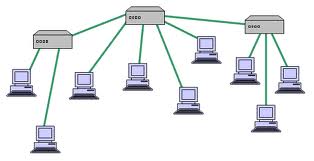
Modern Ethernet networks follow a “star topology”, where each device on the network connects its own cable to a hub. In a single room
Read More
Network Cabling ,Data Cabling

What is “Alien Crosstalk”?

8 Mar 2013

 Network Cabling, Data CablingNo, it’s not ET calling home. “Alien Crosstalk” is defined as “unwanted signal coupling from one balanced twisted-pair component, channel, or permanent link to another”.


Alien crosstalk is not generally affected by common noise from motors, transformers, or florescent lighting fixtures. Alien crosstalk is specified as “a parameter for cabling to approximate the energy present when all cabling pairs are energized”.

Read More

Network cabling,Office Cabling in DC

Ethernet Wiring for Home Networking

1 Mar 2013

Network cabling,Office Cabling in DCAlthough “Wifi" is simpler for a lot of people, due to multimedia sharing, bandwidth on some  home networks, some users  really want a hard-wired home networking solution. A wired network allows a private, high speed, network at home for Internet access, file sharing, media streaming, online gaming (console or PC), IP security cameras, or other standard Ethernet type wiring use.


There are certain design considerations that need to be addressed based on needs.  Answering these questions will affect quantities, tools and materials needed.


The basic questions are:


  1. Which room(s) do I want wired?

  2. How many ports do I want in each location?

  3. What is a good location for distribution?

    If the internet comes over a cable into the house move the cable modem there so  it will be able to supply internet access to the entire network.  Another consideration is the amount of space needed to hold the network equipment.


  4. What path should the cables take?

    This is the most difficult consideration. For single floor homes the basement may be the best path. For multi-story homes you have to be creative. Outside may be an option or use an old laundry chute. The other consideration is cable length. The max cable length for up to gigabit speeds over copper UTP cabling is 100 meters (300 feet). This should be plenty for most home applications.


  5. What network speed do I need?

    This will determine what kind of switch to get. 10mbps is faster than most home internet connection.  If you just “surf” the internet, use a 10 megabit switch. If you are planning on sharing multimedia over the network 100 megabit switches are available and reasonably priced. If you must have the fastest, go with a Cat6 Gigabit cable.


International Cooperating Ministries – Cabling Project Notes

20 Aug 2012

Project Objectives and Details based on site survey by Richard Elbe


Number of Drops: 110 total cable drops

  • 47 double network drops

  • 1 single network drop

  • 3 network printer drops

  • 3 media box wallplates with (2 HDMI, 2 VGA and 3 RCA Jacks)


Ceiling: Non-plenum, separate ducting allows for Cat6 PVC cable rather than the more expensive plenum cable.

Racks: 6' x 19" Relay Rack

Switches: Five 24,port Netgear Gigabit switches that will leave room for 4 ports per switch for future expansion of the network.
Read More
Data Cabling, Cat5e, Cat6/6a Cabling

US Court of Appeals Veterans Affairs – Cabling Project Notes

18 Jun 2012

Project Objectives (Do not call, this project has been COMPLETED)


Number of Drops: 360 (140 duals, and 20 quads)

Ceiling: Non-plenum, separate ducting

Racks: Enclosed, 19”, will already be installed by customer

Switches: Provided by customer, 48 port

Patch cables: None necessary. They will provide patch cables from wall plate to computers and from patch panels to switches.

Labeling and documentation of all cabling is important. How this looks is important to them. Please provide a spreadsheet of all wallplates and rooms.

  • Location is behind elevators.

  • All workstation runs will terminate in wiring closet behind elevators.

  • We will mount patch panels in this closet on the wall. Use 24port, Cat5e, patch panels.

  • They will mount racks for switches.

  • 4 pairs of fiber will run from the closet to the server room on the same floor. We are to provide the cabling plant for the fiber.


Office Cabling Network Cabling

Server Room:


  • 2, 24 port patch panels per rack.

  • Cabling plant for fiber to switch closet.


Existing server room


Click HereThey want cable management hardware to be part of the solution. What you see in this room is what they’re cleaning up and looking to make high end and professional in the new location. Photos here include existing fiber. Note the ceiling cable management rack. In the new location these will be in place in the server room and along the ceiling in the main hallways.


New server space - Roughed in area they’re moving to.


General Floor Space:


  • Quad drops in each office and cube in the technology area

  • Dual drops in all other offices

  • 6 drops for cable t.v.

  • Wall facing outside is already dry walled and insulated


Part of that wall has large window with wall space under it. Customer is unsure if drops will go there or anywhere along that outside wall.

Includes the outside wall. They’re not sure if there will be drops along this wall. If so it’ll be interesting because of the insulation. Also note that they MAY want drops under the windows along this wall.

There are some pictures of the ceiling details. Also note that the client will already have cabling runners ceiling mounted down the middle of the two main hallways to the server room.


Special Fiber Optic Line Item Bid:


US Court of Appeals wants this as a line item so they can choose to add this work or not when they’re doing the budget.

Fiber runs between floors. The floor plan represents the 6th floor. 14 runs broken out as follows. A single 6-strand fiber cable will be run from the 6th to each floor in the table below. Three strands will be connected and three will be left as spares.


# of Runs Floor
3 11th
3 10th
3 9th
3 2nd
2 Mezzanine

12’ ceilings, concrete floors.

Conduit already exists between the floors. We have to repack the conduit we use with fire stop putty to meet fire code. See photos of the “Switch closet” for conduit images.
Office Cabling ,Network Cabling

GovDelivery Cat5 Network Cabling Project

12 Mar 2010

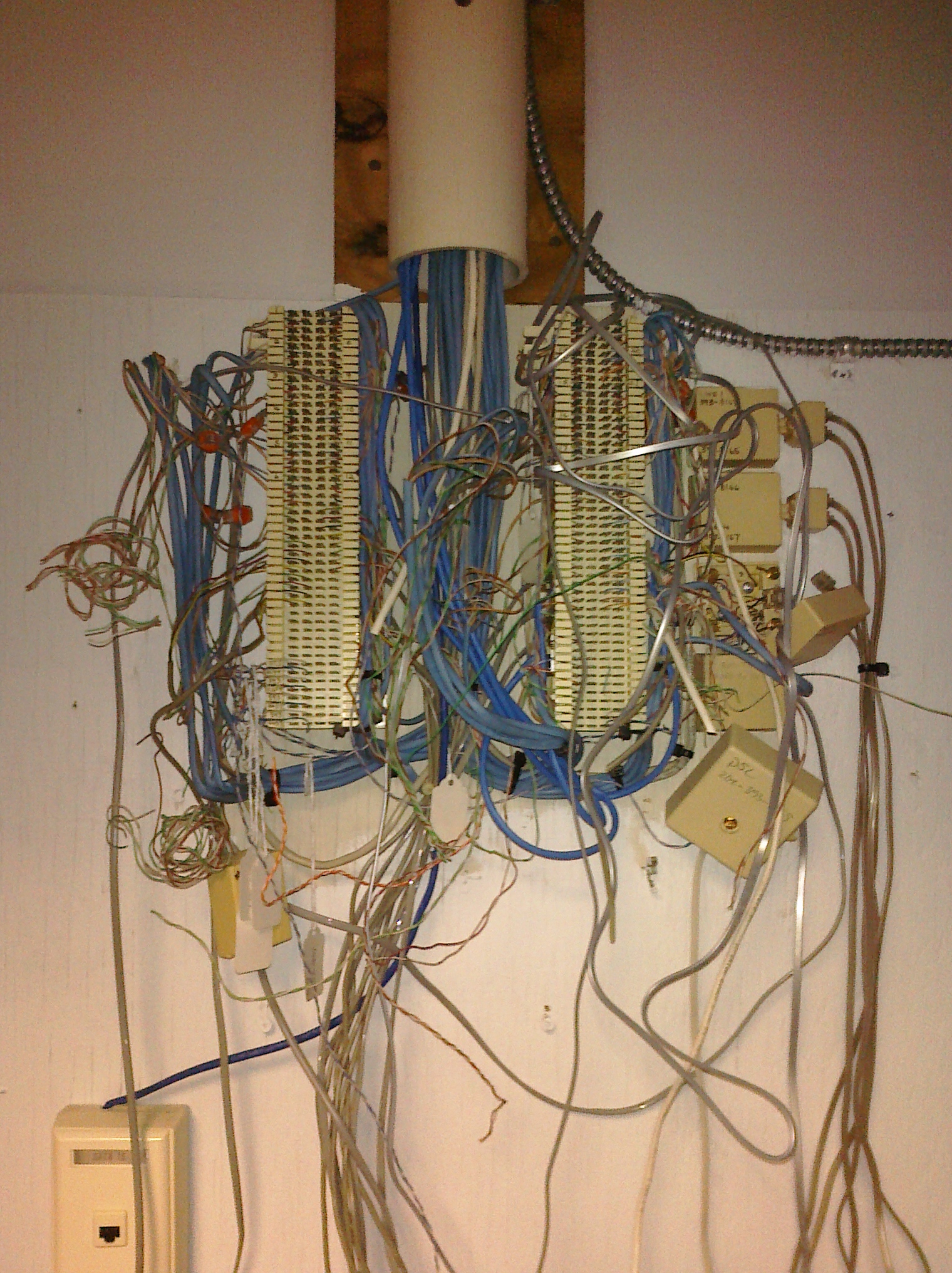
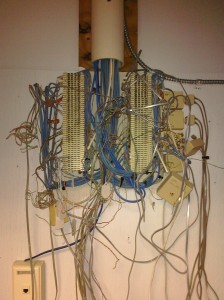
Structured Cabling,Network CablingThis is what the wall closet looked like at the new office at GovDelivery when we first got on-site.  Our job was to add more cabling and to clean up the mess left behind by the previous tenant.
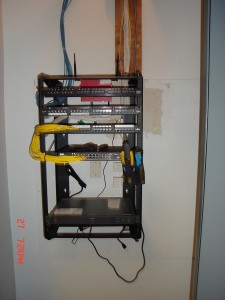
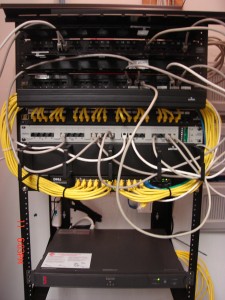

Office Cabling ,Network CablingNetwork Cabling, Structured Cabling,Washington DC After photos of the new Cat5 network wiring system. We removed all of the phone blocks because the new phone system is VOIP and therefore runs on the Cat5 network cabling. Jonathan Banks took our Post Installation Survey and stated that he was "most satisfied "with our price.
Also, see his quote below.


Jonathan Banks of GovDelivery.com says "Progressive Office provided great communication and efficiency throughout the process."


Network Cabling, Data Cabling ,Cat5e ,Cat6/6a Cabling

Computer Network Patch Panel

23 Dec 2009

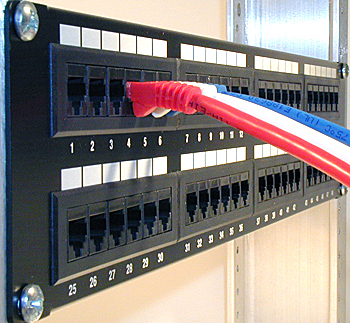
Network Cabling ,Data Cabling, Cat5e, Cat6/6a CablingA patch panel is an in-line series of connections mounted onto a frame to enable network cables to be terminated in an orderly manner. Typically, the panel is the termination point of network cabling drops that are installed in a office or residential cabling system.It is numbered and comes in 12-port, 24-port, 48-port and 96-port configurations. The numbering of the panel ports allows for the network installer to label the wallplates to match the corresponding connection at the patch panel.


Patch panels are most commonly used for computer data networks but as Voice Over Internet Protocol (VOIP) phone systems become more common, we are seeing phone systems being terminated into panels. They are wall or rack-mounted. In small offices, a 12 or 24-port patch panel might be wall-mounted to a wooden mounting board. Larger office networks will usually require a rack mounted series of  panels.


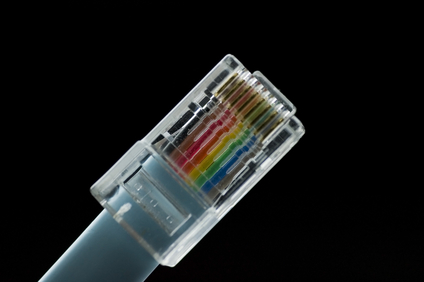
The patch panel comes in Cat5, Cat5e and Cat6 types to match the cable being installed. The connections on the panel are RJ45 that are designed to allow for a cable to "punch-downed" into the connector. The connector has 8 punch down points to accommodate the 4-pairs of wires in a Cat5/6 cable.