Network Cabling Data Cabling

VoIP Solutions

20 Apr 2014

Practical Solutions for Start-up Business Entities


 Network, Cabling Data, CablingVoIP

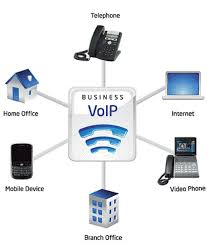
Providers of Voice over Internet Protocol (VoIP) offer useful solutions to start-up enterprises. Indeed, VoIP is a big boost to modernization efforts of phone companies. The technology has transformed traditional telephone service and introduced features that include voice mail, caller ID, call forwarding, and call waiting. With virtual PBX, you can now call using broadband Internet while spending less. Moreover, the need to make expensive long-distance calls is eliminated. VoIP has features much like conventional telephone systems, but there are also more sophisticated elements like the conference call component and directory for employee extension numbers.


Why VoIP Is Practical to Use


VoIP translates to saving on operational costs. Long-distance calls become cheap if you depart from public phone networks. Voice traffic passes through the Internet or a private data set of connections. For the business unit, this particular system integrates voice and data traffic into a single network, sidestepping the need for separate PBX cables. There may be an installation fee, but considerable savings can be derived due to one network. At the same time, there is no need to maintain a telephone structure, no PBX box on the wall.  The burden of the network administrator is reduced since the focus can be narrowed to just one network. You no longer need different teams to manage the voice and data connections.


Enhancement of Multi-party Calling


One specific detail enhanced by VoIP providers is conference or multi-party calling. The three-way calling has no additional cost. It is also possible to bring in three additional callers to your conversation. You will need adequate bandwidth from your high-speed Internet connection if you plan to utilize this feature. Aside from this, you can also enjoy web-based voice mail, which enables you to hear voice mail from any personal computer with a reliable Internet connection.


VoIP service providers offer dependability and affordability that benefits numerous business organizations globally.


Distinct Features of VoIP


VoIP provides advantages to businesses. Apart from cost efficiency, there are numerous exclusive properties that cannot be found in a conventional landline. One feature is the virtual telephone numbers. VoIP does not have a phone number based on the geographic location of the phone. Instead, the number is associated to the physical phone. So, the area code and number move with the phone. That means you can plug the phone into an Internet connection anywhere, worldwide, and you will get a dial tone. You also get one flat rate for unlimited incoming and outgoing calls to anywhere in the US and Canada. You get no surprise charges. The same bill arrives every month.

Network Cabling, Data Cabling,cat5 cat6 cabling

The Advantages of Fiber Optic Cabling

7 Apr 2014

Fiber optic advantages  Network Cabling, Data Cabling,cat5 cat6 cablingSophisticated technology has made it possible for the new generation of entrepreneurs to enjoy Cat5, Cat6, and fiber optic cabling. These technologies amplify speed, enhance performance and reduce costs.


Cat5


Cat5 refers to structured cabling for transmission of data signals. This is used primarily for computer networks. Standard performance is a maximum of 100 MHz and fits into the Gigabit and Fast Ethernet. Cat5 carries other signals for video and telephony. Almost all Cat5 cables are unprotected and depend on balanced lines and twisted pair designs as well as differential signals to reject noise.

Cat6


Cat6 is considered standard for Gigabit Ethernet along with network protocols that require more speed than Cat5 cables. Cat6 is made up of four pairs of wires comparable to Cat5. Using all four pairs allows this model to support communications that are double the speed of Cat5. This translates to speeds of one gigabit/second.

Fiber Optic Cabling


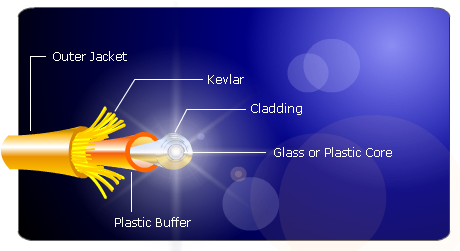
Fiber optic cabling or optical fiber is distinct from Cat5 and Cat6. It utilizes light rather than electricity to transmit signals. It has a better signal compared to the traditional copper cables, so it sends signals more rapidly than is possible with copper cable. Optical fiber is also impervious to interference from electricity, which means that users can use it anywhere and anytime. Fiber optic cabling also allows for much longer transmission distances. Cat5 and Cat6 are limited to only 100m of cable from wallplate to computer.

Even telephone companies have started to phase out copper wires in favor of fiber optic cables. Technical experts of these firms are working to reduce the vulnerability of fiber optic cables to water. Using fiber optic provides enterprises the adaptability of augmenting bandwidth in just several days compared to the conventional copper circuits, which usually take a maximum of one month to upgrade. Fiber optic connections generally start at two megabytes, with dedicated upload and download speeds of up to one gigabyte.

Fiber Connection


The fiber connection will also facilitate the business-mode Service Level Agreement or SLA. This implies that business entities obtain a secured 99.99 percent uptime. If power failure and other issues occur, technical specialists can conduct repairs within a maximum period of four hours. Your business reaps the benefits of speed, assured uptime and fast service by a reputable company like Progressive Office Cabling. It makes use of high-quality cables along with connectivity parts as well as the most efficient systems in cable management. The company’s technicians have been trained properly to be able to respond to your demands. With a proven project management approach, effective communication is guaranteed during the entire project.

This kind of service is practically unmatched in this industry. Savvy users and business proprietors will know how to choose the service provider that can deliver solutions based on their requirements.
Data Cabling, Fiber optic cable

About Fiber Optic Cabling

3 Apr 2014

Data Cabling, Fiber optic cableAn efficient cabling system is one of the prerequisites for a functional network and is considered to be an investment that will comply with your networking needs in the long term. Fiber optic cabling is the product of modern technology. This type of cabling conveys information from one location to another through pulses of light in an optical fiber. It is important for users to learn the advantages of fiber optics.


Fiber optic cables possess more bandwidth, or communications capacity, compared to metal and copper wires. This variety can transmit more information with greater reliability, which is one of the reasons for cable television and telephone providers to opt for fiber. The optical fiber also generates minimal power loss, thereby allowing longer transmission. Such cables are resistant against electromagnetic interference; they can operate in loud electrical environments because the interference does not have any effect on fiber cables.


Moreover, data moves at higher speeds since the fiber optic signal ensures that only a small amount of signal is lost in the course of transmission. Data is safe with fiber cables. It does not give off signals and is relatively hard to utilize. You will easily find out if the cable has been tapped or infringement has been made on the system, as this tampering causes the cable to give away light and causes the whole system to break down. Fiber optic cabling allows users to store electronics and hardware in a particular area rather than wiring cabinets with equipment.


Fiber optic cabling facilitates consistent transmission of data. The central part is fabricated from glass, an insulator, so that electricity cannot pass through. It is barely affected by ebb and flow of temperature, unlike copper, and can be immersed in water without any negative effects. Fiber optic is lightweight and thread like, but tougher than copper wiring. Specifications are a lot more than the copper cable. Although it is more difficult to terminate compared to copper, modern connectors make it easier to terminate.


The costs of fiber as well as other components are decreasing gradually but installation is more costly. Of course, fiber is more expensive than copper but it become more cost-effective in the long run due to less required maintenance, networking and downtime.


Practical users value their money. There may be certain downsides, such as installation expenses, but these are decreasing steadily each year. Fibers are also prone to damages because of the fine and smaller strands. Nevertheless, you can always institute safeguards that will address these points. Make it a point to determine the benefits of using fiber optic cabling.  Install the highest quality of optic fiber cabling that your financial resources will allow.