
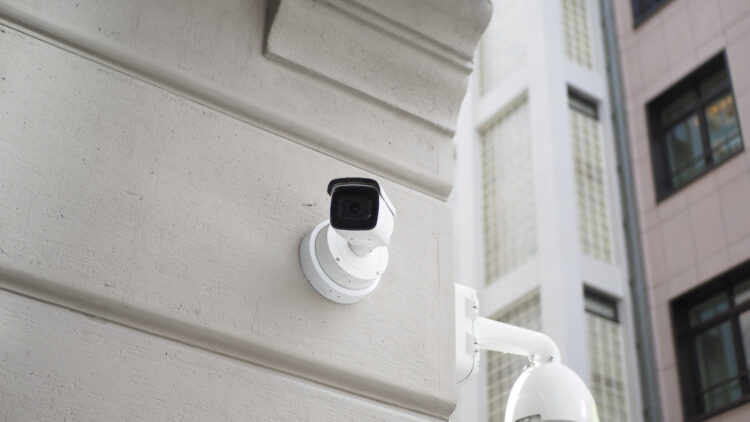
Commercial Security Camera Cabling in Atlanta, GA: Building a Reliable Surveillance Network
Security cameras have become essential infrastructure for Atlanta businesses. Offices, warehouses, distribution centers, retail properties, and industrial facilities rely on surveillance systems to monitor entrances, protect inventory, document incidents, and maintain visibility across their properties.
But installing high-quality cameras is only part of the equation.
Behind every reliable IP surveillance system is the network cabling that keeps those cameras connected. Poor cable runs, improper terminations, inadequate PoE infrastructure, and disorganized network closets can limit the performance of even an advanced camera system.
At Progressive Cabling, we provide professional security camera cabling in Atlanta, GA, along with Cat6, Cat6A, fiber optic, access control, and other commercial low-voltage infrastructure services.
Why Professional Camera Cabling Matters
Modern commercial IP cameras typically depend on Ethernet infrastructure for network connectivity. Many also use Power over Ethernet (PoE), allowing compatible cameras to receive power and data through the same Ethernet connection.
Professional camera cabling helps create a reliable foundation for:
- Continuous video transmission
- High-resolution surveillance
- PoE camera operation
- Network video recorders
- Remote monitoring
- Video management platforms
- Future camera expansion
The objective isn’t simply to get a cable to the camera. Each run should be properly routed, terminated, labeled, and tested.
Cat6 Cabling for Commercial Security Cameras
Cat6 cabling is a popular choice for modern IP surveillance installations.
A professionally installed Cat6 network can provide reliable connectivity for cameras positioned throughout a commercial facility.
Common camera locations include:
- Main entrances
- Employee entrances
- Parking lots
- Loading docks
- Warehouse aisles
- Shipping and receiving areas
- Inventory rooms
- Hallways
- Reception areas
- Building perimeters
Planning these cable runs carefully helps businesses achieve better camera placement instead of choosing locations based solely on where cabling is easiest to install.
Camera Cabling for Atlanta Warehouses
Warehouses present unique surveillance challenges.
Large footprints, high ceilings, loading areas, inventory racks, and multiple entrances may require dozens of cameras positioned throughout the facility.
Atlanta warehouse camera projects may require cabling for:
- Loading dock cameras
- Shipping and receiving areas
- Interior warehouse aisles
- Exterior doors
- Employee entrances
- Parking areas
- High-value inventory zones
Because Ethernet copper runs have distance limitations, larger warehouses may also require additional IDFs or fiber optic backbone connections.
Progressive Cabling can build the infrastructure needed to connect cameras throughout larger commercial environments.
Using Fiber for Large Camera Networks
Fiber optic cabling can play an important role in larger surveillance deployments.
Rather than attempting to run every camera back to one central network room, a facility can use fiber to connect network closets located throughout the property.
The infrastructure may look like:
Main Network Room → Fiber Backbone → IDF → Cat6 → Security Cameras
This approach can be particularly useful for:
- Large warehouses
- Manufacturing facilities
- Multi-story buildings
- Commercial campuses
- Multiple-building properties
Fiber provides a scalable backbone while Cat6 or Cat6A provides connectivity to individual cameras.
Supporting PoE Security Cameras
Power over Ethernet has simplified commercial camera deployments by allowing compatible devices to receive network data and power through Ethernet cabling.
However, PoE performance still depends on proper infrastructure.
Professional planning should consider:
- Cable type
- Cable length
- Termination quality
- Switch capacity
- PoE power budget
- Cable bundling
- Network closet organization
Simply installing a PoE camera doesn’t guarantee reliable operation if the infrastructure behind it isn’t designed appropriately.
Security Cameras and Access Control Work Better Together
Commercial security often involves more than video surveillance.
Businesses may also need to control who can enter specific parts of the facility.
Progressive Cabling can provide infrastructure for:
- Security cameras
- Card readers
- Keypads
- Door contacts
- Request-to-exit devices
- Electronic access control equipment
For example, an Atlanta warehouse may install cameras around employee entrances while using card readers to control access through those same doors.
Planning these systems together can create cleaner installations and more organized infrastructure.
Camera Cabling for Atlanta Office Buildings
Offices have different surveillance requirements than warehouses.
Commercial office camera locations may include:
- Reception areas
- Main entrances
- Common corridors
- Parking areas
- Exterior entrances
- Equipment rooms
- Other appropriate shared or security-sensitive areas
Network infrastructure can also support the office’s computers, wireless access points, phones, and access control equipment.
This allows businesses to approach the project as a complete low-voltage infrastructure upgrade rather than installing disconnected systems over time.
Plan for Future Camera Expansion
Security requirements change.
A business that needs 12 cameras today may need considerably more after expanding its warehouse, adding parking areas, or opening another section of a facility.
A scalable camera network can account for:
- Additional cable pathways
- Network rack capacity
- Patch panel space
- Switch capacity
- Fiber backbone expansion
- Future camera locations
Planning for growth during the original installation can reduce the cost and disruption of future upgrades.
Replacing Old Analog Camera Infrastructure
Some commercial properties still contain wiring from older surveillance systems.
When businesses transition to modern IP cameras, existing infrastructure should be evaluated rather than automatically reused.
An upgrade may involve:
- Removing obsolete camera wiring
- Installing new Cat6 runs
- Adding network racks
- Installing patch panels
- Creating fiber connections
- Improving cable management
- Labeling and testing new runs
Progressive Cabling also provides cabling demolition in Atlanta for facilities that need outdated low-voltage infrastructure removed.
Why Cable Labeling Is Important
Imagine having 50 security camera cables entering a network closet without clear labels.
Troubleshooting becomes unnecessarily difficult.
Professional labeling can make it easier to identify connections for cameras covering specific locations.
Organized infrastructure can reduce service time when cameras are replaced, relocated, or upgraded.
Test Camera Cable Runs Before Deployment
New Ethernet runs should be tested before the surveillance system is placed into service.
Testing can identify issues such as:
- Wiring faults
- Termination problems
- Damaged cables
- Excessive run lengths
- Performance problems
Correcting these issues before camera deployment can prevent frustrating troubleshooting later.
Commercial Security Camera Cabling Services in Atlanta
Progressive Cabling provides commercial low-voltage infrastructure services that can support complete surveillance deployments.
Our capabilities include:
- Security camera cable runs
- Cat6 installation
- Cat6A installation
- Fiber optic cabling
- Fiber backbone installation
- PoE infrastructure
- Network racks and patch panels
- Cable labeling
- Cable testing and certification
- Door access control
- Card readers and keypads
- Cabling demolition and abandoned cable removal
This makes it possible to coordinate multiple infrastructure requirements through one low-voltage contractor.
Serving Atlanta and Metro Atlanta
Progressive Cabling supports commercial projects throughout Atlanta and the surrounding Metro Atlanta area, including:
- Downtown Atlanta
- Midtown Atlanta
- Buckhead
- Sandy Springs
- Dunwoody
- Marietta
- Smyrna
- Kennesaw
- Roswell
- Alpharetta
- Norcross
- Duluth
- Decatur
- East Point
- College Park
We can support camera cabling projects for offices, warehouses, industrial properties, and other commercial environments.
Get a Quote for Security Camera Cabling in Atlanta, GA
A surveillance system should be built on infrastructure you can depend on. Professional network cabling provides the foundation for reliable camera connectivity, organized network management, and future expansion.
If you’re searching for security camera cabling in Atlanta, commercial camera installation infrastructure, Cat6 camera runs in Atlanta, IP camera cabling, warehouse camera cabling, or a low-voltage contractor in Atlanta, GA, Progressive Cabling can help.
Contact Progressive Cabling today for a quote on commercial security camera cabling in Atlanta and Metro Atlanta. We can also support your Cat6, Cat6A, fiber optic, access control, network closet, and cabling demolition requirements.

