
New York City, NY
Progressive Office, Inc.
120-09 N. Conduit Avenue
Queens, NY 11420
Phone 212-488-5210
[mappress mapid="6"]
120-09 N. Conduit Avenue
Queens, NY 11420
Phone 212-488-5210
[mappress mapid="6"]


Cable basket trays are described as go-to solutions for routing and supporting numerous cable runs. The wired frame enhances air circulation and cable ventilation. This can be appropriate beneath desks, elevated floors, or hanging tray systems. You can assemble basket trays for intersections, horizontal sections, mounting braces, hardware, and tray cutters.
The cable basket tray made of welded steel wires is considered the most popular support for copper and data cabling. The basket is light-weight and easy to install with complete array of cable tray accessories. Solid basket trays are recommended for heavier wires. These baskets are fabricated to withstand natural elements. Although the material is not solid steel, it is capable of protecting cables from corrosion and last longer.
The cable basket makes possible efficient dispersal and management of cables. This process is accomplished by arranging cables inside the basket trays instead of pulling them through pipe lines. The act of yanking is certainly harder and time-consuming rather than using baskets. Laying down wires in the basket take only minimal time and ensures that cables are distributed evenly around the structure.
The baskets can be stretched along the building just like pipes. However, baskets are open facilitating easier access to the cables. At the same time, it provides sufficient protection to the network cabling system. Cable baskets are lighter with easier functions compared to trays which are quite bulky. Technicians can finish more installations in one day because of fast installation.
Incidentally, it is important to make sure that cable trays should be installed as an inclusive system. The tray should be complete with all the supports mechanisms, fasteners, guards, connections, flexible vertical and horizontal spice plates. You have to mount cable trays so the joints will be accessible for inspection and modification. Support systems are needed so the distance does not go beyond the required measurements. Install intermediary support devices in case the weight of the cable is more than tray rungs’ load capacity.
Erect supports from channel members, twisted rods and other accessories provided by the cable tray manufacturer. Organize the supports in bar or wall-bracket models as called for by the application. Make sure to take away sharp border s from cable trays. You can attach the tray to the spice pates but use square neck-carriage bolts and self-locking nuts. The cable tray should support the building structure. Finally, mount the cable trays with sufficient space to allow access for the installation of network cables.
Your city might be poised for a dramatic increase in Internet speed into your office. Right now, you might have DSL Internet running on Cat5e cable at speeds of up to 25 - 30mb. But 2gb Internet is coming. New high-speed fiber optic networks are being built that will bring 2gb Internet to your office's network. It's coming.
The answer to that question lies primarily in the cabling that exists in your office. Most offices in the US have Cat5e cabling. Cat5e is not even fully capable of handling 1gb speeds and will likely create speed issues at the desktop as users demand more bandwidth from advanced online and desktop applications. Cat5 cable is even slower. So, you will first need to figure out what kind of cable you have. The best way to do this is to look at the cable. Go to you wall closet or server room and look behind the patch panel. The patch panel looks like this.
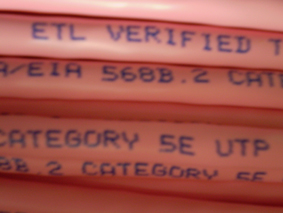
And behind the panel is a bundle of cables. These cables have writing on them that describe the type of cable.That might look like this.
You should be able to see printed right on the cable the words "CATEGORY 5" or "CATEGORY 5E". If it says, "CATEGORY 6" or "CATEGORY 6A" than you are fine. Otherwise, you have cable that will not fully support 2gb Internet speeds into your office. Cat6/6A cabling is designed for 2gb and higher throughputs of data.
But getting ready for 2gb Internet is not just about the cable. You need the right cable and you also need the Cat6 compatible connectors, patch panels and a faster switch too. So, now you have a big decision to make.
What should you do? Recabling an office is a big deal. It's disruptive and it's expensive. But, wait. Is it really such a big expense and does it need to be disruptive? The cost of installing Cat6 cabling in an office is about $175 - $250 per drop. Each computer will need one drop. And you might have a few printers on your network too. So, the cost is about the same as a cheap computer monitor. And the boost in productivity will go on for many years to come.
Will it be disruptive? We can install new cabling in parallel to your existing network at night and on weekends. The switch-over is a weekend job too. Then we finish up by pulling out all of the old cable. That's called demolition. It might get a little dusty. But our team will do it's best to keep things as tidy as possible.
So, are you ready for 1gb Internet? If the service is available and you want a free on-site survey, contact us. We will be happy to come by and look at your office and prepare a Proposal for you at no charge and no obligation. If you aren't sure about the availability of 1gb Internet, contact us and we will find out for you.
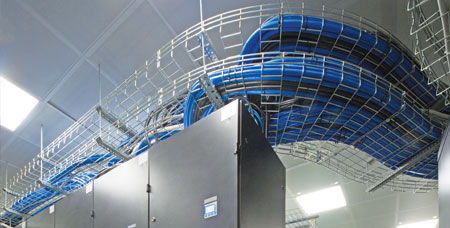
 Cable trays for networks are support systems that can be mounted on walls or hang up from ceilings. The trays are fabricated from aluminum or steel. These come in deepness of 2, 3, 4 and 6 inches. There are also multiple designs like trough (single rail), ladder, basket, and wire-mesh. The single rail is designed either with single or several options.
The solid bottom trays support delicate cables. On the other hand, the center spine model is made up of a central support mechanism supporting the cable with the tray dangling from rods. This tray is important to the data communications market. The single-rail variety mounted on the wall is similar to center-spine. However, the treads can be found only on one side. Wire way is a system that is fully enclosed and provides no access to cabling inside.
Locations where cabling trays are required as well as cable types these carry have evolved during the last two decades. Cable trays are installed not only in power plants and paper mills but also in government facilities, schools and call centers. Certain manufacturers supply product categories produced for installation with uncommon requirements. For instance, the cable tray should be very robust so it can link a span of 30 feet between support systems. The short span variety supports four to five feet or limited space requirements of newly-installed components. Problems are resolved by using different types of cable trays.
The key to this is careful product selection since a single tray will not fit into all requirements. This offers the perfect solution. The main consideration is there are various instruments in the tool box of cable trays. You only need to match up each application for the ideal solution. Right now, there is an increasing need for big-sized trays so it will be possible to add more able in the future.
Modern installations entail manufactured support systems that can effectively hold both Category 5 and 6 cables. While cable performance becomes more efficient, cable and connector makers are also offering warranties for their performance. Along this line, the appropriate cable tray is needed so that cable performance will not be adversely affected by improper cable management.
Contemporary cable trays have multiple benefits. These include the capacity to carry heavy weights. Installation is also faster and less complicated with reduced fitting time. Fixtures like risers, reducers and bends may be built on site. The applications have also expanded to several sectors such as industrial, infrastructure, commercial, food, and data hubs.

 The quality of information flow is no better than the medium that carries it. This is the cabling network. The structured cabling platform will ensure that information flows efficiently through the cabling system. It consists of transmission tools applied according to standard engineering designs that enable users to transmit voice and data signals.
The controlled cabling system is the foundation and essential investment that provides a common, mutual platform for multiple information technology systems. However, there can be problems and information flow can be obstructed because of an information technology structure that has been designed improperly. Therefore, it is necessary to tackle crucial concerns in structured cabling during the planning stage.

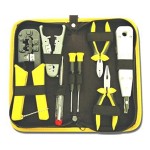 Cabling installation requires a lot of expertise. This is important due to the complexity of networks cables for data and communication services. There are tools installers use to install and test cables. Some of the instruments include carts and caddies.
Network carts and caddies hold cable spools for easier pulling. Reels can be set up on the wire cart which can hold 500 and 1000 foot reels. Cables are mounted on bars that slip through bored holes on the mounting framework. The cart contains a large, wide base that prevents tipping when you pull the cable. Wire caddies secure smaller cable spools which come in lengths of 500 feet or less. And it has dividers that prevent the wires from becoming crisscrossed and twisteded.
The appropriate termination tool increases productivity. It allows installation and termination of Cat5e and Cat6 jacks onto the connectors on a patch panel.
This "punch down tool" ensures accuracy and consistency. There are three categories: manual, impact and multi-wire. Cable installers can opt for a manual but most consider the impact tool to be the best option.
The fundamental impact instrument is fitted with a spring-loaded head which can be triggered by the installer. Not much force is needed. The spring is released automatically after being compressed. Modern multi-wire tools like the Jack Rapid punch down tool can terminate jacks eight times faster.
You can use several interchangeable blades for various impact tools. However, this depends on your cabling system. The advantages of this tool are its speed, user-friendliness and uniformity of termination. Sophisticated models consist of fixed blades that cut off leftover wire instantly instead of having to use wire cutters. These new products include a handle that is easy to hold, a disposable blade head and fixed band that holds the jack in place.
You might need professional shears to ensure a quick, clean, and accurate cut. Each job requires cutting of cables and trimming of excess wires. A premium cable stripper guarantees immediate and hassle-free elimination of exterior insulation from multi-core cables, unshielded twisted as well as shielded twisted pairs. The flexible depth gauge will give better results. Refrain from using pocket knives or ordinary scissors because you will probably end up damaging the cable. Other functional tools for cable installation are can wrenches for demarcation point boxes; crimping pliers; knives for splicing cables; voltage detectors; modular plug crimpers for telephones; and, probe picks to detect loose or broken connections.
But if you prefer to have a profession all do it all for you, contact us!

 Punch-down tools are important for terminating cables in Insulation Displacement Connector (IDC) connecting blocks, patch bays and terminal jacks. These reliable tools have been present for many years. However, manufacturers do not stop in developing accessibility and labor concerns.
Punching down is the term used for the physical force needed to pierce or take away the cable insulation while the connection is being made. These used to be simple screwdrivers which have evolved into modern gadgets designed with durable rubber, gripping curve and impact mechanisms that reduce the use of force for manual exertion.
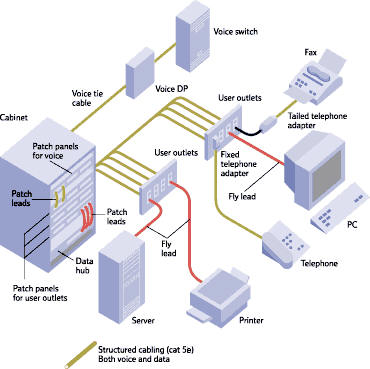
 It is known that structured cabling systems are fabricated to guarantee that information flows efficiently through the network. Such system are made up of transmission products installed based on appropriate guidelines in engineering design. These enable users to put into operation voice and data systems that capitalizes on speed.
This particular configuration has emerged as shared platform for multiple information technology applications. These include voice and data, building automation, security mechanisms, telecommunications conferencing, and fire alarms. This union transformed the structured cabling platform into the most essential network element. Therefore, it calls for a crucial investment in a very reliable, adaptable and scalable cabling structure.
This efficient and complex cabling scheme segregates the whole infrastructure into controllable blocks. After that, it puts them together to come up with a high-performance network. This end product is the vital link for many enterprises and all data hubs. Such a system facilitates consistency across the network particularly for commercial building structures. Consistency generates cost-effectiveness by standardizing maintenance processes, cutting down on manpower requirements, and improving reliability.
The “structured” design makes possible easy management by identifying specific distribution points, regular labeling and color codes, cabling management, and distribution techniques. As a rule, data facility managers use dynamic methodologies to fill the center with information technology equipment. This accommodates the evolving needs of business operations which frequently compel the need for the most modern IT equipment. Since companies rely on equipment as well as infrastructure, management believes requirements for additional IT capability should be made promptly. If the infrastructure is below par, upgrades will be much more difficult.
The best IT specialists see to it that problems in structured cabling systems are dealt with immediately. One of the primary concerns is to employ highly competent service providers and coordinate entry points/space for each provider. This procedure enhances flaw tolerance of the overall system design. The high-performance model supports aggregate telecommunications requirements and thereby leads to a maximum returns on investments.
Centralized Intermediate Distribution Frames (IDFs) should be in centralized locations in the office facility. This will produce efficient cable management and will ease the addition of new equipment. This design technique has been adopted to avoid any disruption of the data unit or minimized once changes or upgrades are implemented. Telecommunications rooms contain the IDFs, main distribution frames and entrance facilities. Switches are installed in the middle of server rows for economical management.
Please contact us if you have any questions or concerns about your office network cabling.
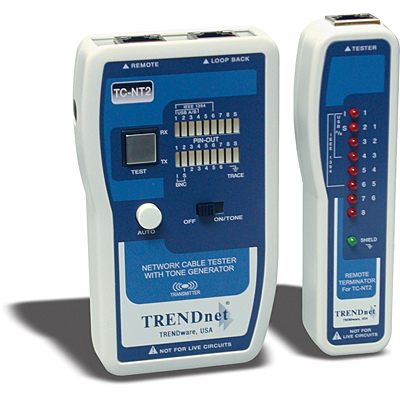
 Testing always plays a vital role in the process of installing new cables or servicing existing ones. Regular testers for data cabling include length, wire crimper map, attenuation, return loss, and DC loop resistance.
Cabling infrastructure requirements have become more complicated. More standards are being developed for cabling professionals in testing and troubleshooting copper and fiber cables. And there are special requirements as well as downsides in the implementation of new technologies. From 10BASE-T to 100BASE-TX to 1000BASE-T and now to 10GBASE-T. It is now more crucial to keep in step with the most up-to-date techniques in cable testing too. In short, cable testing infuses a higher degree of assurance that installed cable links will attain the preferred transmission capacity for your data communications.
Cable testing instruments have been manufactured with unique features for specific tasks. Costs, performance, and applications vary. These depend on the required functions. The three main functions are certification, qualification and verification. Although certain attributes overlap, each category answers a particular testing prerequisite.
Certification facilitates conformity to standards defines by the industry. These are instruments signal a “Pass” or “Fail” towards data testing compliance within standardized industry norms. These testing instruments will find out whether a cable link conforms to a category or class such as Cat6 or Cat5e. It is the last step required by most structured cabling installers towards approval of a new installation.
Qualification determines if the existing cable is capable of supporting specific network speeds. This special class of testers is supposed to meet the up-and-coming requirements of network technicians who troubleshoot data networks. These testers perform checks to make a decision on whether a present cable link supports the requirements for fast or gigabit Ethernet. With these instruments, network technicians can identify and isolate cabling issues. While Continuity testers do not perform the series of tests set down by these standards and are not considered certification tools.
Verification makes sure that cabling connections are correct. This type of tool performs a continuity test. It guarantees all wires in the cabling link have been attached properly to termination points at each end. For twisted pair cabling, there is an appropriate pairing of the wires. Such testing tools also confirm wire pairing and find out installation flaws such as split pairs. These can also help in troubleshooting by working with a toner to pinpoint a certain cabling link. These testing tools do not give out any information regarding bandwidth and data integrity.
If you need your cabling tested or certified, contact us!

 Data volume has grown extensively. Also, the processing capacity to users continues to get grow. Specialists in data management forecast that information production will be 44 times larger in five years with enterprises needing to process and safeguard 80 percent of the new data.
For these reasons, you might need to become more familiar with different types of cabling. There is Category 5 (Cat5) cable but it is only capable of transmitting 1000 megabits data rate per second on an Ethernet network. Transfer of data demands are increasing due to new and more sophisticated applications. That is why many companies prefer to work with Category 6 (Cat6) cables. Cat6 has a maximum data transfer of 10,000 megabits per second. Cat6 is also backward compatible which means your Cat5 connectors will plug i and work (at the lower speeds).
Cat6 infrastructure guarantees that your system will be relevant well into the future. This allows users to easily cope with any modifications, new features or technological developments. The Cat5 standard has been used for a long time. However, your enterprise needs adequate bandwidth to handle these continuing and future changes. It is not merely a possibility or “let's say” situation. It is to be anticipated as the online experience continues to progress.
Demand for Cat6 escalates as the world-wide web is now offering premium video streams, online applications, highly-responsive and media-heavy portals. If you decide to upgrade to a more reliable network, consider Cat6 cables. It is fast becoming the new standard in this industry.
Cat 6 is more costly compared to Cat5e cables. On average, we are finding that projects cost about 20-25% more. This is because you are not guaranteed full speed unless all the components operate at gigabit speed. So, you need Cat6 cable, connectors, patch panels and Gigabit switches too. If one part is not rated as gigabit, the network will run at Cat5e speeds. Call or contact us to help you make this decision.