Network Cabling Data Cabling

Fundamentals of Structured Cabling Systems

15 Nov 2014

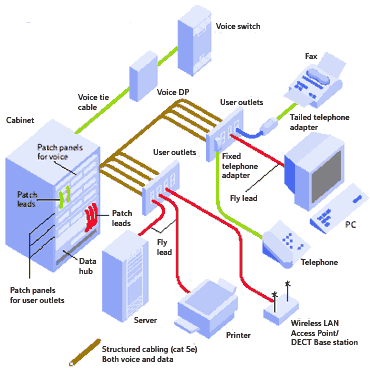
structured cabling, Network Cabling, Data CablingThe structured cabling system is a comprehensive structure of wiring and the related hardware involved. This system ensures a complete and reliable telecommunications infrastructure. This network has several  but mostly for providing telephone services or conveyance of data over a  computer network. This type of cabling system also connects to the internet at the demarcation point.


A quality structured cabling installation has these common elements:


  • It must fir the architectural configuration of the building that hosts  cabling installation

  • It made up of cable and connection fixtures

  • It connects equipment that cabling is setup to support

  • Can be designed to enable retrofitting and upgrading

  • Meets the objectives and requirements of the business

  • Is backed by a guarantee by the manufacturer and the installer


As installers, we use standardized techniques in the completion and upkeep of cabling systems. This is important to guarantee satisfactory system performance on a technically complicated infrastructure. The benefits of adhering to these standards are that they insure stability of connectivity after setup.


 Structured cabling installations may include:


  • Entrance facilities

  • Perpendicular and horizontal backbone conduits or cables

  • Horizontal lanes

  • Work area facilities

  • Equipment areas

  • Telecommunications racks and cabinets


A cabling connector refers to the mechanical device used in connecting a cable to a device or from one cable to another. The connector provides the coupling device that can minimize losses.  For fiber, it permits light signals to move from one connector to another. On the other hand, copper enables electrical impulses to be conveyed. It is important to properly align these  connectors to prevent connectivity breaks. Likewise, it should insure the efficient transmission of data. Connectors are crucial to the reliability of the total telecommunications network.


There are six subsystems in the structured platform. These are entrance facilities, equipment rooms, backbone cabling, telecommunication rooms and enclosures, the cabling, and the work area.  The first consists of cables, network boundary, hardware for connection, security devices, and equipment attached to the network cabling. Backbone cabling consists of subsystems that provide inter-connection between telecommunication, network equipment and access facilities.  Quite often these are the higher speed cabling components such as Cat6 and fiber that connect among the switches of an office.


Horizontal cabling connects from the desktops and phones to the telecommunications rooms and enclosures. The maximum horizontal cable length should be at no more than 100 meters. These desktop components extend out from the wall plate connection end of the horizontal cabling system to the equipment in the wall closet.


Call us if you need troubleshooting or if you have a need for cabling at your office due to expansion or relocation of your firm. We do free on-site surveys and quotes.

data cabling,network cabling,cat6 cable .

PVC Sleeves And Insulation on Fiber-Optic Cable

14 Oct 2014

PVC data cabling,network cabling,cat6 cable .pvc-sleeve- is a common plastic materials for different many uses and applications. PVC is flexible, cost-effective and hard-wearing. Plasticized PVC is considered on of the most popular materials not only for electrical insulation but also for data and fiber optic cables too.


PVC is Polyvinyl chloride. It can be bent and turned many times without cracking or warping. This safety feature makes it appropriate for multiple applications. The infusion of plasticizers provides the needed softness for the insulation and covering of electrical and data wires. Cable wire manufacturers can configure different thicknesses

Read More

Network Cabling Data Cabling

VoIP Solutions Business Start-ups and Corporations

29 Sep 2014

 Network Cabling Data CablingVoice over Internet Protocol (VoIP) is an innovative advancement of phone service. The technology has transformed traditional telephone service and introduced features that has recently included voice mail, caller ID, call forwarding, and call waiting. With virtual PBX, you can now call using broadband internet without spending a lot. Moreover, the need to make long distance calls is eliminated. Voice over Internet Protocol has features much like conventional telephone systems. However, there are more sophisticated elements like the conference call component and directory for employee extension numbers.


Why is Business VoIP Practical?


Business VoIP translates

Read More

Network Cabling, Data Cabling

Choosing Plenum Cables for Plenum Space

5 Sep 2014

Office Cabling Network Cabling, New York City The plenum space is described as that section of the building that makes possible air movement for HVAC systems. It also provides the space for conduits of heated, conditioned and return air circulation. The distance between the structural ceiling and dropped ceiling tiles is regarded as the plenum space.


The plenum space houses communication cables for telephone and computer networks. However, increasing neglect of cables in plenum areas create a major risk in case of fire.

Read More

Network Cabling, Data Cabling

Cloud Phone Platform for Small Companies

28 Aug 2014

Network Cabling, Data Cabling,cloud phone systemCloud communications coupled with software products are currently in. In plain terminologies, the cloud-based phone system is a hosted Voice over Internet Protocol or web-based telephone system. It is a program for communications wherein the application remains inactive in the net but prospective subscribers can hook up to it by paying a fixed monthly fee.


One specific example is the popular Skype. Just like other Internet-based apps, users need both software and hardware to successfully use this configuration. You need a cloud phone or personal computer as end point.

Read More

Smart Trends in Business Telephone Services

21 Aug 2014

Structured Cabling, Office Cabling,business phone servicesTelecommunications industry experts believe that business phone services will continue to evolve as long as Internet technology progresses. Small, medium and large corporations benefit from this type of services. Experts project that increasing sales and cost reduction are among the essential aspects that will affect developments in business telephone systems for this year. Business proprietors will find out the value of said systems and surely shift from the traditional methods to IP telephony.


Phone service providers are expected to continue modifying their services

Read More

Cat6, Network Cabling, Data Cabling

Upgrading To Cat6 Cable

26 Jul 2014

Upgrading to Cat6 Cable: Requirements for a Corporate Office


Cat6 , Network Cabling, Data Cabling

Technology continues to evolve and adapt to corporate requirements. Data volume has increased significantly and processing capacity demands faster access. IT managers have predicted that data production will be 44 times larger five years from now. And enterprises have to process and protect that data. Moreover, the amount of data in your business network system grows constantly.


Until recently, this was accomplished using the Cat5 cable. However, limitations is now causing some problems because it has a maximum data rate

Read More

Network Cabling, Data Cabling,basket type cable tray

Basket Trays

3 Jul 2014

 Network Cabling, Data Cabling,basket type cable trayThe basket type of cable tray is made from wire lattice. The tray provides a foundation for data cables and it facilitates cable management since wires are mounted along and inside the tray. Data cabling is generally smaller but heavier than electrical wires because they are bundled and carried by these trays. A solid steel tray is preferred if heavier cables will be installed but steel is more vulnerable to rusting and exposure to elements. On the other hand, basket trays are lighter than solid racks.


The basket makes cable management and distribution less complicated

Read More

Network Cabling, Data Cabling , cable tray

Uses And Benefits Of Cable Trays

25 Jun 2014

 Network Cabling, Data Cabling, cable traysThe cable tray is meant to prop up insulated cables for communication and power distribution. Cables are mounted on the tray, rather than placed inside a pipe. It can be likened to the structural cog of the building’s electrical layout, as it protects the cables both inside and outside. Wires are organized properly so wire maintenance is easier.


A cable tray facilitates the process of tracking down where wires come from for repairs, and also creates effective fire sealing between wall panels.

Read More

Network Cabling, Data Cabling

Primary Uses Of Cabling Wall Conduit

19 Jun 2014

 Network Cabling, Data Cabling,Wall ConduitThe wire conduit refers to the pipe where cabling passes through. This duct protects insulation and isolates cable wiring. National and local building codes generally require the use of a particular type of conduit for safety and health reasons. The cable conduit is different from the electrical variety. You can install cabling conduits in between walls even if you will not use these pipes immediately; in fact, it is easier and more cost-effective to lay out the conduit during the construction phase.

Read More