Cat6, Network Cabling, Data Cabling

Upgrading To Cat6 Cable

26 Jul 2014

Upgrading to Cat6 Cable: Requirements for a Corporate Office


Cat6 , Network Cabling, Data Cabling

Technology continues to evolve and adapt to corporate requirements. Data volume has increased significantly and processing capacity demands faster access. IT managers have predicted that data production will be 44 times larger five years from now. And enterprises have to process and protect that data. Moreover, the amount of data in your business network system grows constantly.


Until recently, this was accomplished using the Cat5 cable. However, limitations is now causing some problems because it has a maximum data rate

Read More

Network Cabling Data Cabling

Distinguishing between Cat5 and Cat6 Network Cables

12 Jun 2014

Network cablesCAT 5,Network Cabling Data Cabling connect and transmit information between personal computers, storage area networks and routers. You can now find various models of cables. Your choice may depend on configuration and topology of the system’s architecture. The most common variety is known as twisted pair cable in local area networks. Numerous Ethernet networks use this type of cable. It is composed of four pairs of fine wires or conductors. Each pair is entwined several times to prevent obstruction from other cables and devices.


The CAT5 or Category5 is an example of twisted pair cable

Read More

IT Support,Data Cabling,Atlanta GA

Advantages Of Using Cat6 Cables

22 May 2014

Cat 6Category 6 or Cat 6 network copper cabling is the preferred infrastructure for Ethernet, Fast Ethernet, and Gigabit Ethernet. It has a maximum performance of 250 MHz, or 500 MHz for the more contemporary Cat6a standard. This type of cabling may be utilized for a maximum distance (end to end) of 100 meters, or 55 meters for the 10 GBASE-T networks. Aside from support for higher performance, Cat6 includes more rigid specifications for crosstalk and system noise. Although Cat6 is anticipated to surpass Cat 5 and Cat 5e cabling soon, all three cable varieties are still widely used for network installations.


Fast and Credible Performance


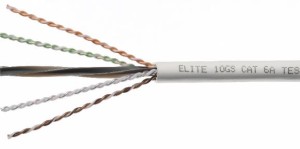
Most IT experts recognize this type of copper cabling for its speedy network performance due to its ability to deliver gigabit data transmission speeds. It has a parallel structure similar to Cat5 and Cat5e. These copper cables have eight wires coiled as one to form four pairs. The major difference is that one pair of the Cat 6 cable wires does not touch the others, so it can produce twice the transmission capacity of the two other models.


It is also backward compatible. The plug and port of Cat6 cable is the same as the 5 and 5e models. Thus, it can be plugged into any outlet that supports these cables. For instance, you can use the Cat 5 connection for a Cat 6 cable although it will not produce the full speed of the Cat 6 cable.


Resistance to Heat and Flexibility


Copper cables are second to silver in terms of effective conductivity, but among non-precious metals, these wires can cope with a broader load of electricity with less need for insulation. Furthermore, copper cabling has more resistance to heat, which eliminates overloading problems. They are impervious to corrosion despite their shiny surface. Copper is also more pliable, so it can be twisted without the risk of splitting. In fact, copper is used in fabricating thick wires for applications where very thin wires are required. It can also be part of an upgrade if you are looking forward to a more optimal network. Copper Cat5, Cat5e and Cat6 are the industry standards for most small to medium sized offices.


There are certain problems that deserve consideration. Such as copper cabling failure in high-performance wiring systems. Users may also need to contend with poor component performance, such as bad cable segments or connectors that do not comply with specifications. However, these problems are frequently the result of human error. So the choice of copper cabling is  still a good one.

network cabling, data cabling

Perfect Patch Panel Installation

4 Jun 2013
This project involved installation of 28 double drops into two 48-port patch panels. Each wall plate has two connections with one dedicated to data and the other dedicated to voice. Price Benowitz has a lovely office at 409 7th Street, NW. The building is historic but renovated into a modern office. So, the drop ceilings and hollow walls facilitated a straight-forward installation of the Cat5e network cabling system.
Read More
Network Cabling, Data Cabling ,Cat5e ,Cat6/6a Cabling

RJ-45 Connectors Made Easy

18 Apr 2013
 Network Cabling, Data Cabling ,Cat5e, Cat6/6a CablingWhat is the difference between a Cat5 and a Cat6 RJ45 connector?

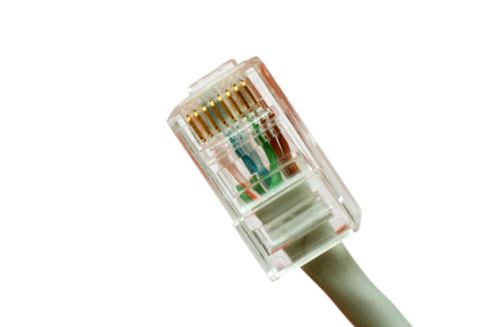
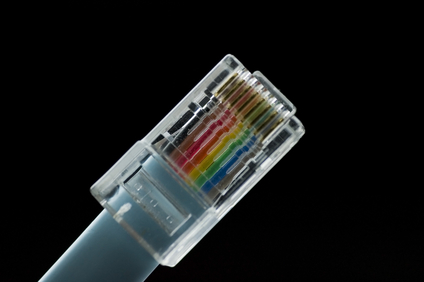
The easy answer is:  they are both cable connectors with a standard network plug and socket, often called an “Ethernet jack”.

Cat 5 and Cat 6 are UTP, or Unshielded Twisted Pair cables.  The difference defines the cables as Category (Cat) 5 or Cat 6 UTP cable. Both are terminated by RJ45 connectors.
Read More
Network Cabling,data cabling,,DC

Cabling Issues

11 Apr 2013

data cabling,,DCOne of the most important things about cabling is to purchase cable not just for what you’re using now but for what you may run in the future.   A rule of thumb is to install the highest-grade cable that your budget allows.


The standard is Ethernet. That means there are two basic types of cables to use: copper Ethernet and fiber optic Ethernet. Copper Ethernet cabling is generally used to connect the data center equipment to the end-user, while fiber optic cabling is used to network the infrastructure and to

Read More

IT Support,Data Cabling,Atlanta GA

A Guide to Network Cabling

22 Mar 2013

Cat 6While WI-Fi and other wireless network technologies have improved greatly over the years, nothing beats the reliability and performance of a wired network in your home or business. One challenge that people face is what kind of cable they need for their needs.


Although there are dozens of network cable types, the fact is only 3 types of network cable is commonly used in home and small business networks: Category 3 (Cat3), Category 5 (Cat5), and Category 6 (Cat6).

Read More

network cabling,Cat6a Cabling in Atlanta

All About Cat6a Cable

11 Feb 2013

Cat6a Cabling in AtlantaIt was once thought that copper cabling would never support speeds above 1 Gig, but Augmented Category 6, or Cat6a - has proven that wrong. Copper still lives and copper cabling may still be around at 40 Gig.


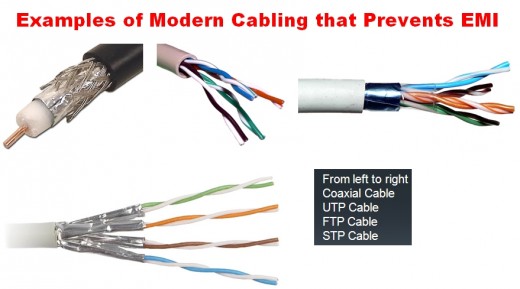
There has been much debate about which is the better option for supporting 10 Gig: Cat6a Unshielded Twisted Pair (UTP)  or Cat6a Shielded Twisted Pair (STP)?  Both solutions have their uses, and some key information can help installers make informed decisions.


Standards and Alien Crosstalk


The IEEE released the 802.3an 10GBASE-T standard in June of 2006, which specifies 10Gbs data transmission over four-pair copper cabling. The Telecommunications Industry Association (TIA) then began work on transmission performance specifications for the cabling. They published TIA Standard 568-B.2-10: Transmission Performance Specifications for 4-Pair 100 Ohm Augmented Category 6 Cabling in February 2008.


The new Cat6a standard extends the frequency of Cat6a cables to 500 MHz with specifications for a new performance parameter called Alien Crosstalk (ANEXT). Cat6a cables are fully backward compatible with all previous categories, including Cat6 and 5e. NEXT is crosstalk that occurs between adjacent cables and connecting hardware. The higher frequency signals of Cat6a makes ANEXT the limiting noise source for Cat6 and Cat5e systems.


Cat6a UTP vs. STP


Due to its ease of installation and familiarity among installers, Cat 6A UTP is today’s cabling of choice as it can support future bandwidth needs and 10Gb/s performance. In addition, the shield n the STP cable helps prevents electromagnetic and radiofrequency interference (EMI/RFI) on twisted pairs, helping eliminate the effects of noise from sources like machinery, generators, or medical imaging equipment, making STP systems the  choice for industrial and healthcare facilities.


As most residential systems are not faced with EMI/RFI challenges, so UTP is still the recommended cabling type for home installations.

Data Cabling, Cat5e Cat6/6a Cabling, Washington DC

Cat6 Q&A

4 Feb 2013

Data Cabling ,Cat5e ,Cat6/6a CablingWhat is Cat6? Cat6 components are interoperable between different vendors and are fully backward compatible. Cat6 has the same nominal Impedance of 100 Ohms as Cat5 and 5e components, but with tighter tolerance on Impedance variations. Transmission parameters are specified to 250 MHz, compared to 100 MHz for Cat 5/5e.


Do Cat6 components behave differently?   The diameters of Cat6 cables range between 0.21 to 0.25 inch (5.3 - 5.8 mm) compared to Cat5/5e’s range of 0.19 to 0.22 inch (4.8 – 5.5 mm).   Cat6 also has a tighter twist length to reduce crosstalk interference.


What about installation?  Cat6 cables and components are installed similar to Cat5/5e. There are design and installation issues that contractors and installers must pay greater attention to; including cable terminations and the pathway fill.


Will Cat6 supersede Cat5/5e?  Yes. The only question is when. The installed cost for Cat6 cabling can be about 20 % higher than Cat5e, but prices will decrease as usage increases.


Will Cat6 deliver what is promised?  Yes. There are no technical obstacles. Test parameters and procedures to qualify Cat6 components to ensure interoperability between different vendor’s products are in place and detailed.


What about the installed performance compared with Cat5/5e?  The biggest benefit is much-improved Signal-to-Noise Ratio at the Receiver:  Cat6 provides about 16 times better Signal-to-Noise Ratio compared to Cat5/5e over a wide frequency range.


Why do we need Cat6? The real question is “is Cat5e good enough for today and in the foreseeable future?”  The answer is “Yes, but…”. Network switch ports are often at the “marginally compliant” limits of the IEEE standard and susceptible to cabling and temperature variations. Cat6 provides fewer bit errors than Category 5e for 100BASE-TX and 1000BASE-T applications.

Cabling, Installations, Network Cabling

Cat6 Installation Tips

9 Jan 2013
 Data Cabling, Cat5e Cat6/6a CablingAlways study and document the required cabling layout and the distances between the equipment to be cabled before starting a Cat6 cable installation.

Refer to ANSI/TIA/ EIA 606 Document for color coding the different functions used in the system guidance. Use either PVC or plenum cable as required depending on where the cables are run. Fiber optic and/or copper cable may be required depending on the transmission speed and type of equipment.
Read More