Data Cabling,Structured Cabling, Cabling Design-Washington DC

Improve Data Center Reliability with Structured Cabling – Part 1

22 Nov 2017

Data Cabling,Structured Cabling, Cabling Design-Washington DCCabling systems were once proprietary prior to the 1990s, which was a major problem for data centers. Each modification required vendor-specific knowledge of each component of the cabling system. In 1991, the TIA/EIA-568 standard was introduced to bring about structured cabling systems.


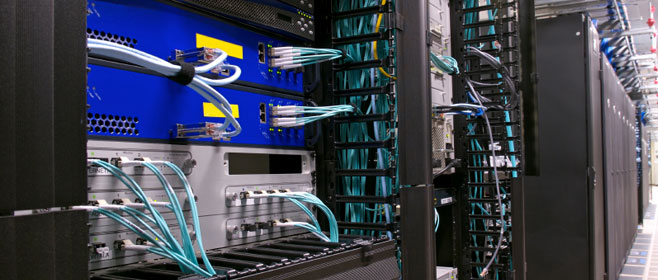
Although 5% percent of a network budget is currently spent on structured cabling, 59% of downtime can be attributed to it. Most downtime results from not adhering to standards. Data center efficiency can be increased by proper planning and implementing structured cabling principles. Structured cabling best practices should be the foundation of every data center.


Proper Planning


Designing proper cable runs, identification of cable types, the process of network verification, planning for future expansion, and accurate documentation are all part of the proper planning for structured cabling. Lacking these, a data center would be disorganized and chaotic.


A data centers begin at the MDA (Main Distribution Area), single or multiple HDA(s) (Horizontal Distribution Area), as well as the required equipment and spacing to allow cable access. The Main Distribution Area is the location of core networking equipment. The cross-connects of HDAs are utilized for the distribution of cables to the EDA (Equipment Distribution Area). A well-organized data center is the product of a structure that is well-planned.


Best Practices


Proper Standards –To attain high levels of proficiency, cabling standards, which are revised every five to ten years, must be followed. Remaining up-to-date will allow a data center to be more adaptable to changes of technology. American data centers now comply with the TIA/EIA-568 standard developed by the TIA (Telecommunications Industry Association), while business and companies located overseas comply with the ISO/IEC IS 11801.


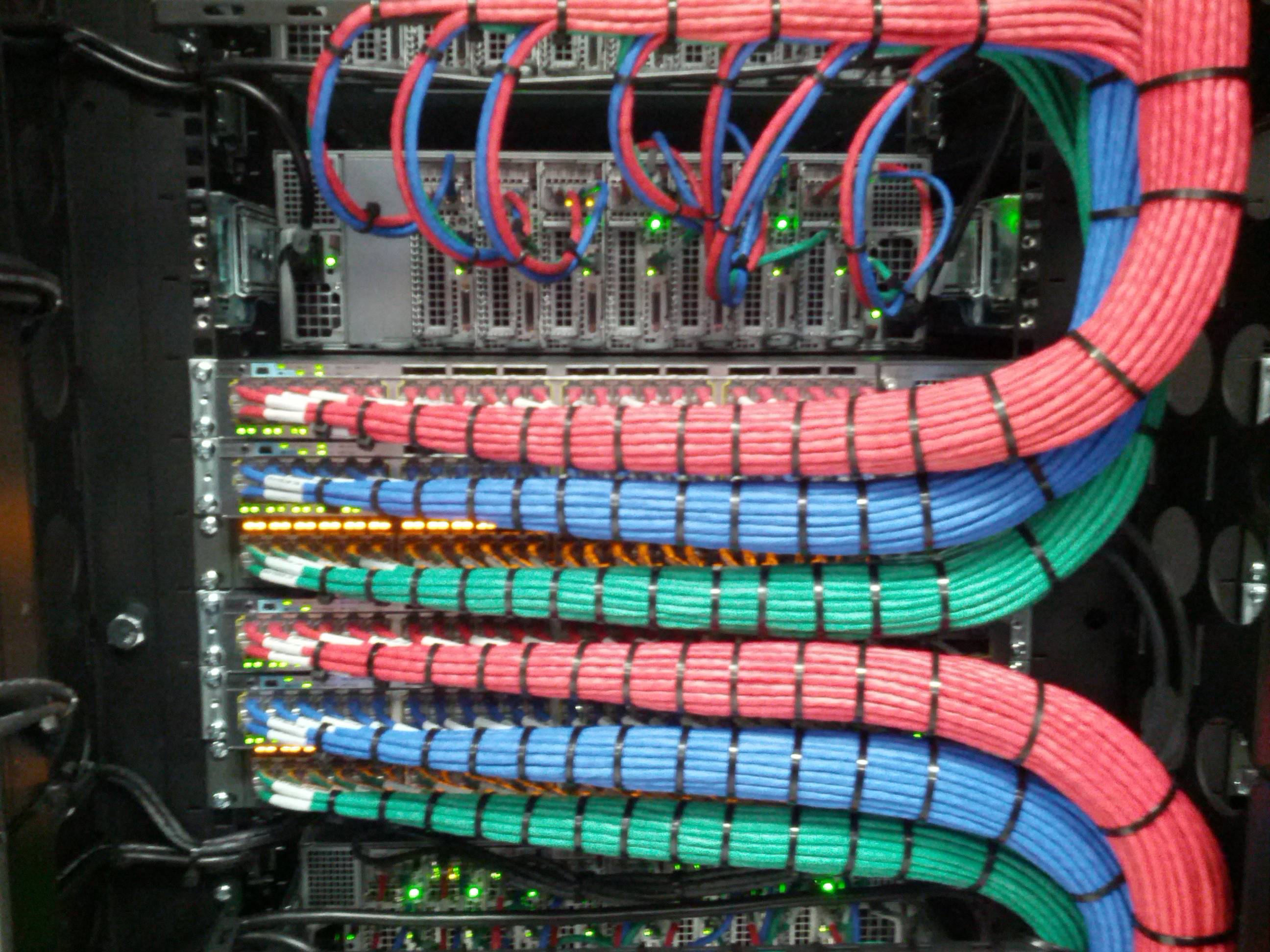
Cable Identification System – In addition to standards, implementing an identification system utilizing colors and labels will assist managers in data center organization. A sound system will conserve both time and money over the long term. Addressing problems or even maintaining aging equipment is eased by a well-defined and easily understandable cable identification system.


Part 2 will discuss Cabling Infrastructure and Improved Network Function.


Progressive Office Cabling


Founded in 1986, Progressive Office’s success has been a direct result of years of commitment to seeking solutions on behalf of our clients in the Washington, D.C. and New York City areas. Efficiently working together, Progressive teams get cabling installed and operating as fast as possible while minimizing disruption and downtime. Call our toll free number (800) 614-4560 today.
Network Cabling, Network , Structured cabling, cable, Washington DC

8 Network Cabling Mistakes to Avoid – Part 2

14 Nov 2017

As discussed in Part 1, the improper I can result in poor network performance, maintenance issues, and concealed expenses. Part 2 will discuss four more network cabling errors to avoid. Remember to consult with a cabling company that is experienced and provides excellent service.


Mistake No. 5: Ignoring Distance Limitations


The standard distance limitation for UTP cabling with Ethernet at 1 Gbps is 100 meters. For cabling used for 10 Gbps or 40 Gbps, it is important to be aware of the distance limitations of the kind of cabling that will be used. Let’s say your project plans to run 10 Gbps for a maximum of 100 meters over UTP cabling. This will require utilizing at least CAT 6A cabling.


Mistake No. 6: Bypassing Codes


Bypassing local codes may result in endangering first responders. In most facilities, it is prohibited to use PVC-jacketed cabling within air handling spaces. When PVC cabling burns, it produces poisonous fumes that can be hazardous to firefighters and other first responders who must enter the facility during an emergency.


The failure to comply with local codes with respect to low voltage cabling may result in costly fines and perhaps even being ordered to completely remove and reinstall cabling, an expensive exercise. Working with a reputable cabling service company that is knowledgeable regarding local ordinances will avoid future problems.


Mistake No. 7: Neglecting Testing


After cabling is installed, testing should be performed on every cable, using equipment that can verify functionality. The verification of cable lengths and specifications is also important. For certain transmission rates, it must be verified that the cabling is capable of adequately providing support.


Mistake No. 8: Non-Compliance with Standards


Your company’s project should comply with technical standards to ensure the proper functioning of its network. Non-compliance will make noise and interference more likely, leading to inefficiency and poor network performance.


Network cabling standards are used worldwide and are drafted by ISO/IEC, CENELEC and the Telecommunications Industry Association (TIA). TIA (USA) issues the ANSI/TIA-568 standards for telecommunications cabling in commercial facilities.


Progressive Office Cabling


Founded in 1986, Progressive Office’s success has been a direct result of years of commitment to seeking solutions on behalf of our clients in the Washington, D.C. and New York City areas. Efficiently working together, Progressive teams get cabling installed and operating as fast as possible while minimizing disruption and downtime. Call our toll free number (800) 614-4560 today.

Structured Cabling, Cabling, Washington DC

The 5 Most Common Structured Cabling Errors – Part 1

19 Oct 2017

Structured Cabling, cablesStructured cabling systems are so standardized that good practices should merely entail following ISO/IEC, CENELEC or Telecommunications Industry Association (TIA) documentation for panel and outlet standards, cable pathway standards, maximum cable and patch cord lengths, patch testing standards, etc. Strictly doing so will invariably result in an installation that is professional and trouble free. In addition, as data speeds grow faster and faster, following industry standards becomes even more crucial.


Improperly installed cabling made up of shorter runs, which do not overly stress the system, may function well enough. In addition, data speeds may be quite beneath the cable specification capacity. As an example, CAT5e carrying 100Mbps and capable of 1Gbps will have ample margin of error. However, structured cabling systems still need qualified technicians for proper installation supporting maximum data speeds over the entire network as required.


The following will discuss the five most common errors of structured cabling. Remember to call an experienced and expert cabling installation team to get the best results for your company’s project.


Error No. 1


Considering cables as merely wiring is the first error. They are actually very important electronic components that provide the pathway for data from point to point within a network. These points may be a desktop PC, a network switch, server, router, and wireless access point. When you consider that cables make these connections possible, then you can understand how important it is to make sure that the cabling is of high quality and properly installed.


Error No. 2


Running data cables near power cables is the second error. Even when cables are screened, this practice is unsound. When data cables are running near and parallel to   power cables, noise emitted by power cables may infiltrate data cables. As the load carried by power cables fluctuate, resulting spikes or surges may radiate into the data cables, creating undesired noise decreasing the quality of the data transmission.


Part 2 will discuss three more common errors of structured cabling.


Progressive Office Cabling


Founded in 1986, Progressive Office’s success has been a direct result of years of commitment to seeking solutions on behalf of our clients in the Washington, D.C. and New York City areas. Efficiently working together, Progressive teams get cabling installed and operating as fast as possible while minimizing disruption and downtime. Call our toll free number (800) 614-4560 today.

IT Support,Data Cabling,Atlanta GA

Why Structured Cabling is Important for Business Phones

27 Sep 2017

IT Support, Data Cabling,Atlanta GAIf your organization is considering a new VOIP (Voice Over Internet Protocol) system, you should think about the structured cabling system needed to support it and maximize its potential. The following summarizes the advantages your digital phone system will have with a well-designed structured cabling system.


Decreased Noise


CAT 6 and CAT 6A cable provides more noise reduction than older cables. Fiber optic cabling is even better. Less noise resistance results in more static and faulty connections during phone conversations. Higher levels of noise also decrease network speed because the system is forced to retransmit data until it is no longer corrupted. Although purchasing lower quality cable saves money in the short run, it may result in long term business losses because of slower response times and annoyed customers.


Lengthened Runs


Higher quality cable will be capable of supporting longer runs that are free of artifacts and errors. Fiber optic cables are not restricted by the length of runs. It is the superior option for a data center or business telephone system because of its excellent noise resistance and high speed. Although second choices, CAT 5e to CAT 6A cabling are capable of supporting runs to 100 meters without noise. Cables that can support long runs provide greater flexibility for layouts, decreasing the need for data hubs or repeaters and increasing reliability.


Maintenance Savings


CAT 5e, CAT 6, and fiber optic cables are highly dependable. However, if they ever become faulty or the network needs to be reconfigured, a structured cabling system that is well organized and diligently marked will save time spent on maintenance. While a company’s network is down, business may be impacted, resulting in lost revenue. Tracing faults is made much easier by a sound structured cabling system.


Transmission Speed


Business is often time-sensitive, and you will want to use the highest quality cable your company can afford. CAT 6A cable is capable of supporting a maximum of 10 Gigabits per second while CAT 5e can only achieve 100 mbps. Older, less capable cables are not recommended because their slow data transmission and high noise levels cannot meet current VOIP demands.


Progressive Office Cabling


Founded in 1986, Progressive Office’s success has been a direct result of years of commitment to seeking solutions on behalf of their clients in the Washington, D.C. and New York City areas. Efficiently working together, their teams get cabling installed and operating as fast as possible while minimizing disruption and downtime. Call their toll free number (800) 614-4560 today.

IT support, network infrastructure

Is it Time to Upgrade Your Network Infrastructure?

21 Sep 2017

IT support, network infrastructureYour company will need to upgrade because network traffic is rising dramatically due to the rapid increase in the number of devices and videos online. By 2020, the number of devices will approach an estimated 12 billion. The following are reasons why you should contact an expert and experienced structured cabling support team to evaluate and improve your network infrastructure.


High Maintenance


The addition of the latest technology often stresses aged infrastructure, resulting in more downtime and troubleshooting. This increased time and effort devoted to this task prevents your IT support from working on implementing innovative solutions that may increase productivity or decrease costs, slowing your company’s growth. Installing up-to-date infrastructure will decrease maintenance and increase deployments.


Inadequate Security


Cybercrime is growing ever more prevalent and complex. Hackers tend to avoid networks with strong security and target those with weak protection. Older network infrastructure will have more and greater vulnerabilities. Modern network solutions now feature intelligent sensors and enforcers, improving security.


Mobile Employees


Today’s workers want the ability to work anywhere and anytime. Unfortunately, aged infrastructure will not be able to cope with new mobile solutions and enterprise cloud applications. In order to maintain and increase employee productivity, a network upgrade replacing obsolete equipment will probably be necessary.


Slow Network


Networks of the past were not designed to meet the current requirements of companies and their workers. Wireless technology now permits employees to work anywhere with wireless access points nearing 7 Gbps, more than 11X faster than the 802.11n standard.


The Competition


A network infrastructure upgrade will allow your company to remain competitive because it will be able to implement the latest solutions that boost productivity and earnings. Powerful applications that would have crashed your old network can now be handled, allowing your organization to keep up with competitors.


Progressive Office Cabling


Founded in 1986, Progressive Office’s success has been a direct result of years of commitment to seeking solutions on behalf of their clients in the Washington, D.C. and New York City areas. Efficiently working together, their teams get cabling installed and operating as fast as possible while minimizing disruption and downtime. Call their toll free number (800) 614-4560 today.

Structured Cabling,Washington DC New York City

Important Considerations for Structured Cabling

13 Sep 2017

 cables,structured cabling, Network CablingAn infrastructure for enterprise communications, structured cabling is a system of hardware and cables designed for flexibility and future capability. Complying with the Electronic Industry Alliance/Telecommunications Industry Association (EIA/TIA), conventional structured cabling meets the organization’s standards internationally. The following are three important aspects of structured cabling that every organization should consider.


Savings


Over time, IT infrastructure has become more condensed and more sophisticated, and the importance of structured cabling has grown. Structured cabling eases a company’s expansion via a design that allows the adoption of additional hardware and software. As it has consistent network architecture, structured cabling allows the simplification of maintenance and repair, decreasing costs of upkeep. A study by the International Engineering Consortium discovered that standardizing cabling components and reducing cable delivery methods decreased startup construction outlay by almost a third. Moreover, expenses for network maintenance are lowered 40%.


Trends


Structured cabling is gradually making the transition from copper cabling to fiber optic because companies desire greater speed and better air circulation for the reduction of cooling costs. Lighter and narrower cables allow an overhead system of cabling to be installed instead of raised-floor cabling. The installation and management of cabling is made easier by less cumbersome cables, and so this trend will grow over time.


Planning


Sound planning is crucial for the success of IT projects. The future number of users, their locations, and required bandwidth must be diligently considered. How PoE (Power over Ethernet) will provide power to devices via must be studied. As Wi-Fi use grows, the number of wireless access points must be determined by every enterprise. Where will cables be located inside and outside the premises? Will the structured cabling be able to cope with moves and changes within the premises? Scalability and flexibility are both important, and so the locations of furniture and server racks must be carefully planned with respect to cabling. IT staff should also understand that different types of cable have limitations as to the length of their respective runs. Finally, there may be government regulations for structured cabling that require compliance.


Progressive Office Cabling


Founded in 1986, Progressive Office’s success has been a direct result of years of commitment to seeking solutions on behalf of their clients in the Washington, D.C. and New York City areas. Efficiently working together, their teams get cabling installed and operating as fast as possible while minimizing disruption and downtime. Call their toll free number (800) 614-4560 today.

Network Cabling,Washington DC New York City Atlanta GA

Cabling Tips for Data Center Management

1 Sep 2017

Network Cabling,Washington DC, New York City, Atlanta GAWhenever there is an IT systems issue, the resolution can often be delayed by poorly structured cabling. Enterprises often turn to their IT staff or an electrical contractor for cabling, but they would be wiser retaining a professional cabling service with years of experience. The following are important cabling tips for data center management.


Highest Quality for Budget


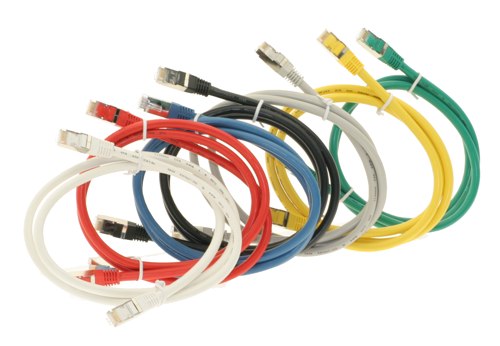
As expected, higher quality cabling materials are more costly, but have superior performance. For example, gold connectors have greater resistance to corrosion, but they will also be more expensive than lower-quality connectors. If your firm’s cabling will be difficult to access or located in a corrosive environment, cables with gold connectors will be the right choice.


Cabling Capable of Company Volume


Category 5, 5E and 6 are cable types and each has its own capabilities in terms of the amount of data carried, speed of transmission, and distance covered. Consult with a professional network cabling service to discuss your present and future requirements in order to select the proper cabling.


Fiber Optic for the Future


Companies expecting large data volumes in the future or requiring longer distances should select fiber optic cables. Retain expert cabling professionals because fiber optic installation will entail particular requirements that can be complex.


Accurate Measuring for Planning


When the recommended span is exceeded, cable becomes more vulnerable to distortion, degrading data quality and speed. IT staff with limited experience may not properly measure the entire distance by not accounting for corners or obstacles.


Margin for Future Modifications


The office may be reconfigured or cable connections may be moved in the future. Thus, it would be wise to allow some margin for future modifications by providing plentiful slack for each cable installed.


Labeling for Organization


An IT team should know precisely where a cable starts and terminates. Clear labeling enables faster tracing of faults, minimizing downtime and resulting losses in revenue. Cabling service professionals carry out proper labeling as a matter of routine.


Progressive Office Cabling


Founded in 1986, Progressive Office’s success has been a direct result of years of commitment to seeking solutions on behalf of their clients in the Washington, D.C. and New York City areas. Efficiently working together, their teams get cabling installed and operating as fast as possible while minimizing disruption and downtime. Call their toll free number (800) 614-4560 today.

Structured cabling,Network Cabling, Washinton DC

Structured Cabling’s Six Subsystems – Part 1

22 Aug 2017

cable management,Network Cabling,Washinton DcA structured cabling system is a type of open network structure utilized by data, telephony, access control, building automation, and other systems. Its advantages are operational flexibility and economy. A structured cabling system is typically divided into these six subsystems: 1) Entrance Facilities, 2) Equipment Room, 3) Backbone Cabling, 4) Telecommunications Room, 5) Horizontal Cabling, and 6) Work Area.


Overview


Structured cabling is the design and installation of a cabling system that can provide support to several hardware use systems, and be suitable for both the needs of the present and the future.


Governed by international standards regarding the wiring of data centers, offices, and apartment buildings for data or voice communications, structured cabling design and installation utilizes several types of cable. These are typically CAT5e and CAT6, along with fiber optic cabling and modular connectors.


Defining methods and specifications for the laying of cabling in various topologies for meeting customer needs, standards typically require the use of a rack-mounted central patch panel from which modular connections can be used as required. Every outlet is then patched into a network switch for network usage or into a PBX (private branch exchange) or IP telephone system patch panel.


The use of color code patch panel cables is common for identifying the type of connection. However, it is not required by structured cabling standards with the exception of the demarcation wall field.


Cabling standards require that all eight conductors of CAT5e, CAT6, and CAT6A cable are connected to discourage "doubling-up" or the use of one cable for both data and voice. However, IP telephone systems are capable of running both telephone and the computer on the same wire.


When copper cabling, CAT5e, CAT6, or CAT6A is used, the maximum distance is 90 meters (98 yards) for the permanent link installation, along with an allowance of 10 meters (11 yards) for patch cords at the combined ends. Both CAT5e and CAT6 are capable of running Power over Ethernet (PoE) applications up to 90 meters. Due to power dissipation, CAT6A performs better and more efficiently.


Part 2 will summarize each of structured cabling's six subsystems.


Progressive Office Cabling


Founded in 1986, Progressive Office’s success has been a direct result of years of commitment to seeking solutions on behalf of their clients in the Washington, D.C. and New York City areas. Working together, their cabling teams get cabling installed and operating as fast as possible while minimizing disruption and downtime. Call their toll free number (800) 614-4560 today.

Data Cabling,Structured Cabling, Cabling Design-Washington DC

Modern Cabling System Design Trends – Part 1

5 Aug 2017

 Data Cabling,Structured Cabling,Washington DC The most significant trend in IT (information technology) is the greater reliance of organizations on high-performance data communications (datacom) cabling. Industry leaders are reporting more than 50% of their market is for data and communications applications. Consequently, their research and development is concentrating on the development of new products and system enhancements.


Objectives of System Design


IT is accelerating rapidly, and people are using it in ways and in areas that only became possible recently. Modern system design aims for maximizing communications capability and flexibility even in limited spaces that emphasize openness and visibility. As a result, the connections between workstations and datacom networks have grown in importance.


Various cable and wire management systems can be used for the management, organization, protection, and connection of cabling infrastructure. These systems allow communication, collaboration, and the flexibility to adapt to the evolving needs of businesses and their workspaces. Five systems are discussed below.


Open Space


Precisely positioned within an open space to allow power and datacom feeds into modular office furniture, poke-through devices can feature audio, video, and control connectors, along with active modules.


Overhead


Flexible and allowing accessibility in drop and open-ceiling applications, overhead systems utilize cable trays that are available in various styles, such as center spine, wire mesh, ladder, and solid bottom.


Perimeter


Easily accessible, expandable, and configurable, perimeter systems are capable of securely routing wiring and cabling along walls. They are primarily used for offices, classrooms, training centers, and conference rooms, offices, classrooms, and training centers.


Tabletop Modular Outlet (TMO)


TMO centers allow easy accessibility to datacom and power on task tables, desktops, study carrels, and lecterns. Their two main styles are recessed and pop-up, linking networked and portable computing.


Vertical Distribution


Visually attractive, vertical distribution units deliver datacom and power from ceilings directly to workstations. Absent the clutter of service poles, they conceal wiring and cabling in an aesthetically pleasing way.


Part 2 will cover High Performance Cabling and Aesthetics of Cabling.


Progressive Office Cabling


Founded in 1986, Progressive Office’s success has been a direct result of years of commitment to seeking solutions on behalf of their clients in the Washington, D.C. and New York City areas. Working together, their cabling teams get cabling installed and operating as fast as possible while minimizing disruption and downtime. Call their toll free number (800) 614-4560 today.

Data Cabling,Structured Cabling,Washington DC

Setting Up a Campus Network

23 Jul 2017

Data Cabling,Structured Cabling,Washington DCAcademic institutions can garner all the benefits of the Internet age by integrating information and communications technology (ICT) with their teaching and learning environments. ICT is an extension of the term for information technology (IT), emphasizing the unification of telecommunications, computers, software, storage, and audio-visual components within a network.


The quality of education can be significantly improved through the sharing of skills, resources, content, and faculty development. IT content and resources should be available to both faculty and students throughout the campus. To this end, academic institutions must establish a network in each of their campuses, achieving the same speed of data transfer at each building.


Typically, a campus network is comprised of several local area networks (LANs) that are interconnected inside a specific geographical area. Networking components, such as switches, routers, and firewalls, and transmission media, such as copper cable and optical fiber, are utilized for interconnection and communication between connected devices.


Campus Network Topology


For academic institutions like colleges or universities, a campus area network should be interconnected to various types of buildings, including administrative, academic, library, student center, hostel, guest house, sports facility, conference, technology, training, and laboratory.


A campus network will be interconnected via high-speed Ethernet cabling over optical fiber of up to 10GB capability. For the efficient processing of data and information traffic using distribution, access and core segments, tiered hierarchal architecture is utilized.


Every building, block, center, and residential complex will be connected by high-speed optical fiber cable. Moreover, every node within a building will be connected with UTP copper cable that supports gigabit speed.


The conference rooms, teaching halls, and common areas inside each campus will be Wi-Fi enabled through the deployment of 802.11 based wireless access points with central authentication, permitting secure network access via laptops, tablets, smartphones, and other Wi-Fi enabled devices.


Internet services, along with common applications, will also be installed at key locations, such as library study halls, allowing students, faculty, and staff easy access via desktop computers and laptops around the clock.


Network Cabling


When  work requires a unionized cabling group, call on Progressive Office Inc.   for your commercial Cat5e/6/6a and fiber cabling projects. Specializing in cabling for data, voice, security and the latest WiFi and LiFi solutions. Phone: (202) 462-4290