networ cabling,cable management

Things to Avoid in Running Network Cabling

28 Mar 2015

Date cabling,cable managementWhat can cabling that has not been installed properly do?


It can lead to a lot of negative outcomes such as paralyzed network performance, maintenance troubles and hidden costs. Network cabling can be  especially troublesome if it is installed by individuals without the proper knowledge and tools. When it comes to twisted pair cabling, there are many factors that you need to consider.


In the past, many companies installed different cable systems since twisted pair cabling was expensive. At present, full installation is still costly although a greater part of the expense is labor since raw cables is not pricey. Cable management is another concern. Use of ladder racks means additional cost but it reduces upkeep. Also be sure you label cables and to make use of color codes.


Unshielded twisted pairs are more practical in terms of usage. Magnetic fields are produced by low voltages that pass through your cables. This is a vital property of the communications cycle. And if you run unshielded cables along with electrical wires, the magnetic field can be interrupted. The communications becomes corrupted or noisy. You can expect that transmissions will not make it from one point to the other. Another possibility is that transmission rates will become slower. The cables should be perpendicular with electrical lines instead with the electric wires inside of shielded tubes at cross points.


Do not attempt to run cable alongside fixtures that create “noise”. Fluorescent lamps, motors and devices that generate electrical or magnetic interference will distort your cabling infrastructure. Install a data cable conduit that will create a buffer from these hazards. Also figure out the total distance of each cable. This is usually up to 100 meters. However, if cabling data rates reaches 10 to 40 GBPs, be attentive about distance restrictions related to the kind of cabling you plan to use. If you will run 10 GBPs for a maximum of 100 meters over twisted pair cabling, it is best to use Category 6 cabling.


Be aware of local codes.


This is important for safety concerns. In many areas, using PVC-covered cables is not allowed in air-handling spaces. When PVC burns, there is toxic emission that may prove dangerous to firefighters and other safety personnel who will try to navigate the location during emergencies. Failure to follow rules can lead to fines and forced replacement of cabling infrastructure. Contractors must be mindful of these regulatory standards.
Structured Cabling, Cabling, Washington DC

Practical Pointers in Network Cabling

20 Feb 2015

StructuredCablingFiberOpticsCat6a10GigNetworking cabling is not a simple task. It entails expertise and attention to detail. What are valuable insights that network technicians need to know about for effective cabling and installations?


Cable length is essential.


The telecommunications standards prescribed by the Telecommunications Industry Association and Electronic industries Alliance (TIA-EIA) states that maximum distance end to end of cables should be no more than 100 meters.

Read More

Structured Cabling,Office Cabling

Cabling Pointers for Effective Data Center Management

5 Feb 2015

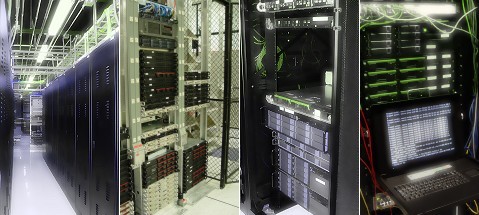
Structured Cabling,Office Cabling,datac enterThe data center supports the lifeblood of corporate enterprises. Communications stop due to the malfunction of this facility. Unfortunately, multiple issues can affect the data hub and incorrect cabling can be one of them. Planning is the key to boosting the efficiency of data center cabling.


 Here are some things to consider:


  1. Measure cables with care. Otherwise, you produce a twisted “rat's nest” and an unnecessary waste of money.

  2. Put a label on both tips of your cables which include patch and short runs. This will be useful if you need to test a cluster of circuits. It will not be confusing if you unplug several patch cables. You know where each single cable is connected. The marking system must be consistent at all times.

  3. Never rush on termination of cables. And redo in cases where cables lose connectivity. Avoid purchasing and using cheap products. You will end up spending more in the long-term.

  4. Test the cables first and make sure it passes the mark for continuity.  If not, you have to do it all over again. And always use a high-quality tester to avoid unwarranted work.

  5. Patch cables must be kept short. Remember that rack servers are only one foot away from each other. Patch cables with a length of three feet are definitely not appropriate. Combine testing and terminating capabilities to make sure that patch cables connect accurately. Additional lengths will cause a lot of twisting.

  6. Come up with a color coding technique. A single color is ideal for patch cables and cable runs. However, it is possible to utilize specific color cables for specific purposes. Avoid random colors. It will be easier to follow cable functions and resolve problems if your color has a purpose. Blue for data, white for voice is a common standard.

  7. Your design must be cable-friendly. Do not put a rack in a place where it is not possible to run your cable effectively. You may end up with cables dropping from the ceiling or scattered on the floor. Expansion should also be in your planning so you know when and how to make adjustments.

  8. Separate electric wires from Cat5/6 cables. Power lines can distort communications. The effects will be to have connection and data transmission issues that can result in data corruptions.

  9. Be careful about excessive temperature. Make sure that the cables are cool and not hot since this can result in cabling decomposition. The data center should be designed in a way that servers and networks are always at a comfortable temperature.


If you need help in designing your structured data cabling system, please feel free to call or contact us. We do free cabling site proposals.

Structured Cabling,Washington DC New York City

Types Of Cabling Racks

20 Jul 2014

Cat6, Network Cabling, Data Cabling,cabling rackc 2Effective cable management is vital to maintaining tidiness in a data facility. Cabling racks are used to prevent twisting of optical cables and communications wiring. Remember that the cabling process is very clear-cut. Hence, if a single cable becomes misplaced, it can affect the whole bundle is and the repair process can involve a lot of troubleshooting. This is expensive and a waste of time.


The Local Area Network or LAN is made up of multiple networking devices. Some of these components are Unified Threat Management solutions, routers, servers, switches, modems, and cables.

Read More

cable testing, Network Cabling ,Data Cabling ,cat6-cabling

Benefits of Copper Cabling Solutions

4 May 2014

cable testing, Network Cabling ,Data Cabling ,cat6-cablingThe conventional process of copper cabling has been used for several years and is still preferred by many network cable providers and end-users. Companies like Progressive Office Cabling offer a complete range of cabling solutions in Cat5, Cat5e, Cat6a and Cat6, providing clients with high-quality cable as well as connectivity components. Progressive Office Cabling makes use of highly effective cable management systems and well-trained technicians for installation jobs. It also employs a web-based online project management system to guarantee proper implementation and monitoring of any project.


How Does Copper Cabling Work?


Installation technicians have to follow specific policies and standards, particularly when it comes to building structure concerns. There are several steps to follow with regard to installation. First, the cable should have the appropriate covering or insulation, which is normally made of PVC, Plenum, Ultra-Violet, or mold-resistant varieties. The cable is cut according to the needed length, and outer covers are removed before connectors are attached. Use the appropriate stripping tools for this purpose. Cables should be mounted as orderly as possible.


There are instances when installers have to use ladder trays and J-hooks, which are made for network cabling, or shoot nails into concrete ceilings using a tool that literally propels nails like bullets into the concrete surfaces. Network cables must be installed away from electric power lines, fluorescent lamps and industrial machines; the risk of electrical coupling can increase dependent on proximity and voltage factors.


Different Benefits


Copper cabling has multiple benefits and is the most effective conductor out there. Copper cables are flexible, which is especially advantageous if you are using electrical wires. It is necessary to bend the wire during installation, so you need something durable that will not easily break after a lot of twisting. Copper does not easily melt, so even if a sudden surge of current or overload takes place, there is no risk of burning or melting. At the same time, copper is not difficult to work on. The majority of electricians opt for copper wires because they can be stripped easily or pulled through rigid spots.


With regard to structured copper cabling, there is the Power over Ethernet benefit. This means that it is possible to run power through devices such as Wireless Access Points, surveillance cameras, and power phones. There is an emergency power supply that continues to power mission-critical devices even if electrical power conks out. Copper cabling supports modern technologies and facilitates the convergence of different applications. Hence, it is important that copper cabling is optimized for your requirements. That is why you should make sure to get the services only of experienced and trustworthy providers in the industry. Choose the provider that ensures customer satisfaction and warranty after installation.

Data Cabling Cat5e Cat6/6a Cabling

Abandoned Cable Liability Issue

17 Oct 2013
 Cabling,Data Cabling Cat5e Cat6/6a Cabling

As tenants come and go in a commercial building, the cabling infrastructure sometimes leaves behind abandoned Cat5, Cat6 and coax cabling. All that needs to happen is for the new tenant to request a reconfigured layout that relocates the main wall closet. Or, sometimes the old tenant will cut away the cabling in order to take the patch panels with them. If possible, keep the wall closet location. And always offer to buy the patch panels from a departing tenant.


Read More

network cabling, data cabling

Perfect Patch Panel Installation

4 Jun 2013
This project involved installation of 28 double drops into two 48-port patch panels. Each wall plate has two connections with one dedicated to data and the other dedicated to voice. Price Benowitz has a lovely office at 409 7th Street, NW. The building is historic but renovated into a modern office. So, the drop ceilings and hollow walls facilitated a straight-forward installation of the Cat5e network cabling system.
Read More
Network Cabling,data cabling,,DC

Cabling Issues

11 Apr 2013

data cabling,,DCOne of the most important things about cabling is to purchase cable not just for what you’re using now but for what you may run in the future.   A rule of thumb is to install the highest-grade cable that your budget allows.


The standard is Ethernet. That means there are two basic types of cables to use: copper Ethernet and fiber optic Ethernet. Copper Ethernet cabling is generally used to connect the data center equipment to the end-user, while fiber optic cabling is used to network the infrastructure and to

Read More

Network Cabling ,Data Cabling

What is “Alien Crosstalk”?

8 Mar 2013

 Network Cabling, Data CablingNo, it’s not ET calling home. “Alien Crosstalk” is defined as “unwanted signal coupling from one balanced twisted-pair component, channel, or permanent link to another”.


Alien crosstalk is not generally affected by common noise from motors, transformers, or florescent lighting fixtures. Alien crosstalk is specified as “a parameter for cabling to approximate the energy present when all cabling pairs are energized”.

Read More

International Cooperating Ministries – Cabling Project Notes

20 Aug 2012

Project Objectives and Details based on site survey by Richard Elbe


Number of Drops: 110 total cable drops

  • 47 double network drops

  • 1 single network drop

  • 3 network printer drops

  • 3 media box wallplates with (2 HDMI, 2 VGA and 3 RCA Jacks)


Ceiling: Non-plenum, separate ducting allows for Cat6 PVC cable rather than the more expensive plenum cable.

Racks: 6' x 19" Relay Rack

Switches: Five 24,port Netgear Gigabit switches that will leave room for 4 ports per switch for future expansion of the network.
Read More