


Office Cabling for Performance and Efficiency – Part 2
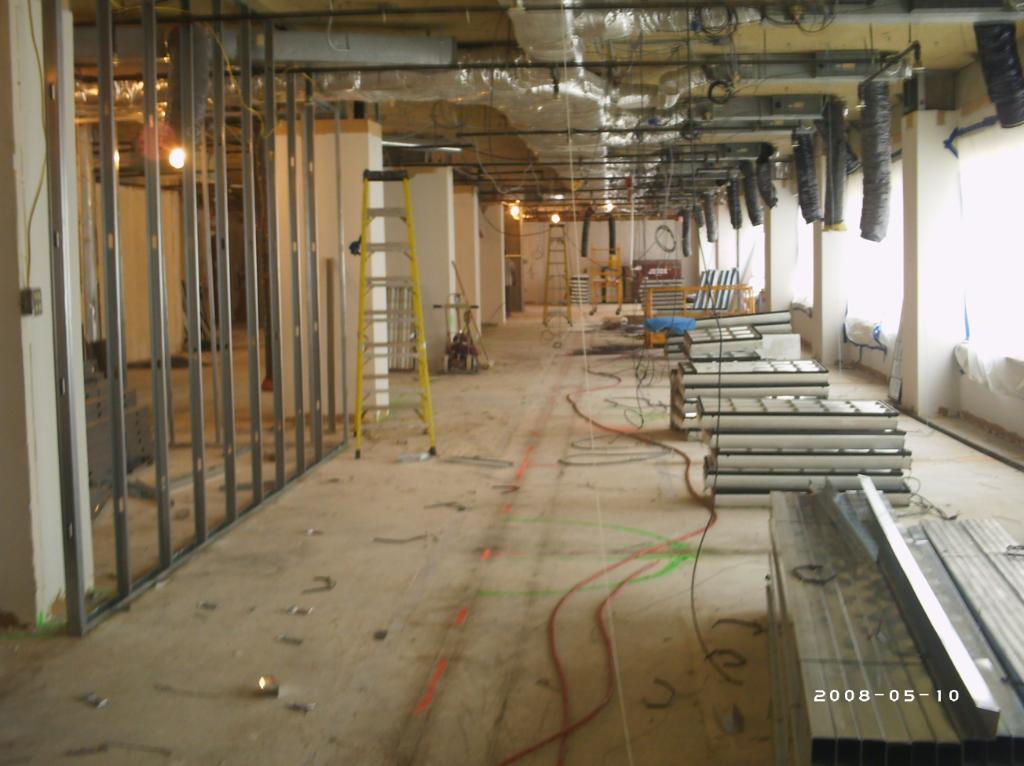
 As discussed in Part 1, office space has become very valuable and costly in many cities. Some companies will need to implement space optimization, and designing their structured cabling network is a good place to start. Part 2 will discuss Cabling System Performance and Densification of Networks.
Cabling System Performance
The TIA 568 standard sets the limit for runs of copper cable to 90 meters (295 feet) from floor distributor to workstations. Exceeding this length will cause greater signal losses or insertion loss and delay limitations due to the Ethernet protocol, which can decrease the performance of the network.
An expansive floor size with a proper number of floor distributors will oftentimes result in cables longer than 90 meters and greater insertion losses. Moreover, short cable runs are affected by crosstalk and return loss.
Due to the increasing implementation of 2.5, 5G, and 10G Ethernet, along with the newest high performance WAP (wireless access points), it is crucial to install a category cable, such as CAT6A, capable of handling higher bandwidth demands in the future.
Densification of Networks
Horizontal distributor optimization inside the equipment room will result in increased floor space and improved network densification. The optimization of floor distributors can improve the usage of LAN Ethernet switches, minimizing intra-building backbone runs. Implementing optimized distributor placement will ease the management of the network and increase reliability.
The use of fiber and copper panels with higher port density should also be considered by network managers. One way to gauge design efficiency is to calculate the number of ports per unit of rack space. This assessment will result in the optimization of rack space, decreasing racks and maximizing floor space.
Using wall-mounted panels for terminating cables and easing their management should also be considered. This will also ensure the prioritization of LAN equipment and fiber panels for rack space. This method suits companies who desire the convergence of building applications and IP networks.
Progressive Office Cabling
Founded in 1986, Progressive Office’s success has been a direct result of years of commitment to seeking solutions on behalf of our clients in the Washington, D.C. and New York City areas. Efficiently working together, Progressive teams get cabling installed and operating as fast as possible while minimizing disruption and downtime. Call our toll free number (800) 614-4560 today.

The Benefits of Structured Cabling for IT Infrastructure
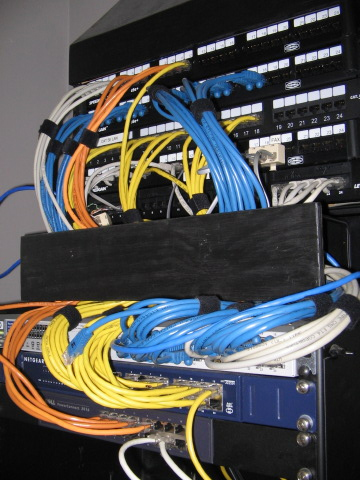
 Utilizing best practices developed over time, structured cabling determines the design and construction of an organization’s IT infrastructure. Standardized practices ease modifications and additions and promote compatibility and reliability. The following will discuss the benefits of structured cabling for your organization’s IT infrastructure.
Efficiency
There will be times when it will be necessary to move forward with changes to your IT infrastructure. When this involves dealing with improperly placed cables without a labeling system, each project will take longer than what would be necessary for a well-organized system. Structured cabling’s best practices decrease downtime and minimize mistakes.
Flexibility
Structured cabling allows flexibility, meaning repairs and changes to the infrastructure become easier and faster to perform. This means data center managers will not hesitate to implement needed changes because they don’t have to deal with disorganized cabling that make their jobs much harder.
Future Proofing
The perpetual improvements of telecommunications technology make it crucial to have an IT infrastructure that can adapt to future technical advances. Structured cabling makes this possible by ensuring upgrades are not difficult to integrate with the existing system. Structured cabling enables future proofing, and so it can be considered a sound investment for companies anticipating expansion.
Redundancy
Structured cabling allows the creation of an IT infrastructure that features redundancy, which helps ensure reliability and accessibility, particularly during maintenance or repair. If a cable is somehow compromised, data communications can keep functioning over redundant cabling as repairs are being performed.
ROI
Business owners should consider structured cabling as an investment that will improve their IT infrastructures. As it will significantly increase the efficiency of its data operations, the ROI (return on investment) could far exceed the initial outlay for implementation over time.
Progressive Office Cabling
Founded in 1986, Progressive Office’s success has been a direct result of years of commitment to seeking solutions on behalf of our clients in the Washington, D.C. and New York City areas. Efficiently working together, Progressive teams get cabling installed and operating as fast as possible while minimizing disruption and downtime. Call our toll free number (800) 614-4560 today.

Advantages of Upgrading to Structured Cabling – Part 1
If it has been a while since your company has upgraded your network cabling, you and your team may not be achieving your potential. As you know, an organization’s IT network is the very heart of its operations. Lacking a network that is up-to-date, staff members will not be as efficient and productive as possible.
Updating from Point-to-Point Cabling
The update that yields the most benefits is having your network make the transition from an outdated point-to-point cabling system to a far more effective structured cabling system. As you may know, there are only two ways for transmitting data over network cables. Numerous companies persist on using point-to-point cabling. Unfortunately, it tends to become problematic, especially when a company needs to significantly expand the network’s size and capabilities. Let’s dig deeper to understand the reasons.
Point-to-point cabling directly connects a switch, device, network, a server, or network, to another network component via fiber optic cable. For the last few decades, this wiring method provided an innovative way to swiftly build a network. However, during that period, the majority of networks at IT departments were not large.
Nowadays, as networks expand and speedy transmissions of massive data amounts become routinely expected, the maintenance of outdated point-to-point cabling systems, along with the thousands of cables required for operations, becomes a large burden on a company’s IT resources.
As a result, organizations have transitioned to structured cabling systems. Rather than directly connecting every single network component to another, a structured cabling system directly links storage units and servers to a communication backbone.
Installed in every part of a facility, local cabling panels are linked to the communication backbone with only one cable. This enables users to easily connect their devices to the whole network by connecting a cable to the nearest cabling panel.
Part 2 will discuss the advantages of upgrading to Structured Cabling.
Progressive Office Cabling
Founded in 1986, Progressive Office’s success has been a direct result of years of commitment to seeking solutions on behalf of our clients in the Washington, D.C. and New York City areas. Efficiently working together, Progressive Office teams get cabling installed and operating as fast as possible while minimizing disruption and downtime. Call our toll free number (800) 614-4560 today.

Structured Cabling’s Top Ten Tips
 Structured cabling that is properly installed can help your business grow by helping to improve its network performance and IT capability. The following will discuss structured cabling’s Top Ten Tips for installing cabling systems.
#1 Cable Labeling
Although cable labeling will slow installation, it will help save lots of time and effort during future repair, reconfiguration, and maintenance tasks.
#2 Cable Testing
Ensure every cable is tested and confirmed to be functioning properly during the installation process. A cable with a nominal performance should not be utilized as it may decrease overall system performance.
#3 Short Patch Cables
Do not use long patch cables when they aren’t required. They are inefficient, look disorganized, and are prone to tangling.
#4 Select Quality Terminations
Avoid purchasing cheap terminating cables because time will be unnecessarily spent on troubleshooting in the future. Select those that are of high quality and terminate properly and rapidly.
#5 Avoid Overheating
Keep in mind that maintaining proper cable temperatures to avoid overheating is crucial for stable and reliable network performance.
#6 Measure 2X, Cut 1X
Precise measurements prior to cutting will minimize damaged and wasted cables during installations.
#7 No Kinky Fiber Cables
As fiber cables have great flexibility, they can kink bend, and knot. These will result in flaws in the fiber cables, negatively affecting performance of the network.
#8 Maximum Cable Length
Do not exceed the maximum length of a cable run, which is typically 100 meters for network cabling systems.
#9 Allow for Expansion
Network cabling systems should always have room for interior expansion. As a business grows, its network should have the room to be able to upgrade or expand.
#10 Qualified Installation Company
In order to ensure that a company’s network cabling system will be properly installed, management must select a qualified installation company and request references. Their technicians should be BICSI certified and experts in ANSI standards.
Progressive Office Cabling
Founded in 1986, Progressive Office’s success has been a direct result of years of commitment to seeking solutions on behalf of our clients in the Washington, D.C. and New York City areas. Efficiently working together, Progressive teams get cabling installed and operating as fast as possible while minimizing disruption and downtime. Call our toll free number (800) 614-4560 today.
Improve Data Center Reliability with Structured Cabling – Part 2
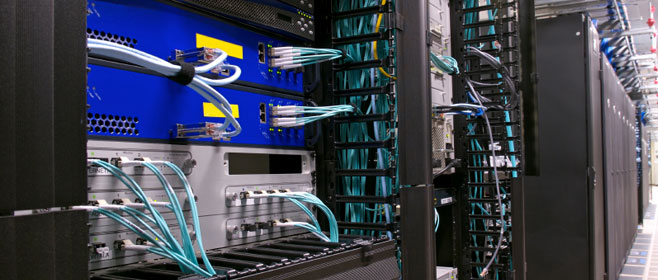
 As mentioned in Part 1, data center efficiency can be improved by properly planning and implementing structured cabling principles. In addition, structured cabling best practices should be the foundation of every data center. Part 2 will discuss Cabling Infrastructure and Improved Network Function.
Cabling Infrastructure
It would be wise to constantly keep the future in mind while you are installing your cabling infrastructure. Setting aside space will allow for expansion. The goal is to make your structured cabling both sound and dependable.
Testing Policy – After the addition or removal of equipment, testing every connection makes sure that a data center will be reliable over time. Performing these tests as a standard practice will help prevent issues that result in downtime. Inconsistent testing practices will result in an unreliable data center.
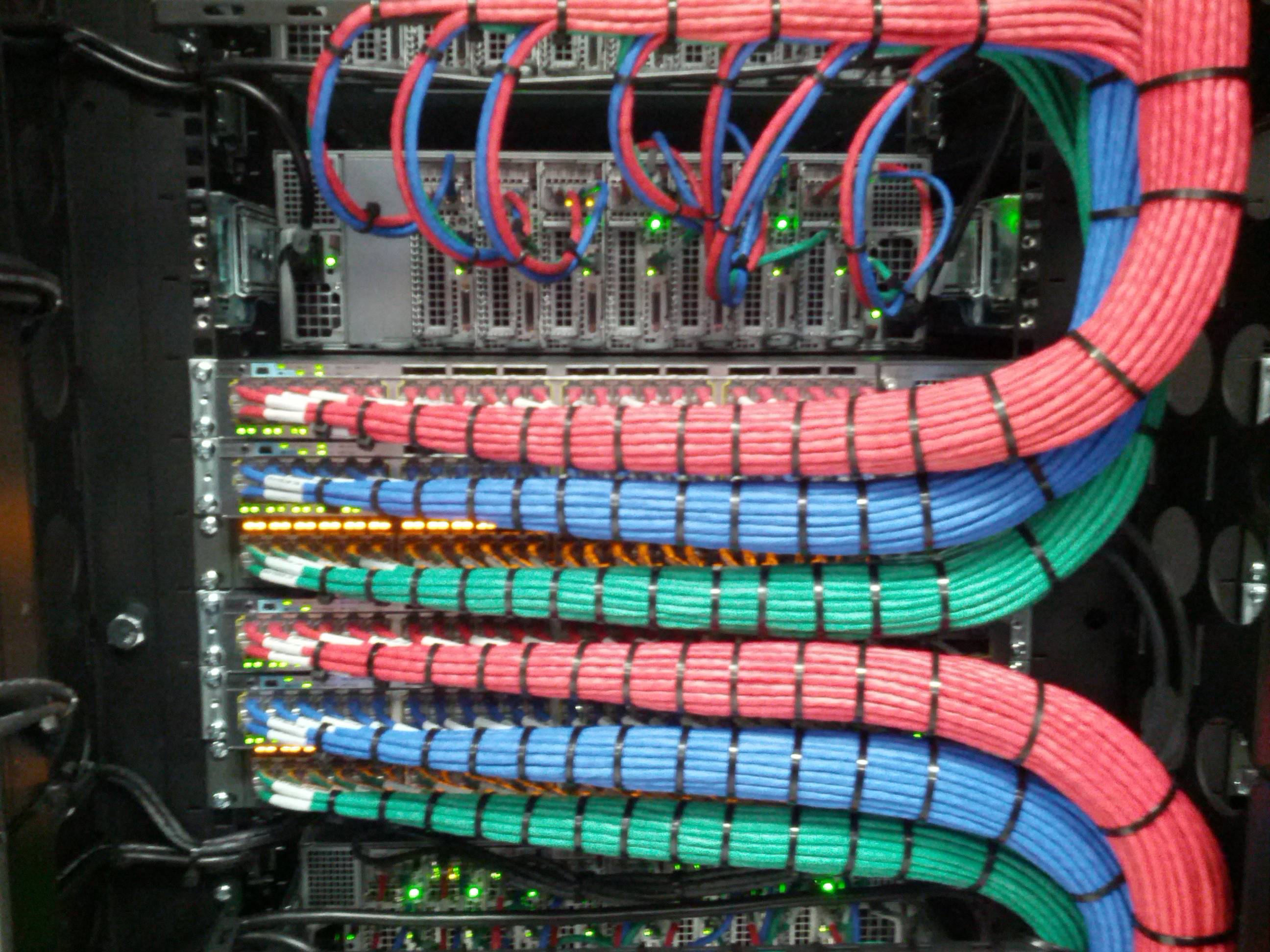
Standardization – The standardization of cable and rack usage will significantly facilitate maintenance. When there is a meltdown, the managers and engineers of a data center won’t have any doubts as to the types of cables and configuration of racks that are being utilized.
Documentation – When proper documentation is neglected, the training of new staff members will be much more difficult and take longer. The addition of equipment and related components will also result in more errors. Good documentation is integral for every sound structured cable system.
Spare Cables – The stocking of spare cables to prepare for contingencies will help prepare a data center for crises that may strike a structured cabling system.
Improved Network Function
A data center will have losses of up to $10,000 for each minute of unplanned outage. Implementing the best practices of TIA/ISO standards will raise the performance of a structured cabling system and make a data center more reliable. Its computer network will have the following benefits:
- Greater responsiveness
- Increased reliability and overall performance
- More secure data backup, storage, and retrieval
- Flexibility for accommodating additional computer terminals and components
- Capable of supporting telephony and other network-dependent systems
Progressive Office Cabling
Founded in 1986, Progressive Office’s success has been a direct result of years of commitment to seeking solutions on behalf of our clients in the Washington, D.C. and New York City areas. Efficiently working together, Progressive teams get cabling installed and operating as fast as possible while minimizing disruption and downtime. Call our toll free number (800) 614-4560 today.
Improve Data Center Reliability with Structured Cabling – Part 1
 Cabling systems were once proprietary prior to the 1990s, which was a major problem for data centers. Each modification required vendor-specific knowledge of each component of the cabling system. In 1991, the TIA/EIA-568 standard was introduced to bring about structured cabling systems.
Although 5% percent of a network budget is currently spent on structured cabling, 59% of downtime can be attributed to it. Most downtime results from not adhering to standards. Data center efficiency can be increased by proper planning and implementing structured cabling principles. Structured cabling best practices should be the foundation of every data center.
Proper Planning
Designing proper cable runs, identification of cable types, the process of network verification, planning for future expansion, and accurate documentation are all part of the proper planning for structured cabling. Lacking these, a data center would be disorganized and chaotic.
A data centers begin at the MDA (Main Distribution Area), single or multiple HDA(s) (Horizontal Distribution Area), as well as the required equipment and spacing to allow cable access. The Main Distribution Area is the location of core networking equipment. The cross-connects of HDAs are utilized for the distribution of cables to the EDA (Equipment Distribution Area). A well-organized data center is the product of a structure that is well-planned.
Best Practices
Proper Standards –To attain high levels of proficiency, cabling standards, which are revised every five to ten years, must be followed. Remaining up-to-date will allow a data center to be more adaptable to changes of technology. American data centers now comply with the TIA/EIA-568 standard developed by the TIA (Telecommunications Industry Association), while business and companies located overseas comply with the ISO/IEC IS 11801.
Cable Identification System – In addition to standards, implementing an identification system utilizing colors and labels will assist managers in data center organization. A sound system will conserve both time and money over the long term. Addressing problems or even maintaining aging equipment is eased by a well-defined and easily understandable cable identification system.
Part 2 will discuss Cabling Infrastructure and Improved Network Function.
Progressive Office Cabling
Founded in 1986, Progressive Office’s success has been a direct result of years of commitment to seeking solutions on behalf of our clients in the Washington, D.C. and New York City areas. Efficiently working together, Progressive teams get cabling installed and operating as fast as possible while minimizing disruption and downtime. Call our toll free number (800) 614-4560 today.