
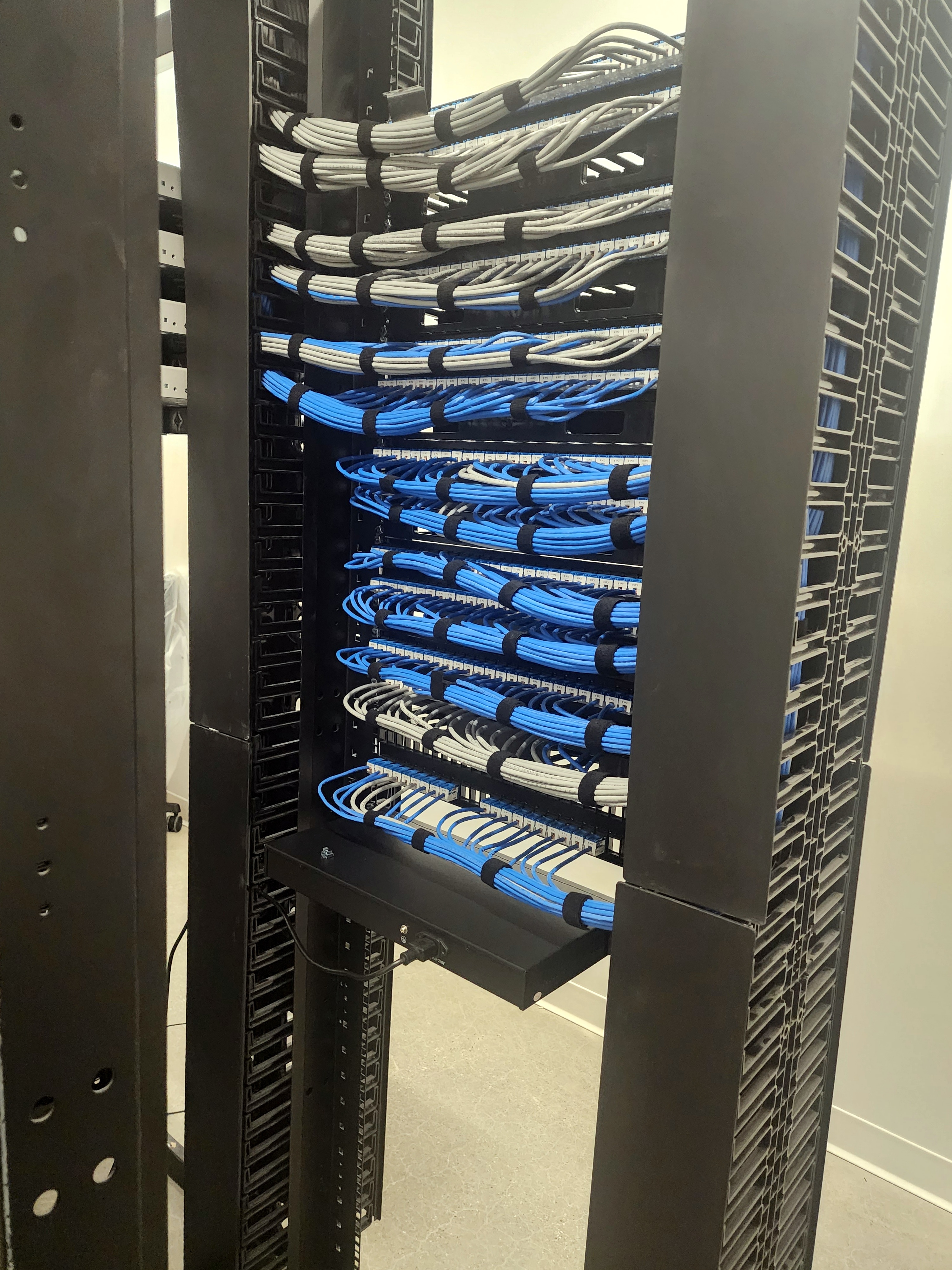
Why Businesses Are Investing in Smart Network Closets for Better Infrastructure Management
When businesses think about upgrading their network, they usually focus on internet speed, wireless access points, or new devices. However, one of the most important parts of a reliable network is often hidden behind a locked door: the network closet.
A poorly designed network closet can lead to overheating, cable confusion, downtime, and expensive troubleshooting. On the other hand, a professionally organized and scalable network closet creates a stronger foundation for every connected system in the building.
Across industries nationwide, businesses are investing in smart network closet design to improve reliability, organization, and long-term network performance. At Progressive Cabling, we help organizations build clean, efficient network environments that support modern technology and future growth.
What Is a Network Closet?
A network closet—often called an MDF (Main Distribution Frame) or IDF (Intermediate Distribution Frame)—is the central location where network equipment and cabling come together.
This space typically contains:
- Network switches
- Patch panels
- Fiber optic connections
- Routers and firewalls
- PoE equipment
- Security and access control connections
The network closet acts as the control center for your entire infrastructure.
Why Network Closet Design Matters
Many businesses inherit closets that were built over time without planning or organization. As new devices and systems are added, the space becomes cluttered and difficult to manage.
Common issues include:
- Tangled and unlabeled cables
- Overheated equipment
- Limited rack space
- Poor airflow
- Difficult troubleshooting
- Increased risk of accidental disconnects
These problems directly impact network reliability and uptime.
The Benefits of an Organized Network Closet
A professionally designed network closet improves both performance and efficiency.
Benefits include:
- Faster troubleshooting and maintenance
- Reduced downtime
- Improved airflow and cooling
- Easier upgrades and expansion
- Better cable management and labeling
- Cleaner, more professional infrastructure
Organization may seem simple, but it has a major impact on long-term network health.
Supporting Modern PoE Devices
Today’s commercial buildings rely heavily on Power over Ethernet (PoE) devices, including:
- Security cameras
- Wireless access points
- Door access control systems
- VoIP phones
These systems place additional demands on switches and cabling inside the network closet.
Proper design ensures:
- Adequate switch capacity
- Stable power delivery
- Reduced heat buildup
- Organized pathways for high-density cabling
This keeps critical systems operating reliably.
Fiber Integration for High-Speed Connectivity
As bandwidth demands increase, many businesses are adding fiber optic backbones to their infrastructure.
Smart network closet design allows for:
- Organized fiber patch panels
- Clean separation between copper and fiber systems
- Scalability for future bandwidth growth
- Easier management of multi-floor or multi-building connections
Fiber infrastructure performs best when installed within a structured, organized environment.
Improving Cooling and Equipment Lifespan
Network equipment generates heat continuously. Poor airflow caused by overcrowded or disorganized closets can shorten the lifespan of switches, servers, and other hardware.
A well-designed closet includes:
- Proper rack spacing
- Ventilation planning
- Organized cable routing
- Reduced airflow obstruction
This helps equipment run cooler and more efficiently.
Planning for Future Growth
Businesses rarely stay the same size forever. New employees, devices, cameras, and access points all require additional network capacity.
Smart network closet planning includes:
- Extra rack space
- Additional patch panel capacity
- Spare conduits and cable pathways
- Fiber-ready infrastructure
This allows businesses to expand without completely redesigning the closet later.
Better Documentation and Network Visibility
Professional network closet organization also improves documentation.
This includes:
- Clearly labeled patch panels and ports
- Documented cable layouts
- Organized rack diagrams
- Easier identification of critical systems
Better visibility reduces troubleshooting time and simplifies future upgrades.
Industries That Benefit Most from Smart Closet Design
Organized network closets are especially important for:
- Corporate office buildings
- Warehouses and distribution centers
- Healthcare facilities
- Educational campuses
- Retail and hospitality environments
- Multi-tenant commercial properties
In these environments, uptime and scalability are critical.
Why Businesses Choose Progressive Cabling
Progressive Cabling provides professional structured cabling and network infrastructure services nationwide. Businesses choose us because we deliver:
- Clean, organized network closet design
- Cat6, Cat6A, and fiber installations
- PoE-ready infrastructure for modern systems
- Professional cable management and labeling
- Scalable solutions built for future growth
We build infrastructure that’s reliable, organized, and easy to manage.
Build a Network Closet That Supports Your Business
Your network closet is more than just a storage space for cables and switches—it’s the foundation of your entire infrastructure. Investing in professional organization and design improves performance, reliability, and scalability across your network.
If your current network closet is cluttered, outdated, or difficult to manage, now is the time to upgrade.
Contact Progressive Cabling today to learn how smart network closet design can improve your infrastructure and support long-term business growth.

