About Stu Kushner

Stu Kushner began his career at Boeing Commercial Aircraft and then on to Hexcel and Case/Rixon where he specialized in CAD/CAM (computer design and robotics). In 1986, he started Progressive Office. The earliest years were about networking small businesses and providing IT support. But since 2008, the company has concentrated exclusively on providing office network cabling solutions.

Structured cabling,Network Cabling, Washinton DC

Structured Cabling’s Six Subsystems – Part 1

22 Aug 2017

cable management,Network Cabling,Washinton DcA structured cabling system is a type of open network structure utilized by data, telephony, access control, building automation, and other systems. Its advantages are operational flexibility and economy. A structured cabling system is typically divided into these six subsystems: 1) Entrance Facilities, 2) Equipment Room, 3) Backbone Cabling, 4) Telecommunications Room, 5) Horizontal Cabling, and 6) Work Area.


Overview


Structured cabling is the design and installation of a cabling system that can provide support to several hardware use systems, and be suitable for both the needs of the present and the future.


Governed by international standards regarding the wiring of data centers, offices, and apartment buildings for data or voice communications, structured cabling design and installation utilizes several types of cable. These are typically CAT5e and CAT6, along with fiber optic cabling and modular connectors.


Defining methods and specifications for the laying of cabling in various topologies for meeting customer needs, standards typically require the use of a rack-mounted central patch panel from which modular connections can be used as required. Every outlet is then patched into a network switch for network usage or into a PBX (private branch exchange) or IP telephone system patch panel.


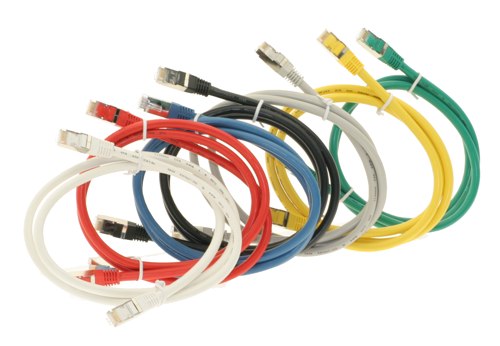
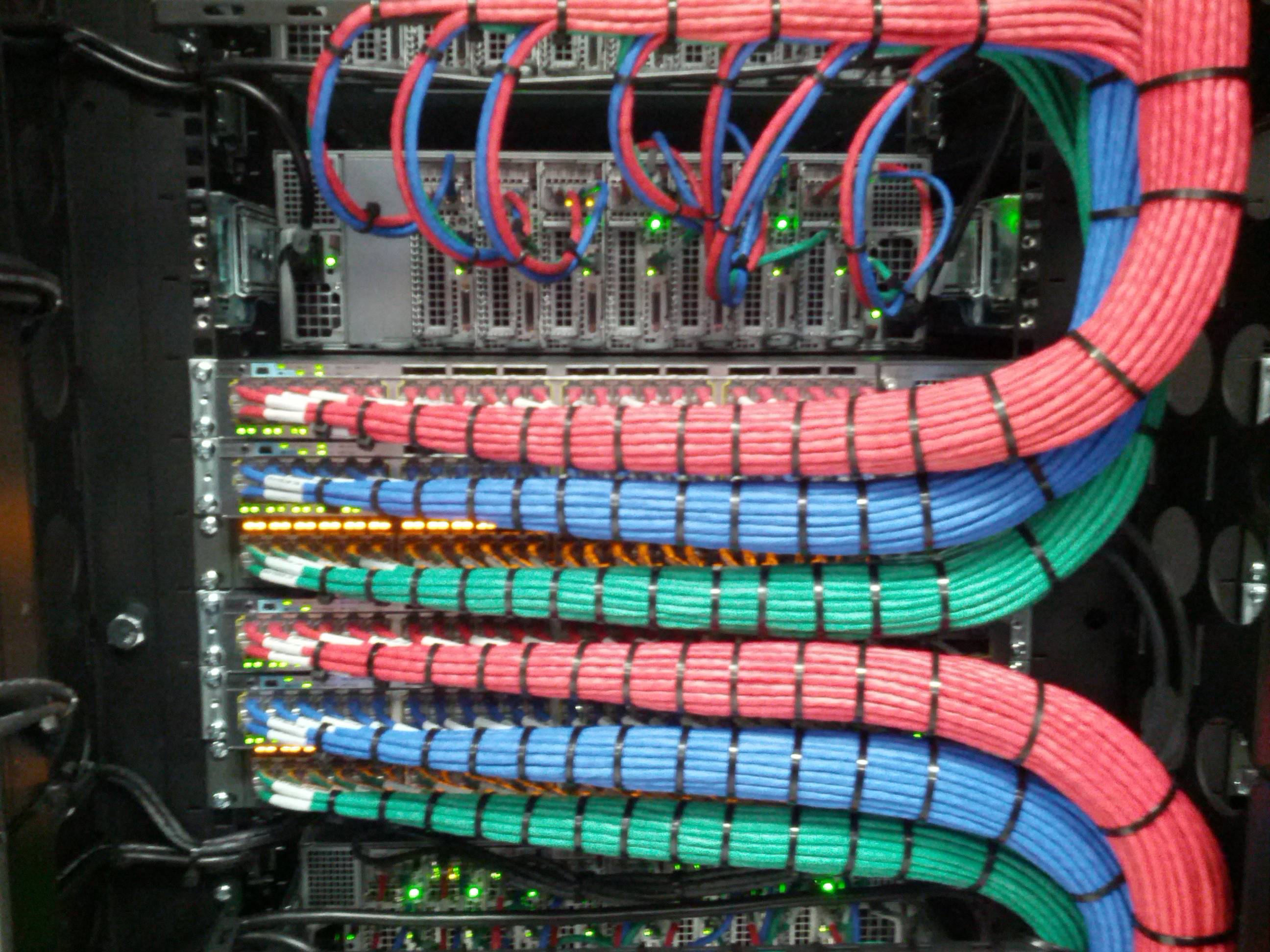
The use of color code patch panel cables is common for identifying the type of connection. However, it is not required by structured cabling standards with the exception of the demarcation wall field.


Cabling standards require that all eight conductors of CAT5e, CAT6, and CAT6A cable are connected to discourage "doubling-up" or the use of one cable for both data and voice. However, IP telephone systems are capable of running both telephone and the computer on the same wire.


When copper cabling, CAT5e, CAT6, or CAT6A is used, the maximum distance is 90 meters (98 yards) for the permanent link installation, along with an allowance of 10 meters (11 yards) for patch cords at the combined ends. Both CAT5e and CAT6 are capable of running Power over Ethernet (PoE) applications up to 90 meters. Due to power dissipation, CAT6A performs better and more efficiently.


Part 2 will summarize each of structured cabling's six subsystems.


Progressive Office Cabling


Founded in 1986, Progressive Office’s success has been a direct result of years of commitment to seeking solutions on behalf of their clients in the Washington, D.C. and New York City areas. Working together, their cabling teams get cabling installed and operating as fast as possible while minimizing disruption and downtime. Call their toll free number (800) 614-4560 today.

Network Cabling ,Data Cabling, Fiber-optic cable,New York City

Modern Cabling System Design Trends – Part 2

17 Aug 2017

Office Cabling,New York CityAs discussed by Part 1, the most significant trend in IT (information technology) is the greater reliance of organizations on high-performance data communications (datacom) cabling. Part 2 will cover High Performance Cabling and Aesthetics of Cabling.


High Performance Cabling


The use of high performance cabling of copper and fiber optic cabling is influencing the design of wiring and cabling management systems. Data transmission integrity must be maintained by cable bend radius specifications. Now available are specialized fittings for raceways and other management systems that ensure minimum cable bend radius, preventing damage and maintaining effectiveness. Upcoming technologies such as 10 G/s Ethernet will result in greater demands, making it even more important that every aspect of a structured cabling system ensures high performance.


Being able to provide adequate space for the accommodation of bend radius needs to work in conjunction with the goal of being unobtrusive visually. This objective is affected by the necessity of physically separating power and low-voltage channels to prevent EFT (electrical fast transient) disturbances. Fortunately, a new raceway design maintains complete separation through crossover fittings that provide more space inside the raceway, allowing the bend radius of 10G/s cable’s larger diameter.


Aesthetics of Cabling


The design of modern wiring and cable management systems now aspire to both form and function. Non-metallic raceways with visually attractive profiles in a variety of colors are now available in the marketplace. Stainless steel is also trending, featuring plates that conceal seams. Moreover, components can be combined in matching colors and styles. This ongoing aesthetic drive has led to almost invisible activations that are recessed and flush. Poke-through devices now feature datacom ports and receptacles with sleeker profiles. Accommodating a greater number of outlets, high-capacity service activations are much less obvious than dated low-capacity fittings.


Summary


Product development for wiring and cabling management systems must unceasingly keep pace with increasingly complex datacom requirements. Solutions from manufacturers must be compatible with a wide variety of datacom cabling, allow for both system and operational flexibility, and deliver eye-pleasing aesthetics in the workplace.


Progressive Office Cabling


Founded in 1986, Progressive Office’s success has been a direct result of years of commitment to seeking solutions on behalf of their clients in the Washington, D.C. and New York City areas. Working together, their cabling teams get cabling installed and operating as fast as possible while minimizing disruption and downtime. Call their toll free number (800) 614-4560 today.

Data Cabling,Structured Cabling, Cabling Design-Washington DC

Modern Cabling System Design Trends – Part 1

5 Aug 2017

 Data Cabling,Structured Cabling,Washington DC The most significant trend in IT (information technology) is the greater reliance of organizations on high-performance data communications (datacom) cabling. Industry leaders are reporting more than 50% of their market is for data and communications applications. Consequently, their research and development is concentrating on the development of new products and system enhancements.


Objectives of System Design


IT is accelerating rapidly, and people are using it in ways and in areas that only became possible recently. Modern system design aims for maximizing communications capability and flexibility even in limited spaces that emphasize openness and visibility. As a result, the connections between workstations and datacom networks have grown in importance.


Various cable and wire management systems can be used for the management, organization, protection, and connection of cabling infrastructure. These systems allow communication, collaboration, and the flexibility to adapt to the evolving needs of businesses and their workspaces. Five systems are discussed below.


Open Space


Precisely positioned within an open space to allow power and datacom feeds into modular office furniture, poke-through devices can feature audio, video, and control connectors, along with active modules.


Overhead


Flexible and allowing accessibility in drop and open-ceiling applications, overhead systems utilize cable trays that are available in various styles, such as center spine, wire mesh, ladder, and solid bottom.


Perimeter


Easily accessible, expandable, and configurable, perimeter systems are capable of securely routing wiring and cabling along walls. They are primarily used for offices, classrooms, training centers, and conference rooms, offices, classrooms, and training centers.


Tabletop Modular Outlet (TMO)


TMO centers allow easy accessibility to datacom and power on task tables, desktops, study carrels, and lecterns. Their two main styles are recessed and pop-up, linking networked and portable computing.


Vertical Distribution


Visually attractive, vertical distribution units deliver datacom and power from ceilings directly to workstations. Absent the clutter of service poles, they conceal wiring and cabling in an aesthetically pleasing way.


Part 2 will cover High Performance Cabling and Aesthetics of Cabling.


Progressive Office Cabling


Founded in 1986, Progressive Office’s success has been a direct result of years of commitment to seeking solutions on behalf of their clients in the Washington, D.C. and New York City areas. Working together, their cabling teams get cabling installed and operating as fast as possible while minimizing disruption and downtime. Call their toll free number (800) 614-4560 today.

Structured Cabling,Washington DC New York City

Structured Cabling Benefits for Security Systems – Part 2

29 Jul 2017

Structured Cabling,Cat5e Cat6/6a CablingAs discussed in Part 1, the transition to IP-based security products along with the rapid increase in business applications has resulted in end-users expecting greater video, audio, and data integration. These items require delivery over a standardized structured cable system. The following are the benefits offered by structured cabling for security systems.


Standardization


The infrastructure of a structured cabling system utilizes the same cabling for conveying all forms of data. This enables the standardization of Ethernet, VoIP, CCTV, access control, along with all other data and communications systems. Standardization allows a structured cabling system to function with numerous systems and protocols in the present and during the service life of the permanent links installed.


Reliable


A structured cabling system will be able to support equipment from multiple vendors, allowing the support of hardware and applications during expansion and switching to other vendors. This capability makes a cable system more reliable because it helps avoid having to reconfigure or replace cabling during technological upgrades or the addition of new devices.


Flexible


Re-configurations involving transferring equipment such as a computer, CCTV camera, or a VoIP phone to another area are made easier by a structured cabling system, which provides the spine for plug and play applications. The shift to TCP/IP, IEE802 packet data transmission enables agile networks that are capable of communication, opening the gateway to numerous purposed integrated systems.


Simpler Fault Diagnosis


Troubleshooting is made quicker and easier by structured cabling because of its segmented design, preventing a single point of failure that could crash an entire network. For the most part, fault diagnosis can be easily accomplished by a certified structured cabling tester, a device which can rapidly identify problems inside a cabling system.


Reusable Cabling


The instances of having to buy and pull new cable are significantly decreased, allowing a company to maximize its existing cabling infrastructure and save money. Structured cable also minimizes disruptions and downtime events because less cabling leaves more building area functional.


Future Proofing


Future installations of applications like CCTV, access control, multimedia, video conferencing, etc. will probably not experience upgrade issues, making structured cabling a worthwhile investment for the foundation and future of a company.


Part 3 will cover the Challenges and Planning of a Structured Cable System.


Network Cabling


When  work requires a unionized cabling group, call on  Progressive Office Inc. for your commercial Cat5e/6/6a and fiber cabling projects. Specializing in cabling for data, voice, security and the latest WiFi and LiFi solutions. Phone: (202) 462-4290

Data Cabling,Structured Cabling,Washington DC

Setting Up a Campus Network

23 Jul 2017

Data Cabling,Structured Cabling,Washington DCAcademic institutions can garner all the benefits of the Internet age by integrating information and communications technology (ICT) with their teaching and learning environments. ICT is an extension of the term for information technology (IT), emphasizing the unification of telecommunications, computers, software, storage, and audio-visual components within a network.


The quality of education can be significantly improved through the sharing of skills, resources, content, and faculty development. IT content and resources should be available to both faculty and students throughout the campus. To this end, academic institutions must establish a network in each of their campuses, achieving the same speed of data transfer at each building.


Typically, a campus network is comprised of several local area networks (LANs) that are interconnected inside a specific geographical area. Networking components, such as switches, routers, and firewalls, and transmission media, such as copper cable and optical fiber, are utilized for interconnection and communication between connected devices.


Campus Network Topology


For academic institutions like colleges or universities, a campus area network should be interconnected to various types of buildings, including administrative, academic, library, student center, hostel, guest house, sports facility, conference, technology, training, and laboratory.


A campus network will be interconnected via high-speed Ethernet cabling over optical fiber of up to 10GB capability. For the efficient processing of data and information traffic using distribution, access and core segments, tiered hierarchal architecture is utilized.


Every building, block, center, and residential complex will be connected by high-speed optical fiber cable. Moreover, every node within a building will be connected with UTP copper cable that supports gigabit speed.


The conference rooms, teaching halls, and common areas inside each campus will be Wi-Fi enabled through the deployment of 802.11 based wireless access points with central authentication, permitting secure network access via laptops, tablets, smartphones, and other Wi-Fi enabled devices.


Internet services, along with common applications, will also be installed at key locations, such as library study halls, allowing students, faculty, and staff easy access via desktop computers and laptops around the clock.


Network Cabling


When  work requires a unionized cabling group, call on Progressive Office Inc.   for your commercial Cat5e/6/6a and fiber cabling projects. Specializing in cabling for data, voice, security and the latest WiFi and LiFi solutions. Phone: (202) 462-4290

Cable Management,Cable Management ,Data Cabling ,Cat5e, Cat6/6a Cabling

Security Aspects of Structured Cabling – Part 1

11 Jul 2017
 

structured Cable Management/ BlogCabling system designed for the purpose of security have hardly changed the last decade and a half. Delivering video images and access control data to a control room utilizing standard transmission technology is basic and familiar. What has recently changed is the transition to IP-based security products and the rapid increase in business applications, resulting in end-users expecting a greater video, audio, and data integration. All of these items require delivery over one standardized structured cable system.


As opposed to traditional video and access control systems, voice and data communications cabling systems have had numerous transformations. Functioning on structured cable systems, data networks have shifted from the pioneering 1980s proprietary cabling to standards-based cabling using optical fiber and balanced twisted pair. This has resulted in greater transmission speeds and significantly increased network bandwidth. These two elements allow a security installer to achieve integration that is demanded by clients for CCTV, access control, and other applications. Through the adoption of standardized structured cabling, installers will be able to access new streams of revenue and provide tangible benefits to users by unifying all of their systems within one cabling infrastructure.


This change in the utilization and deployment of structured cabling systems was recognized by ANSI/TIA-862-B “Structured Cabling Infrastructure Standard for Intelligent Building Systems”, which was developed by the TIA TR-42.1 Commercial Building Cabling Subcommittee and released February 2016. This standard features the requirements of several standard and developing systems that are able to use the existing cabling of buildings. It also includes Distributed Building Services that do not utilize a building’s infrastructure cabling because of application, connector, historic, and topographic limitations.


A company’s network infrastructure is crucial in the distribution of information using electronic media, including CCTV, access control, data, and voice. Functioning over a structured cabling system, this distribution network is developed for the perpetual flow of data, featuring redundancy at the heart.  Installed with centralized topology, this enabled the most facile sharing of resources achievable, along with the greatest flexibility and expandability possible.


Part 2 will cover Structured Cabling Benefits for Your Business.


Network Cabling


When work requires a unionized cabling group, call on  Progressive Office Inc.,   for your commercial Cat5e/6/6a and fiber cabling projects. Specializing in cabling for data, voice, security and the latest WiFi and LiFi solutions. Phone: (202) 462-4290

structured cabling,Network Cabling,Washinton DC

Challenges and Planning of a Structured Cable System – Part 3

5 Jul 2017

 structured Cabling, Network Cabling, Washington DCAs previously discussed, the transition to IP-based security products and the rapid increase in business applications has resulted in end-users expecting greater video, audio, and data integration. These items require delivery over a standardized structured cable system. The following are the benefits offered by structured cabling for security systems. Part 3 will cover the Challenges and Planning of a Structured Cabling System.


Challenges


Typically, customers exploring the security market are advised that the only method for deploying a new access control system or an IP video surveillance system is through the removal of all current coaxial or UTP cable and then the installation of an entirely new Cat 5/6 structured cabling network.


Another method is much less disruptive and cheaper. It uses existing cable and employs an IP transmission system that is a hybrid. There are numerous hybrid transmission systems available that enable installers to make good use of extended Ethernet and PoE power distances through existing cable.


Planning


An effective, structured cabling system supports all the communication needs of a company with the integrated flexibility that enables users to link to CCTV cameras, VoIP telephones, access control points, and data devices. Planning a security system upgrade will include several crucial considerations as summarized below.


  • Applications: What will the system accommodate now as far as data, video, voice, and multimedia applications? What emerging technologies will be adapted in the future?

  • Service Lifetime: The service lifetime of a structured cabling system should be 15 to 20 years because it will be the spine of an organization’s communications network.

  • Compatibility: The applications that will function on the structured cabling system for the foreseeable future should be compatible with it.

  • Bandwidth: As bandwidth demand will usually increase because of business growth, a company must consider present and future demand.

  • Users: For the 15 to 20 year service lifetime of the structured cabling system, the estimated number of users during this period should determine the capacity required.

  • Modifications: Fiber-optic technologies are being developed rapidly, and the design of a structured cabling network should include flexibility in order to accommodate modifications and additional users.


Union Network Cabling


When union work requires a unionized cabling group, call on Union Network Cabling for your commercial Cat5e/6/6a and fiber cabling projects. Specializing in cabling for data, voice, security and the latest WiFi and LiFi solutions. Phone: (202) 462-4290

Structured CablingData Cabling,Washington DC

Moving Your Company’s Structured Cabling

29 Jun 2017

Structured CablingData Cabling,Washington DCMoving your company also means relocating and setting up its structured cabling at the new location. Minimizing disruption is the key for making the transition smooth, and retaining an experienced cable installation company will make this possible. Their resume should include relocation and new construction because they will need to work with vendors, moving companies, architects, and engineers who will also be involved. This will make the coordination of moving your firm’s IT infrastructure seamless.


The move will also involve working with the telecommunication and internet providers to make sure their services are included in the transition plan. The functions they provide are not suspended for an extended period, ensuring swift continuation at the new location.


Services for Relocation

  • When hiring a structured cabling company to assist with your move, be sure they can:

  • Move the network fast and efficiently.

  • Coordinate with Internet and telecommunication providers.

  • Ensure safe packing and transport, and unloading of servers, workstations, and printers.

  • Transfer e-mail and website services smoothly.

  • Set up office network, servers, workstations, and printers at new location.

  • Coordinate with outside vendors, including website, Internet, telecommunication, and e-mail services at new location.

  • Design cabling diagram for sound network foundation.

  • Set up cabling and wiring infrastructure for new location.


Summary of Expertise


Be sure to work with a structured cabling company that is knowledgeable regarding office relocation, network cabling, communications, cable management, computer data cabling, office cabling, and server racks. This depth of knowledge will help minimize unforeseen problems regarding your firm’s structured cabling needs during the relocation. Their experience and expertise will decrease the stress and pressure of moving your IT infrastructure.


Structured Cabling Services


Modern technology features advanced systems that are reliant on sound IT infrastructure that revolves around high-quality cabling and intelligent design. An experienced structured cabling company will understand the needs and requirements of a client and provide the expertise that will minimize costs and maximize infrastructure.


Union Network Cabling


When union work requires a unionized cabling group, call on Union Network Cabling for your commercial Cat5e/6/6a and fiber cabling projects. Specializing in cabling for data, voice, security and even the latest WiFi and LiFi solutions. Phone: (202) 462-4290

Network Cabling ,Data Cabling, Fiber-optic cable,New York City

Introduction to Network Cabling – Part 2

19 Jun 2017

data Cabling,Fiber optic , installationsAs mentioned in Part 1, cabling utilized for network infrastructure is a crucial aspect of networking, growing in importance as new technologies are introduced. Although wireless technology has made great advancements, existing computer networks are still using cables for transferring data. Part 2 will cover Fiber Optics, USB Cables, and Crossover Cables.


Fiber Optics


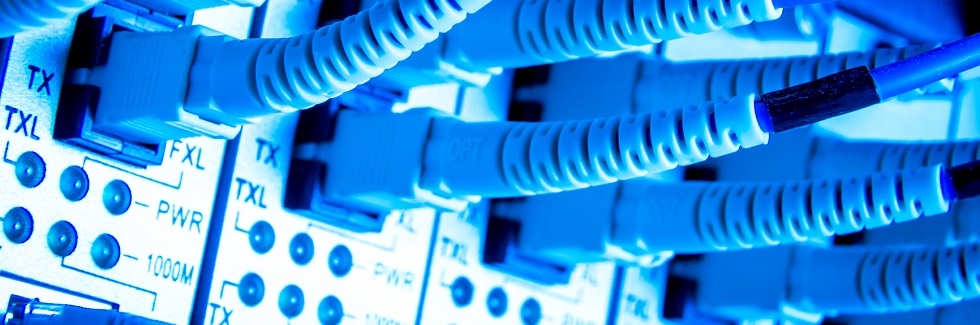
In contrast to older wiring, fiber optic network cables utilize strands of glass and pulses of light to carry data. Although composed of glass, these cables can be bent and have proven their utility in wide area network (WAN) installations in office buildings, especially when long distance runs are necessary and a high volume of communication traffic is typical.


The two main fiber optic cable standards are single mode, the 100BaseBX standard, and multimode, the 100BaseSX standard. Due to single mode's higher bandwidth capacity, it is typically used by long distance telecommunications networks. On the other hand, local networks commonly utilize multimode because of its lower cost.


USB Cables


USB (Universal Serial Bus) cables, which feature twisted pair wiring, are typically used to connect a peripheral device, such as a mouse, to a computer. Dongles or special network adapters also permit the indirect connection of an Ethernet cable to a USB port.


Serial & Parallel Cables


As numerous PCs during the 1980s and early 1990s did not have Ethernet capability, along with the fact USB did not yet exist, now obsolete serial and parallel interfaces were occasionally utilized for networking PCs together. As an example, null modem cables connected the serial ports of two PCs, allowing 0.115 to 0.45 Mbps data transfer.


Crossover Cables


A null modem cable belongs in the category of crossover cables because it joins two network devices of the identical type, like two network switches or two PCs. Ethernet crossover cable usage was most commonly found in home networks years ago when two PCs were directly connected. Currently the majority of home networks are equipped with routers featuring crossover capability, making crossover cables unnecessary.


Union Network Cabling


When union work requires a unionized cabling group, call on Union Network Cabling for your commercial Cat5e/6/6a and fiber cabling projects. Specializing in cabling for data, voice, security and even the latest WiFi and LiFi solutions. Phone: (202) 462-4290

Data Cabling,Network Cabling, Washington DC

Introduction to Network Cabling – Part 1

12 Jun 2017

 Data Cabling,Network Cabling, Washington DCCabling utilized for network infrastructure is a crucial aspect of networking, and it has grown in importance as new technologies are introduced, including virtualization, wireless access points, blade servers, network storage devices, etc.


Although wireless technology has greatly advanced, most of the existing computer networks are still using cables as the media for transferring data. Each standardized type of network cable is utilized for a specific purpose as discussed below.


Coaxial Cables


Patented in 1880 (yes, that long ago!), coaxial cable is most familiar as the cable that connects TV sets to their antennas and also as the standard for 10 Mbps Ethernet, which was common in the 1980s and early 1990s. During this time, networks utilized two coaxial cable types, thicknet, the 10BASE5 standard, or thinnet, the 10BASE2 standard. Composed of an inner copper wire surrounded by insulation and shielding, the stiff quality of these cables made them difficult to install and maintain.


Twisted Pair Cables


During the 1970s, Ethernet was developed at Xerox, which began collaborating with Intel and DEC for its standardization. The initial specifications, titled the Ethernet Blue Book or DIX from their three company initials, was published in 1980.


In the 1990s, twisted pair cables became the primary cabling standard of Ethernet, beginning at 10 Mbps with Category 3 or Cat3, which was followed by 100 Mbps Cat5 and Cat5e and up to 10 Gbps (10GBASE-T). Ranging up to eight wires wound together in pairs, this type of cabling is intended to minimize electromagnetic interference.


Unshielded Twisted Pair (UTP) and Shielded Twisted Pair (STP) are the two chief twisted pair cable types standardized by the industry. Due to lower manufacturing costs, modern Ethernet cables utilize UTP wiring. STP cabling is used by other types of networks like Fiber Distributed Data Interface (FDDI). Clearly the most common network cable type globally, UTP cable is utilized for both networking and for the traditional telephone (UTP-CAT1) cabling.


UTP-CAT5e or Cat5e has become the most common UTP cable as it replaced coaxial cable, which was unable to cope with the increasing demand for networks that were faster and more reliable.


Part 2 will cover Fiber Optics, USB Cables, and Crossover Cables.


Union Network Cabling


When  your work requires a unionized cabling group, call on Progressive Office Inc. for your commercial Cat5e/6/6a and fiber cabling projects. Specializing in cabling for data, voice, security and even the latest WiFi and LiFi solutions. Phone: (202) 462-4290

1 17 18 19 20 21 39