cable testing, Network Cabling ,Data Cabling

Cable Testing And Certification

12 May 2014

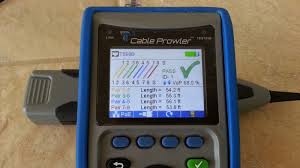
cable testing, Network Cabling ,Data Cabling Cable testing and certification are obviously complicated terminologies that may be difficult for laypeople to understand. Nonetheless, it is important to become familiar with these functions since they have become common fixtures in your homes. It does not matter whether you are simply making repairs or installing new cables, testing always plays an essential role. Testing offers a degree of assurance that the links provide the necessary transmission capacity that supports data communications.


Cable testing implements have been designed with multiple features for a variety of tasks. However, these differ in terms of costs, performance and applications. Testing can be classified into certification and verification. Certification is vital because it ensures conformity of the cabling system to industry benchmarks. Certification instruments decide whether a particular connection complies with ISO or TIA (Telecommunications Industry Association) guidelines. In fact, it is the final step completed by structured cable manufacturers before granting warranties for new installations.


In this technology domain, certification is acknowledged as proof of professional status. The Fiber Optic Association (FOA) oversees adherence to certification requirements and authorizes schools to grant training that meets its standards. FOA programs are created and maintained by experts in the fiber optic enterprise.


Certification indicates that you have accomplished specific performance criteria established by the certifying organization. It includes knowledge, skills and abilities either through training or through experience acquired over the years.
Certification is not simply an ordinary license; it is official consent to do business within a particular jurisdiction. The majority of states in the country require licensing for service providers installing communications cabling. Be sure to check your local area and find out the requirements for licensing. Testing and Certification are the foremost steps in the cable installation process, and it is imperative that all components are tested carefully.


It is not enough to plug in the network equipment set-up and find out if it works properly. Certification is needed to prevent unnecessary and costly improvements or refurbishment in the future. Network examination and certification of all new installations as well as existing networks are provided for the whole infrastructure.


Incidentally, you also need to learn that in communications cabling, standards delineate the kinds of cabling, yardsticks that define cabling, connections, cabling architecture, and testing prerequisites. These standards can minimize downtime and installation costs. At the same time, standards capitalize on system availability and prolong the life span of cabling systems. Lastly, paradigms allow manufacturers to create systems that will accommodate current technologies and equipment without difficulty. The bottom line is to find the company that can do these things for you efficiently.

cable testing, Network Cabling ,Data Cabling ,cat6-cabling

Benefits of Copper Cabling Solutions

4 May 2014

cable testing, Network Cabling ,Data Cabling ,cat6-cablingThe conventional process of copper cabling has been used for several years and is still preferred by many network cable providers and end-users. Companies like Progressive Office Cabling offer a complete range of cabling solutions in Cat5, Cat5e, Cat6a and Cat6, providing clients with high-quality cable as well as connectivity components. Progressive Office Cabling makes use of highly effective cable management systems and well-trained technicians for installation jobs. It also employs a web-based online project management system to guarantee proper implementation and monitoring of any project.


How Does Copper Cabling Work?


Installation technicians have to follow specific policies and standards, particularly when it comes to building structure concerns. There are several steps to follow with regard to installation. First, the cable should have the appropriate covering or insulation, which is normally made of PVC, Plenum, Ultra-Violet, or mold-resistant varieties. The cable is cut according to the needed length, and outer covers are removed before connectors are attached. Use the appropriate stripping tools for this purpose. Cables should be mounted as orderly as possible.


There are instances when installers have to use ladder trays and J-hooks, which are made for network cabling, or shoot nails into concrete ceilings using a tool that literally propels nails like bullets into the concrete surfaces. Network cables must be installed away from electric power lines, fluorescent lamps and industrial machines; the risk of electrical coupling can increase dependent on proximity and voltage factors.


Different Benefits


Copper cabling has multiple benefits and is the most effective conductor out there. Copper cables are flexible, which is especially advantageous if you are using electrical wires. It is necessary to bend the wire during installation, so you need something durable that will not easily break after a lot of twisting. Copper does not easily melt, so even if a sudden surge of current or overload takes place, there is no risk of burning or melting. At the same time, copper is not difficult to work on. The majority of electricians opt for copper wires because they can be stripped easily or pulled through rigid spots.


With regard to structured copper cabling, there is the Power over Ethernet benefit. This means that it is possible to run power through devices such as Wireless Access Points, surveillance cameras, and power phones. There is an emergency power supply that continues to power mission-critical devices even if electrical power conks out. Copper cabling supports modern technologies and facilitates the convergence of different applications. Hence, it is important that copper cabling is optimized for your requirements. That is why you should make sure to get the services only of experienced and trustworthy providers in the industry. Choose the provider that ensures customer satisfaction and warranty after installation.

Network Cabling ,cat5 cat6 cabling

How Does Structured Cabling Work?

10 Nov 2023

CablingNetwork Cabling, Data Cabling,cat5 cat6 cabling is an essential component in your network. It also has a long life span, from 15 to 20 years, so it may be necessary to replace your network equipment at least three times during the life of the cabling configuration. Cable installation is roughly 15 percent of the total network outlay. So it is advisable to invest in premium cabling systems, particularly to reduce maintenance costs and downtime while also achieving improved network performance. Entrepreneurs are always advised to look at the long-term scenario and acquire the best cable installation available.


Uninterrupted Flow of Information


There is no doubt regarding the importance of a structured cabling system in the operations of a business organization. This complete system with related hardware provides far-reaching telecommunications; it has a broad range of uses like supplying phone services or transmitting information through a network of computers. Each structured cabling system is unique depending on a number of factors, including the architectural formation of edifices that houses cabling installation, cable and connection components, equipment variety that cabling supports, configuration including upgrades and retro-fitting, requirements of clients, and manufacturers’ warranties.


The assembly that has been planned carefully and installed according to this plan ensures an unbroken network of information and communications. Aside from this advantage, structured cabling facilitates sharing of resources, enables smooth operations, and adapts to evolving technology. In fact, it is expected to last longer than computer servers and network switches. The types of network installations are the Local Area Network (LAN), Metropolitan Area Network (MAN) and Wide Area Network (WAN).


Cabling installation firms design and install LAN systems consisting of data and voice as well as support equipment for computer networks and mainframe programs of PCs. All installations must comply with state and city codes together with manufacturers’ specifications.


Other Benefits


Structured cabling offers users more flexibility. It takes the place of multiple wiring systems with a single and cohesive infrastructure. This conveys data in various formats ranging from voice to video. You only need to plug the correct adapter into the socket whether you want to connect a computer, telephone or fax machine.


It affords users peace of mind since each cabling comes with full on-site warranty, covering component or performance faults. It is also possible to make changes in a matter of minutes. This built-in ensures that your organization can be very cost-effective. Furthermore, structured cabling has the capacity to hold high bandwidth, guaranteeing that you've invested in a solution that fully supports new applications. In other words, your cabling infrastructure will not become obsolete within the next few years.


Take care to deal only with cabling companies that employ highly competent technicians and make use of superior cable management equipment.

Network Cabling Data Cabling

How to Install a Patch Panel

27 Jun 2013

The process of installing a patch panel onto a wall begins with the preparing the wall to hold the rack. Most offices have drywall walls. Sometimes the walls are concrete if they lie along the structural boundaries of the building. This installation involved mounting the patch panel onto a wall that is drywall on top of concrete.


The photos below will illustrate what is involved in mounting a rack that holds the patch panel and switch.

Read More

Network Cabling, Data Cabling ,Cat5e ,Cat6/6a Cabling

RJ-45 Connectors Made Easy

18 Apr 2013
 Network Cabling, Data Cabling ,Cat5e, Cat6/6a CablingWhat is the difference between a Cat5 and a Cat6 RJ45 connector?

The easy answer is:  they are both cable connectors with a standard network plug and socket, often called an “Ethernet jack”.

Cat 5 and Cat 6 are UTP, or Unshielded Twisted Pair cables.  The difference defines the cables as Category (Cat) 5 or Cat 6 UTP cable. Both are terminated by RJ45 connectors.
Read More
Network Cabling,data cabling,,DC

Cabling Issues

11 Apr 2013

data cabling,,DCOne of the most important things about cabling is to purchase cable not just for what you’re using now but for what you may run in the future.   A rule of thumb is to install the highest-grade cable that your budget allows.


The standard is Ethernet. That means there are two basic types of cables to use: copper Ethernet and fiber optic Ethernet. Copper Ethernet cabling is generally used to connect the data center equipment to the end-user, while fiber optic cabling is used to network the infrastructure and to

Read More

Network Cabling, Data Cabling ,Cat5e, Cat6/6a Cabling

Basic Structured Cabling

4 Apr 2013
Cables,Network Cabling, Data Cabling, Cat5e ,Cat6/6a Cabling

"Structured cabling” is a complete system of cabling and associated hardware which creates a telecommunications infrastructure. This infrastructure can serve a range of tasks, such as providing telephone service or data transmission through a computer network.

Every cabling system is unique. Variations in the structure of the facilities housing the installation, the specific cabling and connections needs, use and function, as well as customer needs requires standardization to ensure acceptable system performance from increasingly complex systems. The American National Standards Institute (ANSI) is the responsible organization
Read More
Washington DC,Network Cabling, Data Cabling

Network Cabling Issues

31 Mar 2013
Network Cabling, Data Cabling ,Washington DCA major part of creating a viable network involves the installation of a cabling system. A solid cabling system is a good investment that will not only meet your current networking needs, but will last through your next-generation network as well.

Modern Ethernet networks follow a “star topology”, where each device on the network connects its own cable to a hub. In a single room
Read More
Network Cabling ,Data Cabling

What is “Alien Crosstalk”?

8 Mar 2013

 Network Cabling, Data CablingNo, it’s not ET calling home. “Alien Crosstalk” is defined as “unwanted signal coupling from one balanced twisted-pair component, channel, or permanent link to another”.


Alien crosstalk is not generally affected by common noise from motors, transformers, or florescent lighting fixtures. Alien crosstalk is specified as “a parameter for cabling to approximate the energy present when all cabling pairs are energized”.

Read More

network cabling,Cat6a Cabling in Atlanta

All About Cat6a Cable

11 Feb 2013

Cat6a Cabling in AtlantaIt was once thought that copper cabling would never support speeds above 1 Gig, but Augmented Category 6, or Cat6a - has proven that wrong. Copper still lives and copper cabling may still be around at 40 Gig.


There has been much debate about which is the better option for supporting 10 Gig: Cat6a Unshielded Twisted Pair (UTP)  or Cat6a Shielded Twisted Pair (STP)?  Both solutions have their uses, and some key information can help installers make informed decisions.


Standards and Alien Crosstalk


The IEEE released the 802.3an 10GBASE-T standard in June of 2006, which specifies 10Gbs data transmission over four-pair copper cabling. The Telecommunications Industry Association (TIA) then began work on transmission performance specifications for the cabling. They published TIA Standard 568-B.2-10: Transmission Performance Specifications for 4-Pair 100 Ohm Augmented Category 6 Cabling in February 2008.


The new Cat6a standard extends the frequency of Cat6a cables to 500 MHz with specifications for a new performance parameter called Alien Crosstalk (ANEXT). Cat6a cables are fully backward compatible with all previous categories, including Cat6 and 5e. NEXT is crosstalk that occurs between adjacent cables and connecting hardware. The higher frequency signals of Cat6a makes ANEXT the limiting noise source for Cat6 and Cat5e systems.


Cat6a UTP vs. STP


Due to its ease of installation and familiarity among installers, Cat 6A UTP is today’s cabling of choice as it can support future bandwidth needs and 10Gb/s performance. In addition, the shield n the STP cable helps prevents electromagnetic and radiofrequency interference (EMI/RFI) on twisted pairs, helping eliminate the effects of noise from sources like machinery, generators, or medical imaging equipment, making STP systems the  choice for industrial and healthcare facilities.


As most residential systems are not faced with EMI/RFI challenges, so UTP is still the recommended cabling type for home installations.