



The Principles of Network Design – Part 3
 As discussed in Part 2, Top-Down Logic is used for the process of Preparation, Planning, Design, Implementation, Operation, and Optimization (PPDIOO). In addition, network designers must determine the Scope of Design prior to the collection of data and planning. Part 3 will cover Business Requirements, Continuity, and Elasticity.
Requirements
Figuring out what an organization needs requires having an understanding of its current objectives, mission statement, and future plans. Knowledge of these should guide the business-driven aspects of the network design. Using a top-down approach, a business’s goals, drivers, requirements, continuity, and strategy will determine its business applications, technical and functional requirements, and network infrastructure solutions.
Continuity
Business continuity is a company’s ability to continue doing business after a system outage caused by a man-made or natural disaster that has damaged a data center. An organization needs a disaster recovery plan to develop its resiliency in the face of such disasters. Various parts of its network may need to be more resilient due to regulatory compliance.
Elasticity
Elasticity is an organization’s level of flexibility when responding to business developments. This typically refers to a change in business objectives or conditions, including growth, recession, merger, acquisition, etc. Therefore, a company’s network design must have adequate flexibility in order to fulfill its business requirements and strategic goals. A designer’s comprehension of the overall trends of the organization’s business sector will provide valuable guidance in the design’s features that provide flexibility.
The design of a network must give an organization the flexibility that will allow it to perform integrations with other networks. This will usually be required when mergers and acquisitions take place. It is important to note that during a merger or acquisition, the network may undergo considerable growth during a very brief period. In such circumstances, the most daunting challenge for network designers is having to handle the various design principles, conflicting control plane protocols, and overlaps in IP address spaces of the networks being integrated.
Part 4 will cover “How IT Enables Business Innovation.”
Progressive Office Cabling
Founded in 1986, Progressive Office’s success has been a direct result of years of commitment to seeking solutions on behalf of our clients in the Washington, D.C. and New York City areas. Efficiently working together, Progressive teams get cabling installed and operating as fast as possible while minimizing disruption and downtime. Call our toll free number (800) 614-4560 today.
The Principles of Network Design – Part 2
 As discussed in Part 1, the Top-Down Approach for network design provides several advantages, especially when its implementation is business-driven. Part 2 will cover the topics of Top-Down Logic and Scope of Design.
Top-Down Logic
The top-down network design approach is capable of utilizing top-down logic in conjunction with the process of Preparation, Planning, Design, Implementation, Operation, and Optimization (PPDIOO) as summarized by the following bullet points:
The Principles of Network Design – Part 1
 Today’s network design must be capable of providing the technical requirements of expanding and evolving IT and business demands. As a result, the task is growing in complexity and difficulty for both service providers and enterprises. The challenge is even steeper when dealing with a legacy infrastructure that must be upgraded for the adoption of newer technologies. In order to succeed, a network design may use either of the two structured approaches discussed below.
Top Down
As it simplifies the process, the top-down design approach is favored by many designers. It does so by providing more control by dividing tasks to directly aim at the scope of the design, assisting designers by letting them view solutions from the perspective of the enterprise.
Bottom Up
On the other hand, the bottom-up design approach initially chooses network technologies and design models. Unfortunately, this greatly increases the risk of design failures due to the greater possibility the network will not be able to provide the needs of the application or business.
Business Driven
An emphasis on a business-driven approach will greatly improve the prospect of attaining a strategic design that will be a success for an enterprise. This is achieved by making both business and technical objectives the central focus of network design. The following will illustrate how a Business Requirement will guide a respective IT & Network Strategy as laid out by the bullet points below:
Business Requirement IT & Network Strategy
- Cost Efficiency Consolidate and virtualize networks.
- Flexibility Make design responsive and adaptable.
- Industry Compliance Ensure compliance with industry standards.
- Continuity of Business Design resilient services and networks.
- Access Control Maintain confidentiality throughout network.
Compliance
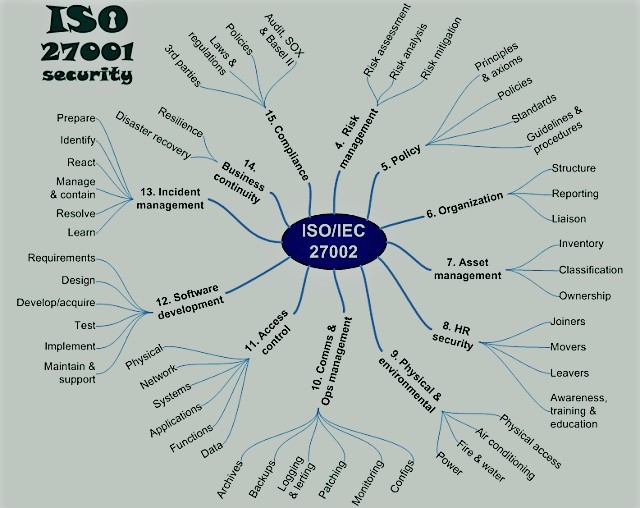
Enterprises commonly practice strict compliance with industry standards to secure advantages for their businesses. For example, compliance with ISO/IEC 27001 Information Security Management raises the reputation of a financial services company by reducing the number of security breaches. In addition, its operational costs from downtime are minimized.
Part 2 will cover the topics of Top-Down Logic and Scope of Design.
Progressive Office Cabling
Founded in 1986, Progressive Office’s success has been a direct result of years of commitment to seeking solutions on behalf of our clients in the Washington, D.C. and New York City areas. Efficiently working together, Progressive teams get cabling installed and operating as fast as possible while minimizing disruption and downtime. Call our toll free number (800) 614-4560 today.

Get a Site Survey Before Cabling Installation
 During the process of selecting a cabling installation company, you will meet with candidate contractors at the new office space. Each visit will typically be a free consultation as each contractor they will make a site survey in order to make an evaluation and prepare a quote for the project. Below are items and information a business owner should be ready to provide to make each site survey as efficient and productive as possible.

Why Structured Cabling is Important for Business Phones
If your organization is considering a new VOIP (Voice Over Internet Protocol) system, you should think about the structured cabling system needed to support it and maximize its potential. The following summarizes the advantages your digital phone system will have with a well-designed structured cabling system.
Decreased Noise
CAT 6 and CAT 6A cable provides more noise reduction than older cables. Fiber optic cabling is even better. Less noise resistance results in more static and faulty connections during phone conversations. Higher levels of noise also decrease network speed because the system is forced to retransmit data until it is no longer corrupted. Although purchasing lower quality cable saves money in the short run, it may result in long term business losses because of slower response times and annoyed customers.
Lengthened Runs
Higher quality cable will be capable of supporting longer runs that are free of artifacts and errors. Fiber optic cables are not restricted by the length of runs. It is the superior option for a data center or business telephone system because of its excellent noise resistance and high speed. Although second choices, CAT 5e to CAT 6A cabling are capable of supporting runs to 100 meters without noise. Cables that can support long runs provide greater flexibility for layouts, decreasing the need for data hubs or repeaters and increasing reliability.
Maintenance Savings
CAT 5e, CAT 6, and fiber optic cables are highly dependable. However, if they ever become faulty or the network needs to be reconfigured, a structured cabling system that is well organized and diligently marked will save time spent on maintenance. While a company’s network is down, business may be impacted, resulting in lost revenue. Tracing faults is made much easier by a sound structured cabling system.
Transmission Speed
Business is often time-sensitive, and you will want to use the highest quality cable your company can afford. CAT 6A cable is capable of supporting a maximum of 10 Gigabits per second while CAT 5e can only achieve 100 mbps. Older, less capable cables are not recommended because their slow data transmission and high noise levels cannot meet current VOIP demands.
Progressive Office Cabling
Founded in 1986, Progressive Office’s success has been a direct result of years of commitment to seeking solutions on behalf of their clients in the Washington, D.C. and New York City areas. Efficiently working together, their teams get cabling installed and operating as fast as possible while minimizing disruption and downtime. Call their toll free number (800) 614-4560 today.

Is it Time to Upgrade Your Network Infrastructure?
 Your company will need to upgrade because network traffic is rising dramatically due to the rapid increase in the number of devices and videos online. By 2020, the number of devices will approach an estimated 12 billion. The following are reasons why you should contact an expert and experienced structured cabling support team to evaluate and improve your network infrastructure.
High Maintenance
The addition of the latest technology often stresses aged infrastructure, resulting in more downtime and troubleshooting. This increased time and effort devoted to this task prevents your IT support from working on implementing innovative solutions that may increase productivity or decrease costs, slowing your company’s growth. Installing up-to-date infrastructure will decrease maintenance and increase deployments.
Inadequate Security
Cybercrime is growing ever more prevalent and complex. Hackers tend to avoid networks with strong security and target those with weak protection. Older network infrastructure will have more and greater vulnerabilities. Modern network solutions now feature intelligent sensors and enforcers, improving security.
Mobile Employees
Today’s workers want the ability to work anywhere and anytime. Unfortunately, aged infrastructure will not be able to cope with new mobile solutions and enterprise cloud applications. In order to maintain and increase employee productivity, a network upgrade replacing obsolete equipment will probably be necessary.
Slow Network
Networks of the past were not designed to meet the current requirements of companies and their workers. Wireless technology now permits employees to work anywhere with wireless access points nearing 7 Gbps, more than 11X faster than the 802.11n standard.
The Competition
A network infrastructure upgrade will allow your company to remain competitive because it will be able to implement the latest solutions that boost productivity and earnings. Powerful applications that would have crashed your old network can now be handled, allowing your organization to keep up with competitors.
Progressive Office Cabling
Founded in 1986, Progressive Office’s success has been a direct result of years of commitment to seeking solutions on behalf of their clients in the Washington, D.C. and New York City areas. Efficiently working together, their teams get cabling installed and operating as fast as possible while minimizing disruption and downtime. Call their toll free number (800) 614-4560 today.
Setting Up a Campus Network
 Academic institutions can garner all the benefits of the Internet age by integrating information and communications technology (ICT) with their teaching and learning environments. ICT is an extension of the term for information technology (IT), emphasizing the unification of telecommunications, computers, software, storage, and audio-visual components within a network.
The quality of education can be significantly improved through the sharing of skills, resources, content, and faculty development. IT content and resources should be available to both faculty and students throughout the campus. To this end, academic institutions must establish a network in each of their campuses, achieving the same speed of data transfer at each building.
Typically, a campus network is comprised of several local area networks (LANs) that are interconnected inside a specific geographical area. Networking components, such as switches, routers, and firewalls, and transmission media, such as copper cable and optical fiber, are utilized for interconnection and communication between connected devices.
Campus Network Topology
For academic institutions like colleges or universities, a campus area network should be interconnected to various types of buildings, including administrative, academic, library, student center, hostel, guest house, sports facility, conference, technology, training, and laboratory.
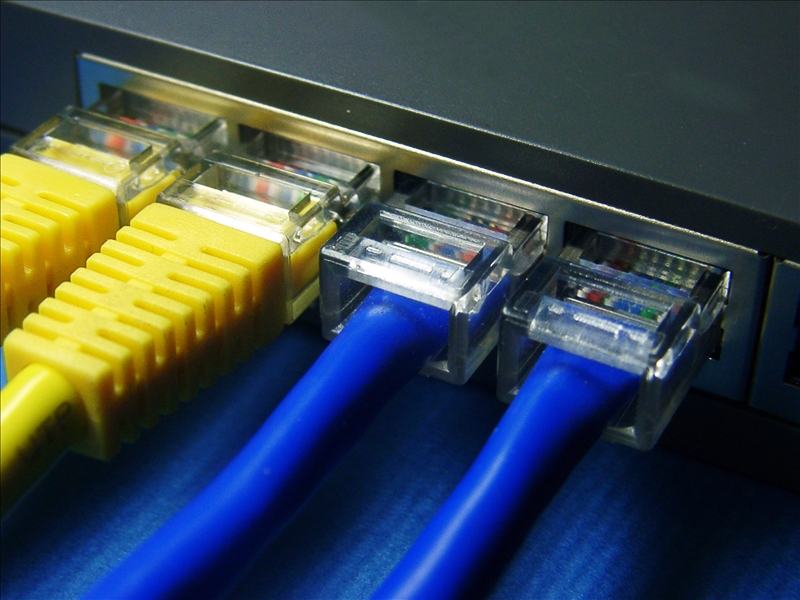
A campus network will be interconnected via high-speed Ethernet cabling over optical fiber of up to 10GB capability. For the efficient processing of data and information traffic using distribution, access and core segments, tiered hierarchal architecture is utilized.
Every building, block, center, and residential complex will be connected by high-speed optical fiber cable. Moreover, every node within a building will be connected with UTP copper cable that supports gigabit speed.
The conference rooms, teaching halls, and common areas inside each campus will be Wi-Fi enabled through the deployment of 802.11 based wireless access points with central authentication, permitting secure network access via laptops, tablets, smartphones, and other Wi-Fi enabled devices.
Internet services, along with common applications, will also be installed at key locations, such as library study halls, allowing students, faculty, and staff easy access via desktop computers and laptops around the clock.
Network Cabling
When work requires a unionized cabling group, call on Progressive Office Inc. for your commercial Cat5e/6/6a and fiber cabling projects. Specializing in cabling for data, voice, security and the latest WiFi and LiFi solutions. Phone: (202) 462-4290

Security Aspects of Structured Cabling – Part 1
 Cabling system designed for the purpose of security have hardly changed the last decade and a half. Delivering video images and access control data to a control room utilizing standard transmission technology is basic and familiar. What has recently changed is the transition to IP-based security products and the rapid increase in business applications, resulting in end-users expecting a greater video, audio, and data integration. All of these items require delivery over one standardized structured cable system.
As opposed to traditional video and access control systems, voice and data communications cabling systems have had numerous transformations. Functioning on structured cable systems, data networks have shifted from the pioneering 1980s proprietary cabling to standards-based cabling using optical fiber and balanced twisted pair. This has resulted in greater transmission speeds and significantly increased network bandwidth. These two elements allow a security installer to achieve integration that is demanded by clients for CCTV, access control, and other applications. Through the adoption of standardized structured cabling, installers will be able to access new streams of revenue and provide tangible benefits to users by unifying all of their systems within one cabling infrastructure.
This change in the utilization and deployment of structured cabling systems was recognized by ANSI/TIA-862-B “Structured Cabling Infrastructure Standard for Intelligent Building Systems”, which was developed by the TIA TR-42.1 Commercial Building Cabling Subcommittee and released February 2016. This standard features the requirements of several standard and developing systems that are able to use the existing cabling of buildings. It also includes Distributed Building Services that do not utilize a building’s infrastructure cabling because of application, connector, historic, and topographic limitations.
A company’s network infrastructure is crucial in the distribution of information using electronic media, including CCTV, access control, data, and voice. Functioning over a structured cabling system, this distribution network is developed for the perpetual flow of data, featuring redundancy at the heart. Installed with centralized topology, this enabled the most facile sharing of resources achievable, along with the greatest flexibility and expandability possible.
Part 2 will cover Structured Cabling Benefits for Your Business.
Network Cabling
When work requires a unionized cabling group, call on Progressive Office Inc., for your commercial Cat5e/6/6a and fiber cabling projects. Specializing in cabling for data, voice, security and the latest WiFi and LiFi solutions. Phone: (202) 462-4290