structured cabling, Data Cabling, cabling tester

Facts about Data Cable Testing

6 May 2015

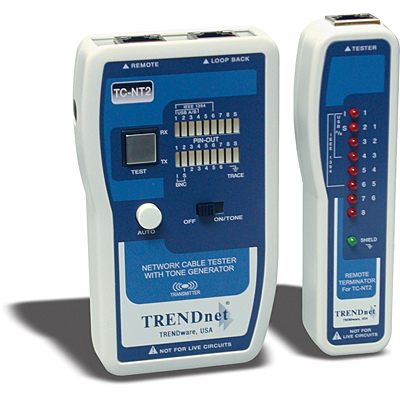
structured cabling, Data Cabling, cabling testerTesting always plays a vital role in the process of installing new cables or servicing existing ones. Regular testers for data cabling include length, wire crimper map, attenuation, return loss, and DC loop resistance.


Complex Cabling Needs


Cabling infrastructure requirements have become more complicated. More standards are being developed for cabling professionals in testing and troubleshooting copper and fiber cables. And there are special requirements as well as downsides in the implementation of new  technologies. From 10BASE-T to 100BASE-TX to 1000BASE-T and now to 10GBASE-T. It is now more crucial to keep in step with the most up-to-date techniques in cable testing too. In short, cable testing infuses a higher degree of assurance that installed cable links will attain the preferred transmission capacity for your data communications.


Cabling Tester Categories


Cable testing instruments have been manufactured with unique features for specific tasks. Costs, performance, and applications vary. These depend on the required functions. The three main functions are certification, qualification and verification. Although certain attributes overlap, each category answers a particular testing prerequisite.


Certification facilitates conformity to standards defines by the industry. These are instruments signal a “Pass” or “Fail” towards data testing compliance within standardized industry norms. These testing instruments will find out whether a cable link conforms to a category or class such as Cat6 or Cat5e. It is the last step required by most structured cabling installers towards approval of a new  installation.


Qualification determines if the existing cable is capable of supporting specific network speeds. This special class of testers is supposed to meet the up-and-coming requirements of network technicians who troubleshoot data networks. These testers perform checks to make a decision on whether a present cable link supports the requirements for fast or gigabit Ethernet. With these instruments, network technicians can identify and isolate cabling issues. While Continuity testers do not perform the series of tests set down by these standards and are not  considered certification tools.


Verification makes sure that cabling connections are correct. This type of tool performs a continuity test. It guarantees all wires in the cabling link have been attached properly to termination points at each end. For twisted pair cabling, there is an appropriate pairing of the wires. Such testing tools also confirm wire pairing and find out installation flaws such as split pairs. These can also help in troubleshooting by working with a toner to pinpoint a certain cabling link. These testing tools do not give out any information regarding bandwidth and data integrity.


If you need your cabling tested or certified, contact us!

Data Cabling ,Network cabling, DC

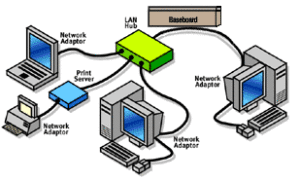
Essential Components for Wired Networks

10 Apr 2015

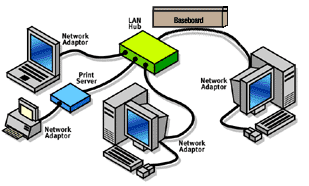
Data Cabling ,Network cabling, DCBe sure to purchase the correct components before you install a wired network. The major components consist of the cable, router and network adapters.


Cables


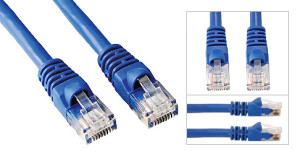
You should opt for fast Ethernet or the 100 Base T cable. Ethernet (RJ-45) looks like telephone cables with somewhat thicker wire and jacks. It is also known as Cat 5e or Twisted Pair Ethernet with corresponding speed ratings of 10, 100, and 1,000. Every PC requires a separate network adapter.

Read More

Cat5e ,Cat6/6a Cabling,patch cables

Patch Cables and Twisted Pair Cabling

21 Mar 2015

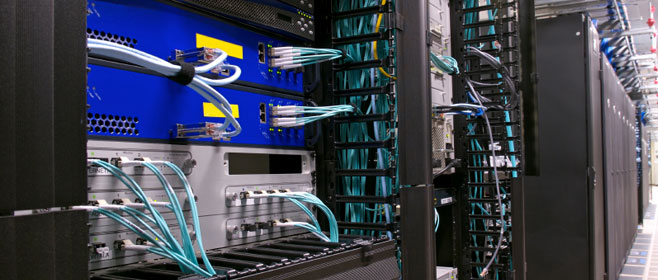
The patch cable is used to link up two network devices. This type of cabling is usually a Cat6 or a Cat5e cable thaCat5e ,Cat6/6a Cabling,patch cablest connects personal computers to the wall plate or provides the short interconnects among the switches, routers and the patch panels in the wall closet or Server Room. These make use of stranded wires instead of solid to increase flexibility. It also lessens the risk of cracking when you unplug the cable. There is also a variety of Ethernet patch called the crossover cable. It is used to hook up two PCs together and sometimes to interconnect switches.


Ethernet Systems


Ethernet systems ensure adaptable and economical methods of conveying voice, data, and multimedia over integrated networks. In fact, Ethernet patch cords have become very common. These wall to wall cables gave rise to the growth of generic and structured cabling systems. Today, these are used practically for all networking components regardless of industry or application. However, there are concerns that you need to consider. Whereas modular attributes and profusion of patch cables denote absolute universal use, there are differences that can reduce interchangeability. Some of the disparities originate from various wiring configurations of cable conductors and connector pins.


Twister Pair Cables


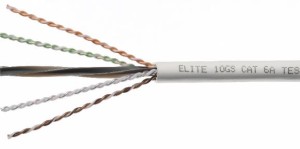
For this type of cabling, two conductors are coiled to prevent electromagnetic interference (commonly known as EMI) that comes from external (usually electrical) sources. One example is the electromagnetic radiation caused by uncovered twisted pair cables or UTP as well as cross talk produced by adjacent electrical wires. The process of shielding generates a conductive barrier to lessen these electromagnetic waves. It also creates a conduit for conduction so that  currents and data can traverse freely. Shielding can be applied on individual pairs or as a group of pairs.


Twisted conductor pairs form a secure circuit. The voltages carry the same magnitude or amplitude. However, one is positive while the other is negative. Incidentally, crosstalk takes place if the electromagnetic field turns out a signal that is too big or strong and intereferes with a nearby pair. The sound is like a fusion of the two fields by means of a swap of the energy between them. Certain components of these signals are passed on to each other during this exchange of energy.


As a result, here is an ensuing increase in the level of “noise”. External sources of EMI and RFI create signal interference in a similar manner. These cause distortion of the signals that go to your office and communications equipment.


Overall, these are the things that you should take into account with regards to twisted and patch cabling.


Please feel free to contact us if you need help with your office cabling project!

Structured Cabling, Cabling, Washington DC

Practical Pointers in Network Cabling

20 Feb 2015

StructuredCablingFiberOpticsCat6a10GigNetworking cabling is not a simple task. It entails expertise and attention to detail. What are valuable insights that network technicians need to know about for effective cabling and installations?


Cable length is essential.


The telecommunications standards prescribed by the Telecommunications Industry Association and Electronic industries Alliance (TIA-EIA) states that maximum distance end to end of cables should be no more than 100 meters.

Read More

Structured Cabling,,Office Cabling.connectors

Important Facts About Cabling Infrastructure

23 Jan 2015

NetworkStructured Cabling,,Office Cabling.connectors cabling that has not been installed properly may result in various communications issues. Even minor problems such as a connector that has not been terminated properly can prevent Power over Ethernet from performing well.


Wiring Standards


See to it that you use appropriate wiring patterns which are T568a and T568b. Refrain from bringing together T568a and T568b in the same cable. And always use premium quality Cat6 or Cat5e cables. We prefer solid over stranded wire.

Read More

Network Cabling ,Data Cabling,CAT2 6A UTP

Issues to Avoid with Cat6a Cables

22 Dec 2014
Network Cabling ,Data Cabling,CAT2 6A UTPA newly popularized cable is Cat6a. It is the new “cable on the block” which has prolonged the life of copper cabling. Cat6a has the shielded twisted and untwisted pairs with different advantages and features. It supports Gigabit Ethernet up to a hundred meters. However, you need to understand and cope with several issues.

Contentions


The size of Cat6a cable is larger than Cat5e. Copper is inherently unreliable due to Bit Error Rates or BER. This is why manufacturers have designed Cat6a cables with a smaller cross-section. It takes up less space in the tray. Yet, this space is needed to minimize crosstalk between cabling pairs. The protective shield in Cat6a cable adds to the expense.

Electricity and Mechanical Facets


Aside from the electrical issues, Cat6a Untwisted Pair (UTP) is fabricated with bigger conductors. It has more rigid twists compared to Cat5e and Cat6 and these heavier conductors plus large and stiffer jacket combines to make for more difficult cable installation. Besides, the external diameter of the UTP means that the Cat6a cable takes up more room in the trays and conduits.

Electrical and mechanical issues should not be overlooked since this can affect performance. The physical stability of Cat6a is essential to its transmission performance. Cat6a can be more sensitive to degradation of signal compared to Cat5.

These may be produced by the following:


  • Cable twisting generates signal reflection.

  • Excess insertion pressure on cables can cause poor connector performance.

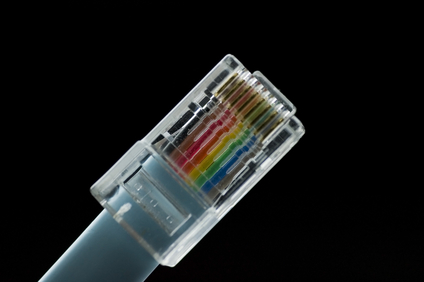
  • Weakness of RJ45 (communications) connectors.


For example, if the cable is wedged in a door or compressed or squeezed by a heavy object, can result in sporadic network problems which may not be easy to detect. Nevertheless, Cat6a functions at enhanced specifications compared to Cat6 UTP. Considering all of these issues it may seem that fiber cable will become the ultimate future for 10 Gigabit Ethernet. It is up to users and the market forces to make the choice.
Cat5e Cat6/6a Cabling,Office Cabling

Handling Cat5/Cat5e Cabling

19 Nov 2014

cat 5e,Network cabling, cables, Atlanta GAInformation Technology specialists have to choose the kind of cable to utilize for their networks. Cat5 has been one of the main choices for decades. This is because Cat5 supports 10/100 Ethernet which includes Fast Ethernet. In recent years, Cat5e has become the dominant choice for new cabling projects. And Cat5e cable is also backwards compatible. Your computers, phone and other network devices will work on Cat5e cable.


One handling issue is the electrical interference

Read More

Network Cabling Data Cabling

Fundamentals of Structured Cabling Systems

15 Nov 2014

structured cabling, Network Cabling, Data CablingThe structured cabling system is a comprehensive structure of wiring and the related hardware involved. This system ensures a complete and reliable telecommunications infrastructure. This network has several  but mostly for providing telephone services or conveyance of data over a  computer network. This type of cabling system also connects to the internet at the demarcation point.


A quality structured cabling installation has these common elements:


  • It must fir the architectural configuration of the building that hosts  cabling installation

  • It made up of cable and connection fixtures

  • It connects equipment that cabling is setup to support

  • Can be designed to enable retrofitting and upgrading

  • Meets the objectives and requirements of the business

  • Is backed by a guarantee by the manufacturer and the installer


As installers, we use standardized techniques in the completion and upkeep of cabling systems. This is important to guarantee satisfactory system performance on a technically complicated infrastructure. The benefits of adhering to these standards are that they insure stability of connectivity after setup.


 Structured cabling installations may include:


  • Entrance facilities

  • Perpendicular and horizontal backbone conduits or cables

  • Horizontal lanes

  • Work area facilities

  • Equipment areas

  • Telecommunications racks and cabinets


A cabling connector refers to the mechanical device used in connecting a cable to a device or from one cable to another. The connector provides the coupling device that can minimize losses.  For fiber, it permits light signals to move from one connector to another. On the other hand, copper enables electrical impulses to be conveyed. It is important to properly align these  connectors to prevent connectivity breaks. Likewise, it should insure the efficient transmission of data. Connectors are crucial to the reliability of the total telecommunications network.


There are six subsystems in the structured platform. These are entrance facilities, equipment rooms, backbone cabling, telecommunication rooms and enclosures, the cabling, and the work area.  The first consists of cables, network boundary, hardware for connection, security devices, and equipment attached to the network cabling. Backbone cabling consists of subsystems that provide inter-connection between telecommunication, network equipment and access facilities.  Quite often these are the higher speed cabling components such as Cat6 and fiber that connect among the switches of an office.


Horizontal cabling connects from the desktops and phones to the telecommunications rooms and enclosures. The maximum horizontal cable length should be at no more than 100 meters. These desktop components extend out from the wall plate connection end of the horizontal cabling system to the equipment in the wall closet.


Call us if you need troubleshooting or if you have a need for cabling at your office due to expansion or relocation of your firm. We do free on-site surveys and quotes.

network cabling,cat6 cable

What are the advantages and disadvantages of Cat6 cabling?

7 Nov 2014

network cabling,cat6 cableAs the price of Cat6 cable has come down, the answer is yes. You get 500% more speed for about a 25% higher price. Unless you really just don't need more speed, go with Cat6.


Category6 or Cat6 cables have established standards for the Gigabit Ethernet. This variety is backward compatible with Category 5 and 5e as well as Category 3 cable. Cat6 facilitates computer networks by providing high-speed data transfer rates. Performance can be described as optimal if other components within the network are also running at gigabit speeds.


What are the upsides?


Cat6 is fast. It has the capability to handle maximum speed performance of 250 MHZ. The network includes Gigabit Ethernet along with 10-Gigabit Ethernet. With complementary routers, interface cards, switches, and patch panels a complete gigabit network is possible. Information Technology professionals are aware that Cat6 cable provides exceptionally fast network performance and gigabit speeds.


The composition is similar to Cat5 Cable. There are eight wires which are coiled together forming four pairs. With Cat6, each pair of wires is designed to be insulated from the others so it can produce twice the communications capacity of Cat5 and Cat5e. Cat6 cables plugs and ports are compatible to Cat5 and Cat5e. It may not have the same maximum speed of the computer cable but it will still function.


You can upgrade to Cat6 cable if your current network is not performing at a productive speed in retrieving and saving your data files. Even small enterprises are now thinking of installing this model because it is fast emerging as the industry standard.


However,  Cat6 cable is  more expensive. It will surely be a waste of resources in cases where greater data speeds are not needed. That is why some users opt for Cat5e which is less expensive while still providing splendid performance.


At the same time, you are not guaranteed 100 percent full speed. Sometimes, there is a misconception that purchasing a Cat6 cable will offer users the whole gigabit bandwidth on your network. The truth is Cat6 cable will only generate full speeds if all of the components in the network can function at gigabit speed. In case a single part (network card, patch panel, switch or connector) is not gigabit rated, the network may work at the slowest speed of the slowest component device.


You might be persuaded to buy Cat6 without really understanding if it will really produce the desired impact on the network. This is why it is essential to learn everything about the product before you make a decision.


Call us at 202-462-4290 before you decide so that you can get a free on-site analysis that will pinpoint your network cabling needs.


cable,Data Cabling ,Cat5e, Cat6/6a Cabling

CAT5E/CAT6 Cable Repair & Patching Techniques

15 Aug 2014

Network Cabling,Crimp Tool , Data CablingNetwork cables are said to be the “arteries and veins” of the communications network. The cabled system is a highly consistent platform for setting up infrastructure since the connectivity is very reliable. It is also easy to troubleshoot. However, it is not really fail-safe. Cables can get warped and sometimes snagged in ceilings. The connectors can also get broken if they are pulled to hard at the wallplate.


It does not matter whether it is Cat5e or Cat6. Cat6 is considered a better choice although, for some, cost prohibitive. When you look at it,

Read More