Data Cabling ,Network cabling, DC

Essential Components for Wired Networks

10 Apr 2015

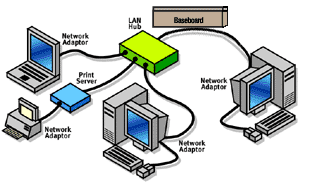
Data Cabling ,Network cabling, DCBe sure to purchase the correct components before you install a wired network. The major components consist of the cable, router and network adapters.


Cables


You should opt for fast Ethernet or the 100 Base T cable. Ethernet (RJ-45) looks like telephone cables with somewhat thicker wire and jacks. It is also known as Cat 5e or Twisted Pair Ethernet with corresponding speed ratings of 10, 100, and 1,000. Every PC requires a separate network adapter.

Read More

Structured Cabling,Washington DC New York City

Basics of Riser Cables

6 Mar 2015

Structured Cabling,Network Cabling Data Cabling Riser cables were designed for non-plenum vertical applications like between the floors of multi-story buildings. They are also described as backbone cables. These cables serve as the main conduit of a distribution system for data, video or voice. It originates from the point where communications go in through a particular edifice.  This cable comprises part of the structure backbone. Other components of this facility are the cable corridors, telecommunications cabinets, equipment rooms, correlated hardware, and support facilities. This cable variety must be fire resistant in accordance with electrical codes. Nonetheless, specifications are not as stringent compared to plenum cables.


Understand its Uses


Riser cables may be used for different forms of data communications which also includes CCTV video access. It is ideal as well for voice communications. One major concern is that requirements vary for each service. Hat is why planning can sometimes be quite complicated. Building managers are often pressed to predict their requirements given limited time and expertise. Quite often they will recommend creating split riser systems for multiple applications which follow parallel routes through the corridors, closets, and equipment areas.


How do you select the medium?


Perhaps, the primary concern is to stay within budget.  You can expect system designers to resort to trade-offs in delivering a broad assortment of services within the backbone system. Other factors that may influence their design are the following:


  • Provide an adaptable medium in relation to supported services

  • Identify the necessary useful life span of backbone cabling

  • Consider the technical needs of users


Standards are on hand to serve as a guide in the design of riser cable systems. There are appropriate benchmarks for optical and copper cable backbone structures. Some of the backbone cable categories include:


  • Copper-shielded and unshielded twisted-pair or UTP cables

  • Coaxial and twin axial cabling configurations

  • Single mode and micron multimode optical fibers


Physical locations supporting riser cables take into consideration the telecommunications service entrances and adjacent equipment rooms containing the main cross-connect. This can extend to the telecommunications closets that serve a particular location, intermediate cross-connects that serve a number of telecommunications closets, or horizontal cross-connects for a remote telecommunications closet or just one level of the building. The telecommunications cabinet is the point of interaction between backbone systems and parallel (same floor) wiring.


Riser cable systems in multiple-story buildings need to pass through equivalent closets making use of connecting conduits between the floors. Said design provides each floor access to the backbone and allows circuits to be distributed to all levels. The conduit and sleeves should go higher than the floor level by at least an inch and fitted with fire-stopping material. These should also adhere to electrical codes. The riser or backbone cable system essentially acts as the core of telecommunications infrastructure.


Structured Cabling, Cabling, Washington DC

Practical Pointers in Network Cabling

20 Feb 2015

StructuredCablingFiberOpticsCat6a10GigNetworking cabling is not a simple task. It entails expertise and attention to detail. What are valuable insights that network technicians need to know about for effective cabling and installations?


Cable length is essential.


The telecommunications standards prescribed by the Telecommunications Industry Association and Electronic industries Alliance (TIA-EIA) states that maximum distance end to end of cables should be no more than 100 meters.

Read More

Structured Cabling,Office Cabling

Cabling Pointers for Effective Data Center Management

5 Feb 2015

Structured Cabling,Office Cabling,datac enterThe data center supports the lifeblood of corporate enterprises. Communications stop due to the malfunction of this facility. Unfortunately, multiple issues can affect the data hub and incorrect cabling can be one of them. Planning is the key to boosting the efficiency of data center cabling.


 Here are some things to consider:


  1. Measure cables with care. Otherwise, you produce a twisted “rat's nest” and an unnecessary waste of money.

  2. Put a label on both tips of your cables which include patch and short runs. This will be useful if you need to test a cluster of circuits. It will not be confusing if you unplug several patch cables. You know where each single cable is connected. The marking system must be consistent at all times.

  3. Never rush on termination of cables. And redo in cases where cables lose connectivity. Avoid purchasing and using cheap products. You will end up spending more in the long-term.

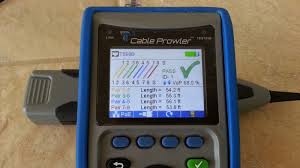
  4. Test the cables first and make sure it passes the mark for continuity.  If not, you have to do it all over again. And always use a high-quality tester to avoid unwarranted work.

  5. Patch cables must be kept short. Remember that rack servers are only one foot away from each other. Patch cables with a length of three feet are definitely not appropriate. Combine testing and terminating capabilities to make sure that patch cables connect accurately. Additional lengths will cause a lot of twisting.

  6. Come up with a color coding technique. A single color is ideal for patch cables and cable runs. However, it is possible to utilize specific color cables for specific purposes. Avoid random colors. It will be easier to follow cable functions and resolve problems if your color has a purpose. Blue for data, white for voice is a common standard.

  7. Your design must be cable-friendly. Do not put a rack in a place where it is not possible to run your cable effectively. You may end up with cables dropping from the ceiling or scattered on the floor. Expansion should also be in your planning so you know when and how to make adjustments.

  8. Separate electric wires from Cat5/6 cables. Power lines can distort communications. The effects will be to have connection and data transmission issues that can result in data corruptions.

  9. Be careful about excessive temperature. Make sure that the cables are cool and not hot since this can result in cabling decomposition. The data center should be designed in a way that servers and networks are always at a comfortable temperature.


If you need help in designing your structured data cabling system, please feel free to call or contact us. We do free cabling site proposals.

data cabling,network cabling,cat6 cable .

PVC Sleeves And Insulation on Fiber-Optic Cable

14 Oct 2014

PVC data cabling,network cabling,cat6 cable .pvc-sleeve- is a common plastic materials for different many uses and applications. PVC is flexible, cost-effective and hard-wearing. Plasticized PVC is considered on of the most popular materials not only for electrical insulation but also for data and fiber optic cables too.


PVC is Polyvinyl chloride. It can be bent and turned many times without cracking or warping. This safety feature makes it appropriate for multiple applications. The infusion of plasticizers provides the needed softness for the insulation and covering of electrical and data wires. Cable wire manufacturers can configure different thicknesses

Read More

Network Cabling, Data Cabling

Choosing Plenum Cables for Plenum Space

5 Sep 2014

Office Cabling Network Cabling, New York City The plenum space is described as that section of the building that makes possible air movement for HVAC systems. It also provides the space for conduits of heated, conditioned and return air circulation. The distance between the structural ceiling and dropped ceiling tiles is regarded as the plenum space.


The plenum space houses communication cables for telephone and computer networks. However, increasing neglect of cables in plenum areas create a major risk in case of fire.

Read More

cable testing, Network Cabling ,Data Cabling

Cable Testing And Certification

12 May 2014

cable testing, Network Cabling ,Data Cabling Cable testing and certification are obviously complicated terminologies that may be difficult for laypeople to understand. Nonetheless, it is important to become familiar with these functions since they have become common fixtures in your homes. It does not matter whether you are simply making repairs or installing new cables, testing always plays an essential role. Testing offers a degree of assurance that the links provide the necessary transmission capacity that supports data communications.


Cable testing implements have been designed with multiple features for a variety of tasks. However, these differ in terms of costs, performance and applications. Testing can be classified into certification and verification. Certification is vital because it ensures conformity of the cabling system to industry benchmarks. Certification instruments decide whether a particular connection complies with ISO or TIA (Telecommunications Industry Association) guidelines. In fact, it is the final step completed by structured cable manufacturers before granting warranties for new installations.


In this technology domain, certification is acknowledged as proof of professional status. The Fiber Optic Association (FOA) oversees adherence to certification requirements and authorizes schools to grant training that meets its standards. FOA programs are created and maintained by experts in the fiber optic enterprise.


Certification indicates that you have accomplished specific performance criteria established by the certifying organization. It includes knowledge, skills and abilities either through training or through experience acquired over the years.
Certification is not simply an ordinary license; it is official consent to do business within a particular jurisdiction. The majority of states in the country require licensing for service providers installing communications cabling. Be sure to check your local area and find out the requirements for licensing. Testing and Certification are the foremost steps in the cable installation process, and it is imperative that all components are tested carefully.


It is not enough to plug in the network equipment set-up and find out if it works properly. Certification is needed to prevent unnecessary and costly improvements or refurbishment in the future. Network examination and certification of all new installations as well as existing networks are provided for the whole infrastructure.


Incidentally, you also need to learn that in communications cabling, standards delineate the kinds of cabling, yardsticks that define cabling, connections, cabling architecture, and testing prerequisites. These standards can minimize downtime and installation costs. At the same time, standards capitalize on system availability and prolong the life span of cabling systems. Lastly, paradigms allow manufacturers to create systems that will accommodate current technologies and equipment without difficulty. The bottom line is to find the company that can do these things for you efficiently.

cable testing, Network Cabling ,Data Cabling ,cat6-cabling

Benefits of Copper Cabling Solutions

4 May 2014

cable testing, Network Cabling ,Data Cabling ,cat6-cablingThe conventional process of copper cabling has been used for several years and is still preferred by many network cable providers and end-users. Companies like Progressive Office Cabling offer a complete range of cabling solutions in Cat5, Cat5e, Cat6a and Cat6, providing clients with high-quality cable as well as connectivity components. Progressive Office Cabling makes use of highly effective cable management systems and well-trained technicians for installation jobs. It also employs a web-based online project management system to guarantee proper implementation and monitoring of any project.


How Does Copper Cabling Work?


Installation technicians have to follow specific policies and standards, particularly when it comes to building structure concerns. There are several steps to follow with regard to installation. First, the cable should have the appropriate covering or insulation, which is normally made of PVC, Plenum, Ultra-Violet, or mold-resistant varieties. The cable is cut according to the needed length, and outer covers are removed before connectors are attached. Use the appropriate stripping tools for this purpose. Cables should be mounted as orderly as possible.


There are instances when installers have to use ladder trays and J-hooks, which are made for network cabling, or shoot nails into concrete ceilings using a tool that literally propels nails like bullets into the concrete surfaces. Network cables must be installed away from electric power lines, fluorescent lamps and industrial machines; the risk of electrical coupling can increase dependent on proximity and voltage factors.


Different Benefits


Copper cabling has multiple benefits and is the most effective conductor out there. Copper cables are flexible, which is especially advantageous if you are using electrical wires. It is necessary to bend the wire during installation, so you need something durable that will not easily break after a lot of twisting. Copper does not easily melt, so even if a sudden surge of current or overload takes place, there is no risk of burning or melting. At the same time, copper is not difficult to work on. The majority of electricians opt for copper wires because they can be stripped easily or pulled through rigid spots.


With regard to structured copper cabling, there is the Power over Ethernet benefit. This means that it is possible to run power through devices such as Wireless Access Points, surveillance cameras, and power phones. There is an emergency power supply that continues to power mission-critical devices even if electrical power conks out. Copper cabling supports modern technologies and facilitates the convergence of different applications. Hence, it is important that copper cabling is optimized for your requirements. That is why you should make sure to get the services only of experienced and trustworthy providers in the industry. Choose the provider that ensures customer satisfaction and warranty after installation.

Network Cabling ,cat5 cat6 cabling

How Does Structured Cabling Work?

10 Nov 2023

CablingNetwork Cabling, Data Cabling,cat5 cat6 cabling is an essential component in your network. It also has a long life span, from 15 to 20 years, so it may be necessary to replace your network equipment at least three times during the life of the cabling configuration. Cable installation is roughly 15 percent of the total network outlay. So it is advisable to invest in premium cabling systems, particularly to reduce maintenance costs and downtime while also achieving improved network performance. Entrepreneurs are always advised to look at the long-term scenario and acquire the best cable installation available.


Uninterrupted Flow of Information


There is no doubt regarding the importance of a structured cabling system in the operations of a business organization. This complete system with related hardware provides far-reaching telecommunications; it has a broad range of uses like supplying phone services or transmitting information through a network of computers. Each structured cabling system is unique depending on a number of factors, including the architectural formation of edifices that houses cabling installation, cable and connection components, equipment variety that cabling supports, configuration including upgrades and retro-fitting, requirements of clients, and manufacturers’ warranties.


The assembly that has been planned carefully and installed according to this plan ensures an unbroken network of information and communications. Aside from this advantage, structured cabling facilitates sharing of resources, enables smooth operations, and adapts to evolving technology. In fact, it is expected to last longer than computer servers and network switches. The types of network installations are the Local Area Network (LAN), Metropolitan Area Network (MAN) and Wide Area Network (WAN).


Cabling installation firms design and install LAN systems consisting of data and voice as well as support equipment for computer networks and mainframe programs of PCs. All installations must comply with state and city codes together with manufacturers’ specifications.


Other Benefits


Structured cabling offers users more flexibility. It takes the place of multiple wiring systems with a single and cohesive infrastructure. This conveys data in various formats ranging from voice to video. You only need to plug the correct adapter into the socket whether you want to connect a computer, telephone or fax machine.


It affords users peace of mind since each cabling comes with full on-site warranty, covering component or performance faults. It is also possible to make changes in a matter of minutes. This built-in ensures that your organization can be very cost-effective. Furthermore, structured cabling has the capacity to hold high bandwidth, guaranteeing that you've invested in a solution that fully supports new applications. In other words, your cabling infrastructure will not become obsolete within the next few years.


Take care to deal only with cabling companies that employ highly competent technicians and make use of superior cable management equipment.

Data Cabling Cat5e Cat6/6a Cabling

Abandoned Cable Liability Issue

17 Oct 2013
 Cabling,Data Cabling Cat5e Cat6/6a Cabling

As tenants come and go in a commercial building, the cabling infrastructure sometimes leaves behind abandoned Cat5, Cat6 and coax cabling. All that needs to happen is for the new tenant to request a reconfigured layout that relocates the main wall closet. Or, sometimes the old tenant will cut away the cabling in order to take the patch panels with them. If possible, keep the wall closet location. And always offer to buy the patch panels from a departing tenant.


Read More